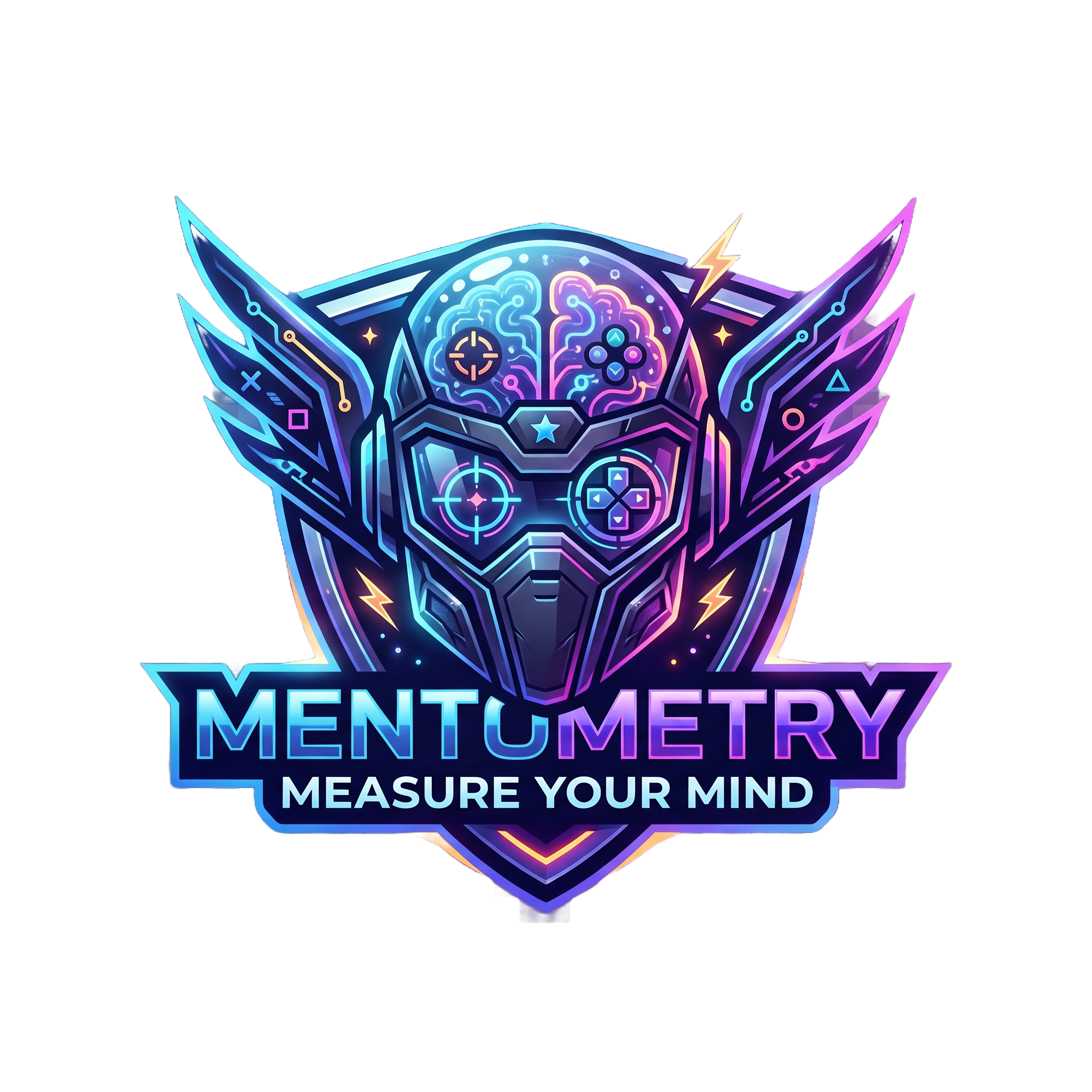
Homescapes is easy to recognize as a match-3 puzzle game with a cozy home-restoration theme. That makes it approachable, colorful and potentially engaging for regular play. But if you are choosing a game specifically for a brain workout, the important question is not whether it feels mentally busy. It is whether the play demands the kind of memory or attention you want to practise, and whether research supports benefits beyond the game itself.
- Directory rating
- ★ 4.7 / 5 (13.4M votes)
- Price
- Free
- Platforms
- Google Play
- Developer
- Playrix
- Released
- 2017
- Homescapes combines match-3 combinations, home restoration and a story-led structure, according to its store description.
- It is listed in Mentometry as a Memory Games title with the skill tag Memory, but that classification is not proof that the game improves memory.
- The game may plausibly exercise short-term visual tracking, planning and remembering recent board information during play.
- Research on working-memory training generally finds stronger effects on similar tasks than on broad abilities or everyday performance.
- Homescapes is best viewed as an enjoyable puzzle game with some memory-related demands, not as a validated cognitive-training program.
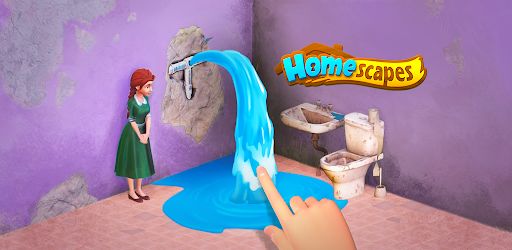 Memory GamesHomescapesPlayrix★ 4.7 (13.4M votes)View ratings & details ▶
What is Homescapes?
Homescapes is a free Google Play game by Playrix. The game card lists it as a Memory Games title, with Memory as its skill tag. It was released in 2017 and has a 4.7/5 rating from 13,375,300 votes on the supplied store data.
The store description presents Homescapes as part of the Playrix Scapes series. Its central loop combines match-3 combinations with restoring and decorating a home room by room. The description also mentions a storyline, new friends in each chapter and Austin the butler as a recurring character.
Those details point to a hybrid experience rather than a narrowly designed memory test. The match-3 puzzles are the main mental activity described, while the home-restoration and story elements provide a broader progression frame. The store text is marketing material and is not independently verified, so claims such as “thousands of levels,” “exciting events” or “useful boosters” should be treated as descriptions of the advertised experience rather than research findings.
How it plays, based on the description
The supported gameplay description is straightforward: you make match-3 combinations, solve puzzles and use the results to restore the interior of a home. The game is described as progressing room by room, with each chapter adding story and new friends. That gives the activity a clear sense of movement from one small objective to the next.
The store description also advertises power-ups, boosters, different challenges and expeditions. However, it does not provide enough detail to assess how often these elements appear, how demanding they are or how much they change the underlying puzzle play. A careful review should not turn those promotional phrases into assumptions about specific mechanics.
From a cognitive perspective, the likely demands are local and moment-to-moment. You may need to scan a board, remember where useful pieces or possible combinations appeared, compare several options and keep a short plan in mind while acting. Those are plausible demands of match-3 play, but the exact amount of memory required will depend on the board, the available moves and the way an individual approaches each puzzle.
If you want to make Homescapes more mentally deliberate, pause before each move and identify two or three possible combinations. Try to remember which arrangement you intended to create, rather than immediately tapping the most obvious match.

Which cognitive skills might it exercise?
Homescapes is tagged for Memory, so memory is the natural focus of this review. Still, “memory” is a broad term. Remembering a recent board position, holding a planned move in mind and recalling a longer sequence of information are different tasks. The available game data does not establish that Homescapes targets any one of these processes in a controlled way.
| Possible skill | Why it may be involved | Confidence from the available data |
|---|---|---|
| Recent visual memory | You may keep track of board arrangements, useful pieces or possible combinations. | Reasonable possibility, not verified by a game study. |
| Working memory | You may hold a short plan in mind while scanning and making a move. | Plausible, but likely task-specific. |
| Visual search | Match-3 play requires looking across the board for combinations. | Strongly suggested by the described mechanic. |
| Planning | You may compare immediate matches with moves that could create a better result. | Plausible, though the description gives no difficulty details. |
| Decision-making | You choose which available combination to make next. | Directly supported by the match-3 description. |
It is also worth separating practice within the game from general cognitive improvement. If you become better at spotting Homescapes combinations, that may reflect familiarity with its visual style, rules and recurring patterns. It does not automatically mean that your memory has improved in unrelated situations.
Working memory is the ability to briefly hold and use information. Research reviews commonly find that training can improve performance on tasks that resemble the exercises being practised, while transfer to broader abilities is less consistent. A 2016 meta-analysis reported short-term gains on working-memory measures but no convincing evidence that working-memory training improves broad real-world cognitive skills such as intelligence, reading comprehension or arithmetic. (pmc.ncbi.nlm.nih.gov)
What does research say about memory training?
The research picture is more nuanced than the phrase “brain workout” suggests. In controlled studies, participants can often improve at a trained task. They may also show near transfer, meaning better performance on a different task that shares important features with the original. Far transfer is a much higher bar: it asks whether practice carries over to relatively different skills or everyday outcomes.
A review of working-memory training described transfer as strongest when trained and untrained tasks shared features such as the same recall format or material type. That finding is relevant to Homescapes because a person could become more efficient at the visual decisions that Homescapes repeatedly presents. It does not demonstrate that the game produces broad memory benefits outside similar puzzle situations. (pubmed.ncbi.nlm.nih.gov)
Other reviews reach somewhat different conclusions depending on the population, task and outcome being measured. A 2019 meta-analysis of working-memory training in healthy older adults found small, significant and lasting transfer gains on working-memory tasks, while effects on reasoning were very small and only marginally significant. This is a reminder that research findings can vary, and that results from structured training studies cannot simply be assigned to every commercial puzzle game. (pubmed.ncbi.nlm.nih.gov)

More recent work continues to examine whether the cognitive demands of a training task influence transfer. A 2026 systematic review and meta-analysis reported asymmetric transfer between different working-memory paradigms, with some evidence that more demanding updating training transferred better to span tasks than the reverse. That result concerns specific adaptive working-memory protocols, not Homescapes, so it should not be used as evidence that match-3 play has the same effect. (pmc.ncbi.nlm.nih.gov)
The practical conclusion is modest but useful: Homescapes may provide mental practice, especially in visual scanning, short-term planning and game-specific pattern recognition. There is not enough supplied evidence to call it a validated memory intervention, and the general research does not justify promises about intelligence, disease prevention or protection against cognitive decline.
A high app-store rating measures how users rate the game, not whether the game improves memory. Homescapes’ 4.7/5 rating from 13,375,300 votes indicates strong user approval in the supplied data, but it is not a cognitive outcome.
Play 1-Back Memory free on Mentometry — no download, and your score joins the global leaderboard.
Pros and cons for brain-workout seekers
- Free on Google Play, according to the supplied game data.
- The match-3 format is easy to understand and offers repeated opportunities to scan, compare and choose.
- The home-restoration and story structure may make regular play more appealing than a bare memory drill.
- The game is explicitly catalogued under Memory Games with a Memory skill tag.
- The very large number of supplied ratings suggests that many users have tried and rated it.
- The store description does not establish that Homescapes improves memory outside the game.
- Its advertised features are presented as marketing text, not independent evidence.
- Match-3 pattern recognition is not the same as deliberate recall training.
- The game may reward familiarity with its own rules and visual patterns, which limits what can be inferred about general cognition.
- There is no supplied clinical or experimental study of Homescapes itself.
How to use it as a more thoughtful brain workout
If you enjoy Homescapes, you do not need to stop playing because the research is cautious. Enjoyment matters for sustained engagement, and a puzzle can be a pleasant way to spend a few minutes. The key is to set an honest goal: play for entertainment and mental engagement, not as a guaranteed route to a stronger memory in daily life.
- Choose a small focus. For one session, pay attention to remembering possible combinations rather than rushing through every obvious move.
- Predict before acting. State your intended match mentally, then check whether the board changed in the way you expected.
- Notice errors. If you miss a combination, ask whether the problem was visual scanning, forgetting a planned move or choosing too quickly.
- Vary your practice. Pair Homescapes with activities that use different forms of memory, such as recalling a short sequence or remembering locations.
- Keep the claim small. Track whether you feel more attentive during play, but do not treat that feeling as proof of general cognitive improvement.
For a more direct memory exercise, Mentometry’s 1-Back Memory asks you to compare each new symbol with the one shown immediately before it. That makes the memory demand explicit instead of leaving it embedded inside a larger decoration and puzzle loop.

Another option is Grid Memory, which asks you to remember highlighted cells and reproduce the same pattern. It focuses more directly on visual-spatial recall than the match-3 combinations described for Homescapes.
Play one short session without rushing. Before each move, remember the combination you intend to make, then check whether the result matched your prediction. Stop after ten deliberate moves and note which errors were memory errors and which were visual-search errors.
ALSO READ Homescapes vs Match Masters: Which Puzzle Game Fits You?
Who should play Homescapes?
Homescapes is a good fit for people who want a gentle, accessible puzzle game with a home-restoration theme and an ongoing story. The free price and Google Play availability also make it easy to try, based on the supplied data. If you enjoy the combination of matching, decorating and chapter-based progression, the game may provide a pleasant reason to return.
It is also suitable for players who like the idea of a mental warm-up but do not want a formal test every time they play. You can use the game to practise pausing, scanning and planning while keeping expectations realistic. Those are worthwhile habits during play, even if they do not translate automatically to unrelated tasks.
Homescapes is less suitable if your main goal is a precise memory assessment or a tightly controlled cognitive exercise. Its description emphasizes match-3 combinations, home restoration and story elements rather than a clearly defined recall protocol. For that purpose, a dedicated memory task is a more direct match.
Similar alternatives
Match Masters is another free Google Play title listed under Match-3 & Bubbles and Memory Games, with Memory as its skill tag. Its description emphasizes match-3 play and live multiplayer against friends or opponents around the world. Choose it if the competitive element described in the store text appeals more than Homescapes’ home-restoration setting.
 Match-3 & Bubbles · Memory GamesMatch MastersCandivore★ 4.8 (2.5M votes)View ratings & details ▶
Gardenscapes comes from Playrix and is also listed as a Memory Games title with Memory as its skill tag. Its description combines match-3 combinations with restoring and exploring a garden, making it a close thematic alternative to Homescapes.
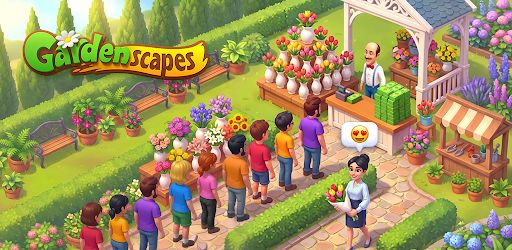 Memory GamesGardenscapesPlayrix★ 4.8 (13.3M votes)View ratings & details ▶
Farm Heroes Saga is another free Google Play match-3 title listed under Memory Games with a Memory skill tag. Its supplied description uses crops, vegetables, animal friends and farm-themed challenges rather than home decoration.
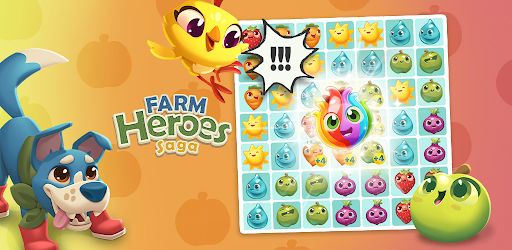 Memory GamesFarm Heroes SagaKing★ 4.6 (9.8M votes)View ratings & details ▶
These alternatives share an important limitation with Homescapes: their catalogue category and store descriptions do not prove that they produce general memory improvements. The best choice is therefore the one whose theme, pace and structure you are most likely to enjoy, while using dedicated memory tasks when you want a clearer workout target.
Final verdict
Homescapes is a plausible mental-engagement game, but a weak candidate for strong brain-training claims. Its match-3 play may involve visual search, short-term memory, planning and decision-making, while its home-restoration and story elements give those puzzles a more motivating frame.
For people seeking an enjoyable puzzle with some memory-related demands, Homescapes is easy to recommend. For people seeking evidence-based memory training, the honest verdict is more limited: play it because you like the game, and treat any cognitive benefit as possible, specific and unproven beyond the tasks it presents.
Frequently Asked Questions
Is Homescapes a brain-training game?
Homescapes is a match-3 puzzle game listed under Memory Games with a Memory skill tag. It may involve memory-related decisions, but there is no supplied evidence that it is a validated brain-training program.
Does Homescapes improve memory?
The available data does not show that Homescapes improves memory outside the game. Research on cognitive training generally finds stronger effects on tasks similar to the ones practised than on broad everyday abilities.
What skills does Homescapes use?
Its match-3 format plausibly uses visual search, short-term planning, decision-making and recent visual memory. The exact cognitive demands are not verified by a study of Homescapes itself.
Is Homescapes free?
The supplied game data lists Homescapes as free on Google Play. The store data provided here does not give further pricing details.
What are good alternatives to Homescapes?
Match Masters, Gardenscapes and Farm Heroes Saga are similar listed games. For a more direct memory exercise, Mentometry also offers 1-Back Memory and Grid Memory.
Are match-3 games good for your brain?
They can provide mental engagement and practice with game-specific visual decisions. However, playing a match-3 game should not be treated as proof of improved intelligence, prevention of decline or broad memory gains.
Sources
- Working Memory Training Does Not Improve Performance on Measures of Intelligence or Other Measures of “Far Transfer”: Evidence From a Meta-Analytic Review / Journal of Experimental Psychology: General
- Is Working Memory Training Effective? A Meta-Analytic Review / Developmental Psychology, American Psychological Association
- Working Memory Training Involves Learning New Skills / Journal of Memory and Language
- Reviewing Working Memory Training Gains in Healthy Older Adults: A Meta-Analytic Review of Transfer for Cognitive Outcomes / Neuroscience & Biobehavioral Reviews
- The Asymmetry of Working Memory Training Transfer: A Systematic Review and Meta-Analysis / Psychonomic Bulletin & Review
- Can Brain Training Smartphone Apps and Computer Games Really Help You Stay Sharp? / Harvard Health Publishing
Educational content, not medical or financial advice.