Block Blast! is a free block puzzle game built around colorful pieces, an 8×8 board and the familiar satisfaction of clearing space. Its store description presents it as a casual strategy challenge with daily puzzles and an endless high-score chase. For people looking for a brain workout, the most honest verdict is more measured: it plausibly exercises visual planning, spatial organization and decision-making during play, but the available game information does not establish that it produces broad or lasting cognitive benefits.
- Directory rating
- ★ 4.9 / 5 (8.3M votes)
- Price
- Free
- Platforms
- App Store, Google Play
- Developer
- HungryStudio
- Released
- 2022
- Block Blast! is a free puzzle game for the App Store and Google Play, released in 2022.
- The described play loop centers on matching colorful blocks on an 8×8 board, clearing them and pursuing higher scores.
- It plausibly engages visual-spatial reasoning, planning, attention and flexible decision-making.
- Research on cognitive training generally finds that improvements are more reliable on practiced or closely related tasks than on broad abilities.
- Play it as an enjoyable mental challenge, not as a proven way to improve intelligence or prevent cognitive decline.
 Puzzle Games · Brain TrainingBlock Blast!HungryStudio★ 4.9 (8.3M votes)View ratings & details ▶
What Block Blast! is
Block Blast! is listed as a puzzle game and brain-training title by HungryStudio. It is free, available on the App Store and Google Play, and dated 2022 in the supplied game data. The overall store rating is 4.9 out of 5 from 8,281,701 votes; the supplied store details list a 4.9 rating for the App Store and 4.8 for Google Play.
The store description frames the game as a “block crush” experience in which players place or match colorful blocks, watch them clear, and try to make increasingly effective decisions. It also highlights fresh daily puzzle challenges and an endless high-score system. Because this is marketing text rather than independently verified documentation, those claims should be treated as a description of the intended experience, not as a guarantee of exactly how every session works.
That distinction matters for a brain-workout review. A game can demand concentration and planning without being a validated cognitive-training program. Block Blast! may be mentally engaging, but engagement alone does not demonstrate transfer to school, work, memory in daily life or general intelligence.
How it plays, based on the description
The clearest supported detail is the board: Block Blast! asks players to match colorful blocks on an 8×8 grid. The goal appears to be arranging pieces so that blocks can be crushed and space can be used efficiently. The description emphasizes the visual payoff of cubes exploding in color, suggesting a simple action-and-feedback loop built around making a move, clearing blocks and preparing for the next decision.
The game also offers two forms of replay structure in its store description. Daily puzzle variety is intended to provide a new challenge each day, while the endless high-score system gives players a reason to keep testing their own performance. Those elements create a lightweight “one more run” rhythm: solve the immediate board, then see whether a more careful sequence can produce a better result.
What the supplied information does not establish is equally important. It does not specify the exact piece-generation rules, whether blocks can be rotated, how scoring works, whether there are penalties, or what happens when the board fills. It also does not verify particular modes, progression systems, rewards or difficulty settings. A careful review should not turn the missing details into invented features.
For a more deliberate session, pause before each move and identify the spaces you may need next. The aim is not to play slowly forever; it is to notice whether planning changes your decisions and scores.
Which cognitive skills it plausibly exercises
Block Blast! has no supplied skill tags, so the following assessment is an informed description of the demands implied by its board-and-block format. It is not a clinical assessment, and it is not evidence that the game improves any of these abilities beyond the practiced task.
| Skill | Why the game may engage it | What not to assume |
|---|---|---|
| Visual-spatial reasoning | Players organize colored blocks within an 8×8 grid and consider how shapes occupy space. | Playing it does not prove broad improvement in spatial ability. |
| Planning | A strong move may depend on preserving useful space for later pieces. | The game data does not establish how deep or complex the planning is. |
| Attention | Players must monitor the current board, available blocks and changing opportunities. | Concentration during play may remain specific to the game. |
| Decision-making | Each placement involves choosing among possible arrangements and trade-offs. | Better game decisions do not automatically transfer to real-world decisions. |
| Cognitive flexibility | A player may need to abandon an intended arrangement when the board changes. | The available data does not show that the game systematically trains flexibility. |
Visual-spatial reasoning and planning
The strongest plausible match is visual-spatial reasoning. Players working with an 8×8 grid need to inspect locations, compare shapes and judge how a placement changes the available space. They may also need to imagine short sequences of moves rather than evaluating only the immediate clear.
Planning is closely related. If a move removes a line but leaves awkward gaps, it may be less useful than a move that preserves several future possibilities. That kind of choice is a real mental demand, even when the game remains casual and approachable. The skill exercised, however, is likely to be tied closely to the board and rules presented by the game.
Attention and decision-making
Any successful run requires attention to the current arrangement. A player has to notice open spaces, potential clears and the consequences of a placement. The high-score structure may also encourage monitoring: players compare their current run with their previous best and look for more efficient choices.
Decision-making is present in a modest, game-specific form. Players weigh immediate benefits against future flexibility, then commit to one arrangement. This can feel like a small tactical boss fight, especially when the board becomes crowded, but it should not be confused with a general decision-making assessment.
Working memory and flexibility
Working memory may be involved when players hold a possible placement or short plan in mind while inspecting the board. Cognitive flexibility may be involved when a promising plan no longer fits and the player must reconsider. These are plausible demands, not confirmed skill tags supplied by Mentometry.
There is also a practical limit to what can be inferred. Without verified details about the block sequence, time pressure, scoring rules or difficulty progression, it is impossible to say how strongly Block Blast! taxes memory, inhibition or shifting. A relaxed puzzle session and a highly constrained challenge can recruit different levels of effort.
Research on games and cognition often finds effects that are specific to the practiced activity or closely related tests. A review of working-memory training concluded that evidence mainly supports near transfer, with no convincing evidence that training reliably produces broad far-transfer benefits. In other words, getting better at a task does not automatically mean becoming better at unrelated thinking tasks. (apa.org)
What the research says about these skills
The broader literature gives puzzle games a plausible but limited scientific case. Reviews of video-game research have reported associations or training effects involving visual-spatial processing, attention, processing speed and aspects of executive function. However, findings vary by game genre, study design, participant group and outcome measure. Results from one game should not be casually applied to another, especially when the games have different mechanics.
A systematic review of commercial games and cognition reported that puzzle-game findings were mixed. Some studies suggested benefits for task switching or inhibitory control, while other outcomes, including visual and spatial working memory, did not consistently improve. The review also noted that puzzle games did not show a clear advantage over other genres for every cognitive measure. (pmc.ncbi.nlm.nih.gov)

Meta-analytic research on video games has likewise produced a nuanced picture. One analysis found improvements across several information-processing domains in experimental studies, but effects for executive functions were negligible in the true-training comparisons included in that analysis. It also warned that habitual-gamer comparisons can be affected by bias, because people who choose to play games may differ from non-players before training begins. (pubmed.ncbi.nlm.nih.gov)
More recent reviews of serious games have reported promising near-transfer results for attention and executive functions, while also pointing to small samples, varied methods and limited evidence for far transfer. Those findings concern selected training programs and research conditions, not Block Blast! specifically. They support a cautious conclusion: games can provide structured practice in particular mental operations, but the size, durability and everyday relevance of any benefit remain uncertain. (pmc.ncbi.nlm.nih.gov)
The distinction between near transfer and far transfer is especially useful here. Near transfer would mean becoming better at a similar board arrangement or a related spatial task. Far transfer would mean that playing Block Blast! reliably improves unrelated abilities such as mathematics, workplace judgment or general intelligence. The supplied game data cannot support the latter claim, and the wider research literature does not justify making it.
Block Blast! may be a worthwhile mental activity because it asks you to look, plan and choose. That does not make it a treatment, a diagnostic test or a proven method for preventing cognitive decline. The World Health Organization has described the evidence for cognitive training and dementia-risk reduction as limited or insufficient in important areas, so entertainment claims should stay modest. (cdn.who.int)
Play Color Sequence free on Mentometry — no download, and your score joins the global leaderboard.
Pros and cons
- Free to download according to the supplied data.
- Available on both the App Store and Google Play.
- A simple 8×8 block-board concept is easy to understand from the description.
- Daily puzzle challenges may provide regular variety.
- An endless high-score system can make personal improvement feel concrete.
- The format plausibly engages visual-spatial planning and attention.
- The very high supplied user rating suggests strong appeal among store reviewers, although ratings are not cognitive evidence.
- The game has no supplied cognitive skill tags, so the brain-workout profile must remain cautious.
- The store description does not verify exact rules, scoring, progression or difficulty.
- Repeated play may train familiarity with this particular board format more than broad thinking skills.
- Daily challenges and high scores may encourage repetition without proving deeper cognitive value.
- There is no supplied evidence that Block Blast! improves intelligence, memory in daily life or any medical outcome.
- The store description is marketing text, not an independent evaluation of the game.
Who should play it?
Block Blast! is a reasonable choice for adults and gamers who enjoy visual puzzles, short strategic decisions and the satisfaction of chasing a personal best. It may also suit people who want a low-friction activity that feels more mentally active than passive scrolling. The best reason to play is that you enjoy the loop, not that the title promises a neurological upgrade.
It is a particularly good fit if you like self-comparison. The endless high-score structure described by the store gives you a simple metric to track, while the daily puzzle concept offers a natural routine. Keep the metric in perspective: a higher score can reflect practice, familiarity with the rules or a favorable sequence of pieces, as well as better planning.
It is less suitable for someone seeking a validated assessment of memory, attention or reasoning. It is also a poor substitute for professional evaluation if you are worried about changes in cognition. A casual block puzzle can be enjoyable and demanding without answering a medical question.
Play one session with a single goal: before each move, name the space you are trying to preserve. Afterward, compare your score with a session played more impulsively. Treat the result as a personal experiment, not a scientific test.
ALSO READ Sudoku.com Review: Is It a Good Brain Workout?
Similar alternatives
Dot Knot – Line & Color Puzzle is another free puzzle game listed under Puzzle Games and Brain Training. Its supplied description centers on connecting dots and thinking creatively, so it may appeal more to players who prefer line-based visual organization than block placement. It is listed for the App Store and carries a 4.9 out of 5 rating from 76,486 votes in the supplied data.
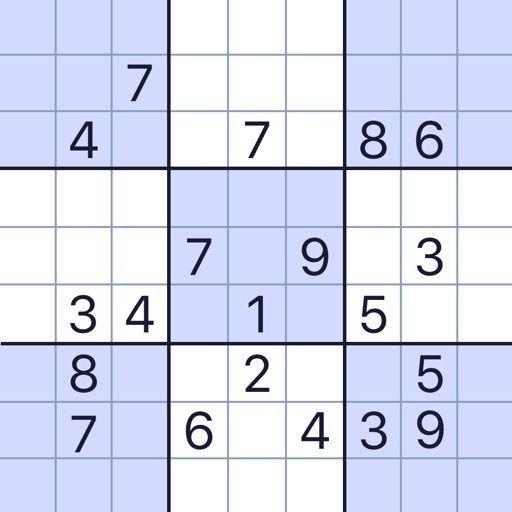
Sudoku Puzzle – Brain Games offers a more explicitly logical and numerical alternative. Its supplied skill tags are Logic & Reasoning and Math & Numeracy, and its description emphasizes Sudoku puzzles, including daily challenges. Choose it if you want rule-based number grids rather than spatial block arrangement.
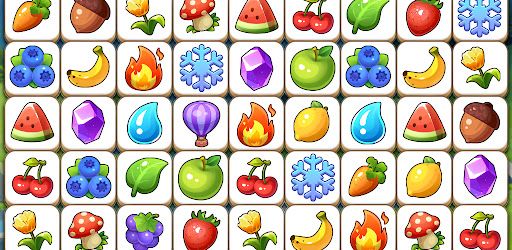
Tile Explorer – Triple Match is a free match-3 puzzle game listed for Google Play. Its supplied description emphasizes relaxation, joy and tile matching, making it a potentially gentler alternative for players who want a casual matching experience rather than a high-score-focused block board.
Within Mentometry, Color Sequence is a more targeted option for practicing sequence recall: watch colors light up, then repeat them in order. It is not the same kind of spatial placement challenge as Block Blast!, but it gives the session a clearer memory focus.
Color Binding takes a different route by asking players to remember which color was paired with which shape. It may suit someone who wants a compact association-memory challenge instead of an open-ended board puzzle.
How to use Block Blast! as a sensible brain workout
If you decide to play, a few habits can make the activity more intentional without turning it into homework.
- Set a modest session length. A defined session helps you keep the game enjoyable rather than treating endless play as automatically better.
- Focus on process, not only score. Notice whether you are planning ahead, preserving space and adapting to new situations.
- Vary your mental activities. Pair a spatial puzzle with reading, learning, physical activity, social interaction or other interests rather than relying on one game.
- Track personal patterns carefully. Scores can change with familiarity, mood, attention and the sequence of available pieces.
- Stop making health claims from game performance. A strong run means you played well under those rules; it does not diagnose or rule out a cognitive condition.
This broader approach matches the research better than the idea of a single magic exercise. A game can be one enjoyable form of active engagement while still having narrow, uncertain effects outside its own rules. The strongest case for Block Blast! is therefore practical and modest: it gives you a compact challenge that may recruit planning and visual organization while you are having fun.
Verdict
Block Blast! looks like a polished, accessible choice for players who enjoy arranging blocks, clearing an 8×8 board and pursuing a personal high score. Its daily puzzle and endless-score framing may give the experience a durable routine, and the described mechanics plausibly engage visual-spatial reasoning, attention and short-term planning.
For a brain-workout audience, though, the correct rating is not “proven cognitive enhancer.” It is an enjoyable puzzle with plausible mental demands and unproven broader effects. Play it as a game, use it as one small part of a varied routine, and let the real reward be the satisfaction of finding a better move.
Frequently Asked Questions
Is Block Blast! a good brain game?
It can be a good casual puzzle for practicing visual organization, planning and attention during play. There is not enough evidence to say that it produces broad improvements in cognition.
What skills does Block Blast! use?
Based on its described 8×8 block-board format, it plausibly uses visual-spatial reasoning, attention, planning and decision-making. The supplied game data does not provide official skill tags.
Can Block Blast! improve intelligence?
There is no evidence in the supplied data to support that claim. Research on cognitive training generally finds stronger evidence for improvement on practiced or closely related tasks than for broad intelligence gains.
Is Block Blast! free?
The supplied data lists Block Blast! as free. It is listed for the App Store and Google Play.
Does Block Blast! prevent dementia?
No such claim is supported. A puzzle game should not be treated as a proven way to prevent cognitive decline or dementia.
What games are similar to Block Blast!?
Dot Knot – Line & Color Puzzle, Sudoku Puzzle – Brain Games and Tile Explorer – Triple Match are listed alternatives with different puzzle formats. Mentometry also offers Color Sequence and Color Binding for more targeted memory challenges.
Sources
- Is Working Memory Training Effective? A Meta-Analytic Review / American Psychological Association, Developmental Psychology
- Effects of Video-Game Play on Information Processing: A Meta-Analytic Investigation / Psychonomic Bulletin & Review
- Video Games for Well-Being: A Systematic Review on the Application of Computer Games for Cognitive and Emotional Training in the Adult Population / Frontiers in Psychology
- The Effectiveness of Serious Games for Training of Attention and Executive Functions: A Systematic Review / peer-reviewed systematic review
- Risk Reduction of Cognitive Decline and Dementia: WHO Guidelines, Second Edition / World Health Organization
- Risk Reduction Guidelines for Cognitive Decline and Dementia, Cognitive Interventions / World Health Organization
Educational content only; not medical or financial advice.