Blockudoku®: Block Puzzle Game offers a neat puzzle premise: combine the familiar 9×9 layout of Sudoku with the spatial decisions of a block puzzle. That makes it an appealing candidate for a quick mental workout, especially if you enjoy arranging shapes, spotting openings and chasing a higher score. The important caveat is that enjoyable practice is not the same as a proven upgrade to general intelligence. Blockudoku looks best understood as a focused puzzle game that may exercise several useful skills while you play.
- Directory rating
- ★ 4.6 / 5 (1.3M votes)
- Price
- Free
- Platforms
- Google Play
- Developer
- Easybrain
- Released
- 2019
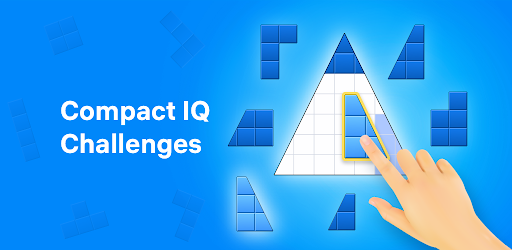
- Blockudoku combines Sudoku-style 9×9 grids with shaped blocks that are cleared by completing lines and cubes.
- Its strongest plausible demands are visual planning, rule-based reasoning, spatial organization and attention to board state.
- The game is free on Google Play and has a listed rating of 4.6/5 from 1,295,456 votes.
- Research on cognitive training generally finds the clearest gains on practiced or closely related tasks, not broad improvements in intelligence.
- Choose it for a compact, score-driven puzzle habit, not as a medical or guaranteed cognitive intervention.
What is Blockudoku?
Blockudoku®: Block Puzzle Game is listed as a puzzle game in the “Sudoku & Number Grids” category. It was released in 2019, is free to play and is listed for Google Play. The store listing gives it a 4.6/5 rating from 1,295,456 votes, which suggests a large audience has responded positively to the basic concept, although a store rating cannot tell you whether the game is a good fit for your preferred kind of brain workout.
The central idea is an “original combination” of Sudoku and block puzzles, according to the store description. The board is a 9×9 grid, and the listed objective is to place blocks so that lines and cubes can be completed and removed. The description also mentions blocks of various shapes, daily challenges with trophies and seasonal events.
Those details point to a game built around repeated decisions rather than a single fixed puzzle. Every placement affects the space available for later pieces. In that sense, each move can feel like spending a limited resource: clear too little and the board may become crowded; plan well and you create room for the next tactical play.
Research distinguishes between near transfer, which means improvement on a task similar to the one practiced, and far transfer, which means improvement on much broader or different abilities. Reviews of working-memory and video-game training have found that practice effects are usually more reliable on the trained task or closely related measures than on general cognitive ability. That is why Blockudoku is best framed as practice in a particular family of puzzle skills, not a shortcut to higher intelligence.
How it plays
A grid, shapes and clearing goals
The store description supports a straightforward loop. You work on a 9×9 board, place blocks of different shapes and aim to complete lines and cubes. Once completed, those formations are removed, helping keep the board clear and creating space for future placements.
This structure creates a constant tension between the move that looks best immediately and the move that preserves flexibility. A large shape may fit comfortably now but leave awkward gaps later. A smaller placement may seem less rewarding but open several useful areas. The game therefore appears to reward looking beyond the current block rather than treating each placement as an isolated action.
Score chasing and recurring challenges
The listing says that players can beat their high score, complete daily challenges and earn unique trophies. It also mentions seasonal events. These elements give the game a repeatable, goal-oriented shape, although the supplied description does not establish how the challenges are structured or how much variety they contain.
That uncertainty matters for a brain-workout review. A game can be mentally engaging without offering a broad training program. Blockudoku’s supported appeal is narrower and clearer: it gives you a rules-based board, changing block shapes and a reason to keep refining your decisions.

| Aspect | What the supplied information supports | Review judgment |
|---|---|---|
| Board | 9×9 block puzzle board | Familiar grid structure with room for spatial planning |
| Pieces | Blocks of various shapes | Likely to create changing placement problems |
| Objectives | Complete lines and cubes, keep the board clean and beat a high score | Encourages planning, prioritization and repeated optimization |
| Extra goals | Daily challenges, trophies and seasonal events are listed | May support regular engagement, but details are not verified here |
| Access | Free on Google Play | Easy to try if you use the listed platform |
Before placing a block, scan for three things: the spaces it fills, the lines or cubes it might help complete and the spaces it could make unusable. That simple pause turns a reflexive placement into a short planning exercise.
Which cognitive skills might it exercise?
Blockudoku is tagged with Logic & Reasoning and Math & Numeracy. The game description supports a cautious interpretation of those tags, but not a claim that it teaches formal mathematics. Most of the likely work comes from interpreting a grid, comparing possible placements and anticipating what will happen after a line or cube is completed.
Logic and reasoning
The game presents a constrained decision problem. You have a board, a piece and a set of possible locations. The reasoning challenge is to choose a placement that satisfies the immediate rules while preserving future options.
This is a practical form of rule-based reasoning. You are not proving a theorem, but you are testing possibilities: “If I put this shape here, what spaces remain?” and “Can this placement help me complete a line without creating a dead end?” Repeated play may make you more familiar with the game’s own patterns and tactics. That is a legitimate form of task practice, but it should not be confused with a general rise in reasoning ability.
Visuospatial planning
Although the official skill tags do not list visuospatial ability, the described mechanics plainly involve shapes and positions on a grid. You need to compare the geometry of a block with the available spaces and keep track of how the board changes after pieces are placed or formations are cleared.
That makes visual organization and spatial planning plausible demands of the game. Still, the supplied information does not tell us whether pieces can be rotated, how they are presented or how quickly decisions must be made. Those details would affect the exact cognitive profile, so this review stays with the broader claim: Blockudoku appears to require visual-spatial arrangement as part of its puzzle loop.
Attention and mental updating
A crowded board can contain several relevant possibilities at once. You may need to monitor open areas, incomplete lines, potential cubes and the shape currently available. That kind of play plausibly exercises selective attention and the ability to update your plan as the board changes.
Again, the most defensible expectation is specific. You may become better at noticing patterns and managing information within this style of grid puzzle. There is not enough evidence here to say that playing Blockudoku will improve attention across unrelated activities.
Math and numeracy
The store category and skill tags include Math & Numeracy, but the description does not mention arithmetic, equations or explicit number calculations. The numeracy connection therefore seems indirect. The 9×9 board and Sudoku association may involve counting, rows, columns and structured grid awareness, but that is different from practicing calculation or mathematical concepts.
If your goal is arithmetic fluency, Blockudoku should not be your only tool. If your goal is to work with organized visual information and rule-based layouts, the numeracy tag is more plausible as a secondary description.
Solving more Blockudoku boards can make you more practiced at Blockudoku-style decisions. It does not establish that your intelligence will increase, that your everyday reasoning will broadly improve or that the game can prevent cognitive decline. Those stronger claims require evidence from well-designed studies on this specific game and outcomes beyond the game itself.

Play Odd One Out free on Mentometry — no download, and your score joins the global leaderboard.
What does the research say about these skills?
The general research picture is mixed but useful. Cognitive tasks are not isolated from one another, yet training effects often depend on how similar the practice task is to the test. A widely cited meta-analysis of working-memory training found improvements on tasks close to the trained activities, while finding little evidence for reliable far transfer to intelligence and other distant outcomes.
Reviews of video-game research have also reported an uneven pattern. Some genres, particularly action games, have been associated with attention or spatial outcomes in certain studies, but those findings cannot simply be transferred to a block-and-grid puzzle. Different games make different demands, and evidence from one genre does not validate another.
More broadly, a comprehensive meta-analytic investigation of video-game training reported small or null overall effects on general cognitive ability and found no evidence for a causal relationship between playing video games and enhanced cognitive ability. That conclusion is especially relevant to the language of “brain workouts”: a game can be mentally demanding and enjoyable without acting as a general-purpose cognitive booster.
For Blockudoku, the most reasonable evidence-based position is modest. Playing may exercise skills that are close to the game’s mechanics, such as arranging shapes on a grid, recognizing recurring patterns and planning under its rules. Whether those skills transfer to unrelated reasoning, work performance or everyday decision-making is not established by the information supplied here.
For five sessions, pause before every placement and name your intended goal: clear a line, complete a cube, preserve an open area or prepare for a future piece. Notice whether deliberate planning changes your scores or simply changes how you think through each move.
Pros and cons
- Combines two familiar puzzle ideas in one 9×9 grid.
- Blocks of various shapes create a clear spatial-planning challenge.
- Completing lines and cubes gives each placement a concrete purpose.
- High-score play can support repeated problem solving and self-comparison.
- Daily challenges, trophies and seasonal events are listed as additional goals.
- Free to try on Google Play.
- Large store rating base: 4.6/5 from 1,295,456 votes.
- The game’s cognitive value should not be overstated beyond the specific puzzle skills it uses.
- The description does not establish improvements in intelligence, memory or everyday reasoning.
- Math and numeracy appear to be secondary rather than arithmetic-focused demands.
- The supplied information does not explain the full structure of daily challenges or seasonal events.
- Players seeking classic Sudoku may prefer a number-placement puzzle without block-puzzle mechanics.
- Players who dislike score chasing or repeated board optimization may find the loop narrow.
Who should play it?
Blockudoku is a good candidate for adults who enjoy compact, rules-based puzzles and want a repeatable way to spend a few minutes arranging shapes. It may suit players who like the logic of Sudoku but also want a more spatial, placement-focused board. The high-score objective gives the experience a light competitive edge without requiring the reviewer to assume any unlisted multiplayer feature.

It is also a reasonable choice if you want a free game that can serve as a deliberate attention break. You can approach each move as a small planning problem rather than playing on autopilot. That mindset is more valuable than the label “brain training,” because it keeps expectations tied to what the game actually asks you to do.
It is less suitable as a standalone choice for someone specifically seeking arithmetic practice, formal Sudoku solving or a scientifically validated cognitive intervention. It is also not an appropriate substitute for professional advice or treatment for memory, attention or other health concerns.
A simple way to use it as a puzzle habit
- Play for a defined period rather than assuming longer sessions are automatically better.
- Focus on the decision process: identify open space, possible clears and future risks.
- Track your own high scores if that makes the game more motivating, but do not treat score changes as a measure of general intelligence.
- Vary your mental activities by pairing grid puzzles with other forms of reading, learning or problem solving.
- Stop if the game becomes frustrating or compulsive rather than refreshing.
Use your score as a game statistic, not a health statistic. A higher score may reflect familiarity with Blockudoku’s patterns, a good run of pieces or a more careful session; it does not measure your overall cognitive ability.
ALSO READ Word Connect Review: Is It a Good Brain Workout?
Similar alternatives
If you want a more traditional number-grid experience, Sudoku Master® – Sudoku Puzzle is a close alternative in the same Puzzle Games and Sudoku & Number Grids category. Its supplied description presents it as a free Sudoku app intended for daily brain workouts, so it may appeal to players who prefer number placement over shaped blocks. It is listed for Google Play with a 4.8/5 rating from 227,773 votes.

Sudoku Game – Daily Puzzles is another free Google Play option. The description emphasizes Sudoku puzzles and daily play, including online or offline use, although this review does not infer anything beyond that supplied marketing text. Its listed rating is 4.8/5 from 250,925 votes.
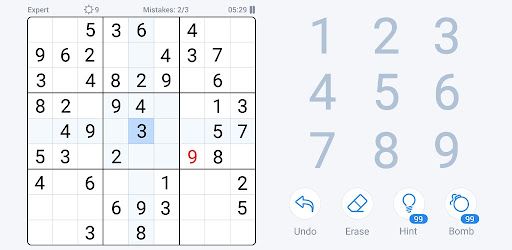
Sudoku – Classic Sudoku Puzzle takes the most direct classic-Sudoku position of the listed alternatives. Its description says it is intended for both newcomers and advanced players and mentions daily challenges and thousands of puzzles. It is listed as free on Google Play with a 4.7/5 rating from 605,914 votes.
If you want shorter visual or number-based exercises rather than another Sudoku app, Mentometry’s Odd One Out asks you to find the one different shape in a group. That makes it a compact visual-discrimination task and a useful change of pace from grid placement.
Odd or Even offers a different kind of quick challenge: a number flashes on screen and you tap whether it is odd or even. It is more directly connected to rapid number classification than Blockudoku, so it may be a better fit for someone who wants a simple numeracy-oriented mini-game.
Verdict
Blockudoku®: Block Puzzle Game is a credible choice for a casual brain workout if you define that phrase carefully. Its 9×9 board, varied block shapes and line-and-cube clearing rules plausibly engage visual planning, pattern recognition, attention and game-specific reasoning. The free price, large rating base and recurring goals make it easy to try.
The honest limitation is just as important: there is no basis here to claim that Blockudoku improves intelligence, prevents cognitive decline or produces broad mental benefits. Treat it as a focused puzzle habit and a small tactical boss fight for your attention. If you enjoy the loop, that is enough reason to play.
Frequently Asked Questions
Is Blockudoku good for a brain workout?
It can be a useful puzzle workout for visual planning, pattern recognition and game-specific reasoning. Research does not justify treating it as a general intelligence enhancer or medical intervention.
Is Blockudoku the same as Sudoku?
No. The game is described as a combination of Sudoku and block-puzzle ideas. It uses a 9×9 board, shaped blocks and clearing goals involving completed lines and cubes.
Does Blockudoku improve intelligence?
There is no evidence supplied here that it improves intelligence. Research on cognitive and video-game training generally finds stronger effects on practiced or closely related tasks than on broad cognitive ability.
Is Blockudoku free?
The supplied listing identifies Blockudoku as free on Google Play. Its store rating is listed as 4.6/5 from 1,295,456 votes.
What skills does Blockudoku use?
It plausibly uses logic, visual-spatial planning, attention and pattern recognition. Its Math & Numeracy tag is best interpreted cautiously because the description does not mention arithmetic practice.
What games are similar to Blockudoku?
The closest listed alternatives are Sudoku Master® – Sudoku Puzzle, Sudoku Game – Daily Puzzles and Sudoku – Classic Sudoku Puzzle. They are more directly focused on traditional Sudoku-style number grids.
Sources
- Working Memory Training Does Not Improve Performance on Measures of Intelligence or Other Measures of “Far Transfer”: Evidence From a Meta-Analytic Review / Psychological Bulletin
- Meta-analysis of Action Video Game Impact on Perceptual, Attentional, and Cognitive Skills / Psychological Bulletin
- Video Game Training Does Not Enhance Cognitive Ability: A Comprehensive Meta-Analytic Investigation / Psychological Bulletin
- Effects of Video-Game Play on Information Processing: A Meta-Analytic Investigation / Psychonomic Bulletin & Review
- National Academies Committee Sees Promising but Inconclusive Evidence on Interventions to Prevent Cognitive Decline, Dementia / National Institute on Aging
Educational content, not medical or financial advice.