Blue light has become the villain of bedtime. The story is simple: screens emit blue light, blue light suppresses melatonin, and poor sleep follows. The real picture is more useful than that tidy folklore. Evening light can influence the body clock, and screen use can interfere with sleep, but brightness, timing, content, duration and habit all matter. The strongest evidence supports reducing stimulating or bright screen exposure close to bedtime. The evidence for special glasses and “night mode” is more mixed.
- Evening light can suppress melatonin and shift the circadian clock later, especially when exposure is bright, close to the eyes and late at night.
- Screen use can affect sleep through more than light: stimulating content, emotional arousal, notifications and delayed bedtimes also matter.
- Blue-light-filtering glasses may help some people, but controlled-trial evidence is inconsistent and not strong enough to treat them as a guaranteed fix.
- A practical first move is to dim the room and screens, stop demanding activities before bed, and protect a consistent sleep schedule.
- Short cognitive games are one small habit-building option, not a substitute for sleep or a treatment for insomnia.
What “blue light” actually means
Blue light is short-wavelength visible light. It is not a special form of radiation produced only by phones, and it is not automatically harmful. Daylight contains abundant short-wavelength light, which helps the brain identify daytime and support alertness.
The bedtime issue is timing. Light entering the eyes in the evening can signal “day” to the circadian system at a time when the body is preparing for sleep. Specialized retinal cells are particularly responsive to short-wavelength light and send information to the brain’s central body-clock system. Evening light can reduce the normal rise of melatonin and move circadian timing later. These mechanisms are well established, although the effect from an individual screen varies with brightness, distance, duration and the surrounding room light. (pubmed.ncbi.nlm.nih.gov)
Melatonin is better understood as a timing signal than as a simple “sleep switch.” A later or weaker evening melatonin signal can make sleepiness arrive later, but it does not guarantee that a person will lose sleep every time they look at a screen.
This distinction matters because the phrase “blue light is bad” is too broad. Light is essential for healthy circadian timing during the day. The practical goal is not to eliminate blue light from life. It is to avoid unnecessary, bright and engaging light when the body is moving toward sleep.
What is well established about evening light?
Well-established finding: evening light can affect melatonin and circadian timing. Laboratory studies have repeatedly shown that light exposure in the evening can suppress melatonin and shift the timing of the biological clock. Short-wavelength light is especially effective at producing these effects, although brightness and total light exposure also matter. (pubmed.ncbi.nlm.nih.gov)
A frequently cited randomized crossover study compared reading a light-emitting electronic book with reading a printed book before bed. Participants using the electronic reader took longer to fall asleep, showed reduced evening melatonin, experienced a later circadian timing signal and were less alert the following morning. The study was carefully controlled, but it used a small group and a demanding four-hour reading protocol, so it demonstrates biological plausibility rather than predicting the exact response to every phone session. (pubmed.ncbi.nlm.nih.gov)
Also well supported: sleep is affected by the broader context of screen use. A device can keep someone awake because the content is exciting, upsetting or socially demanding. A game, video or conversation can encourage “one more level,” “one more episode” or “one more reply.” Notifications can interrupt sleep even when the screen is not being actively used.
The National Sleep Foundation’s 2024 consensus statement found agreement that screen use generally impairs sleep health in children and adolescents, that pre-sleep content can impair sleep in those age groups, and that behavioral strategies may reduce negative effects. The panel was more cautious about making broad claims for every type of screen exposure and every age group. (pubmed.ncbi.nlm.nih.gov)
What does late screen use do besides expose you to light?
It helps to think of late screen use as a bundle of exposures rather than a single chemical or color problem. The screen may provide light, but the activity also changes behavior and attention. Those pathways can overlap, and a study that observes poorer sleep after screen use cannot always identify which pathway was dominant.
| Possible pathway | How it can affect sleep | Strength of evidence |
|---|---|---|
| Evening light | May suppress melatonin and delay circadian timing. | Well established in laboratory research. |
| Stimulating content | Can increase alertness, emotion or mental activity close to bedtime. | Supported, but effects vary by content and person. |
| Delayed bedtime | Long sessions can reduce the time available for sleep. | Strongly plausible and consistently observed in screen-use research. |
| Notifications and interruptions | Can fragment sleep or encourage checking behavior. | Supported, with effects depending on settings and habits. |
| Blue-light glasses | May reduce some light exposure, but may not reliably improve objective sleep. | Preliminary to mixed. |
Observational studies often find that bedtime device use is associated with shorter sleep, poorer sleep quality or greater daytime sleepiness. Such studies are useful for identifying patterns, but they cannot prove that the screen alone caused the problem. People who sleep poorly may also be more likely to use devices in bed, and factors such as stress, work schedules and caffeine can influence both screen use and sleep. (pubmed.ncbi.nlm.nih.gov)
A screen is not a sleep toxin that affects everyone in the same way. “Screen time” covers a quiet audiobook, an emotionally intense argument, a bright tablet at maximum settings and a short message check. Treating all of those as identical produces weak advice.
How strong is the case against screens before bed?
The evidence is strongest when several risk factors appear together: bright light, close viewing distance, prolonged use, stimulating content and a habit of staying in bed with the device. The evidence is weaker when a person uses a dimmed screen briefly, keeps a stable bedtime and is not especially sensitive to evening stimulation.
That does not mean a brief message or a few minutes of reading will ruin sleep. It means that repeated, late and activating screen sessions are sensible targets for change. The goal is not perfect digital abstinence. It is to reduce the exposures most likely to keep your brain in “active mode” when you want it to enter “recovery mode.”
For adults with chronic insomnia, basic sleep hygiene alone is not considered a complete treatment. The American Academy of Sleep Medicine recommends against using sleep hygiene as a single-component therapy for chronic insomnia because it is less effective than more comprehensive behavioral approaches when used by itself. That is an important boundary: dimming your phone may be helpful, but persistent insomnia deserves a broader, evidence-based evaluation. (pmc.ncbi.nlm.nih.gov)
Do not begin with a dramatic rule such as “no screens after 7 p.m.” Start by identifying the session that most clearly delays sleep. That might be scrolling in bed, work email after lights-out or a competitive game that repeatedly extends bedtime.
Play Radar Tracker free on Mentometry — no download, and your score joins the global leaderboard.
Do night mode and warm settings solve the problem?
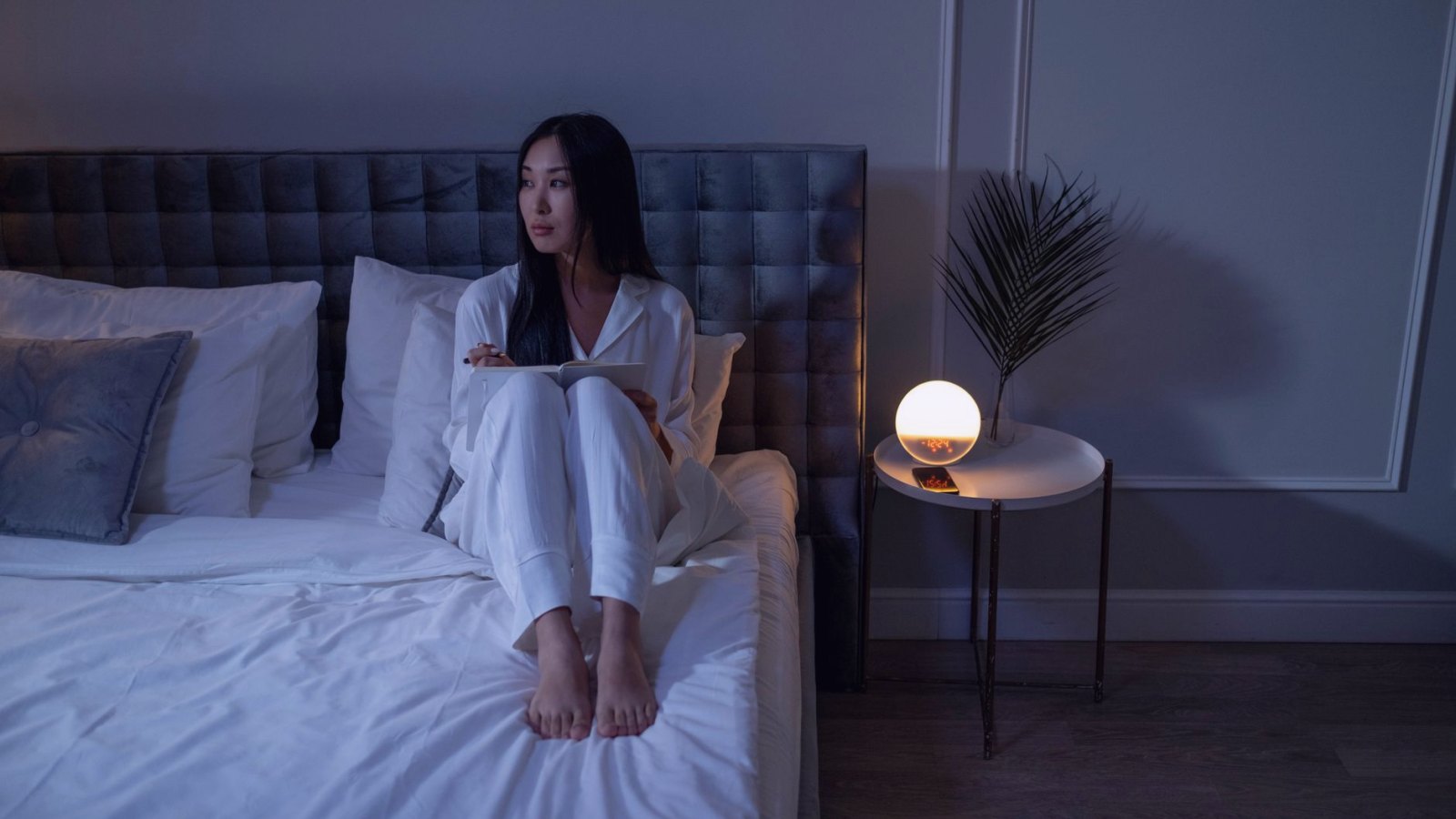
Night mode usually reduces short-wavelength output and may make a screen appear warmer. Lower brightness also reduces the total amount of light entering the eyes. Those changes are logically consistent with what we know about light and circadian timing, and they may be useful when avoiding a screen is impractical.
But night mode is not a permission slip for unlimited late-night stimulation. A warm, dim screen can still be bright enough to affect some people, and the content can still be exciting. It can also make it easier to continue using the device because the screen feels more comfortable.
The most reasonable interpretation is that night mode is a harm-reduction tool, not a guaranteed shield. If you need to use a device, reduce brightness, use a warmer setting and keep the activity brief. If the device is keeping you mentally engaged, changing the color will not remove that pathway.
What about blue-light-blocking glasses?
The research is mixed. A 2021 systematic review identified experimental studies of blue-blocking glasses across sleep and mood-related conditions and reported promising findings in some sleep-disorder and shift-work contexts. However, the studies varied widely in design, participants, lens properties and outcomes. A 2023 systematic review from Cochrane concluded that blue-light-filtering lenses may have little or no short-term effect on visual performance and that evidence about sleep remained uncertain. (pubmed.ncbi.nlm.nih.gov)
A newer systematic review of randomized crossover trials found no statistically significant improvements in objective measures such as sleep-onset latency, total sleep time, sleep efficiency or wake after sleep onset. It included only three small double-blind trials with 49 participants, so it does not prove that the glasses never help. It does show why confident claims that blue-light glasses reliably fix sleep are premature. (pubmed.ncbi.nlm.nih.gov)
The practical conclusion is modest. Glasses may be worth trying if a person prefers them and finds them comfortable, especially when late screen use cannot be avoided. They should not replace dimmer lighting, fewer interruptions, a consistent schedule or professional help for ongoing sleep problems.
- May reduce some short-wavelength light reaching the eyes.
- Can be useful when late screen exposure is difficult to avoid.
- Some people find the routine itself helpful.
- Controlled-trial results are inconsistent.
- Lens quality and filtering strength vary.
- They do not remove stimulating content or delayed bedtime.
- They are not a proven treatment for chronic insomnia.
A practical evening screen experiment
Rather than arguing with your habits in the abstract, run a small personal experiment. Keep the change simple enough to repeat for seven nights, and track bedtime, estimated time to fall asleep, awakenings and how alert you feel the next morning. This is not a clinical test, but it can reveal whether your own routine is contributing to the problem.
- Choose one screen-related behavior to change, such as phone use in bed.
- Set a wind-down point 30 to 60 minutes before your intended sleep time.
- Dim room lights and enable a warmer, lower-brightness screen setting if you still need a device.
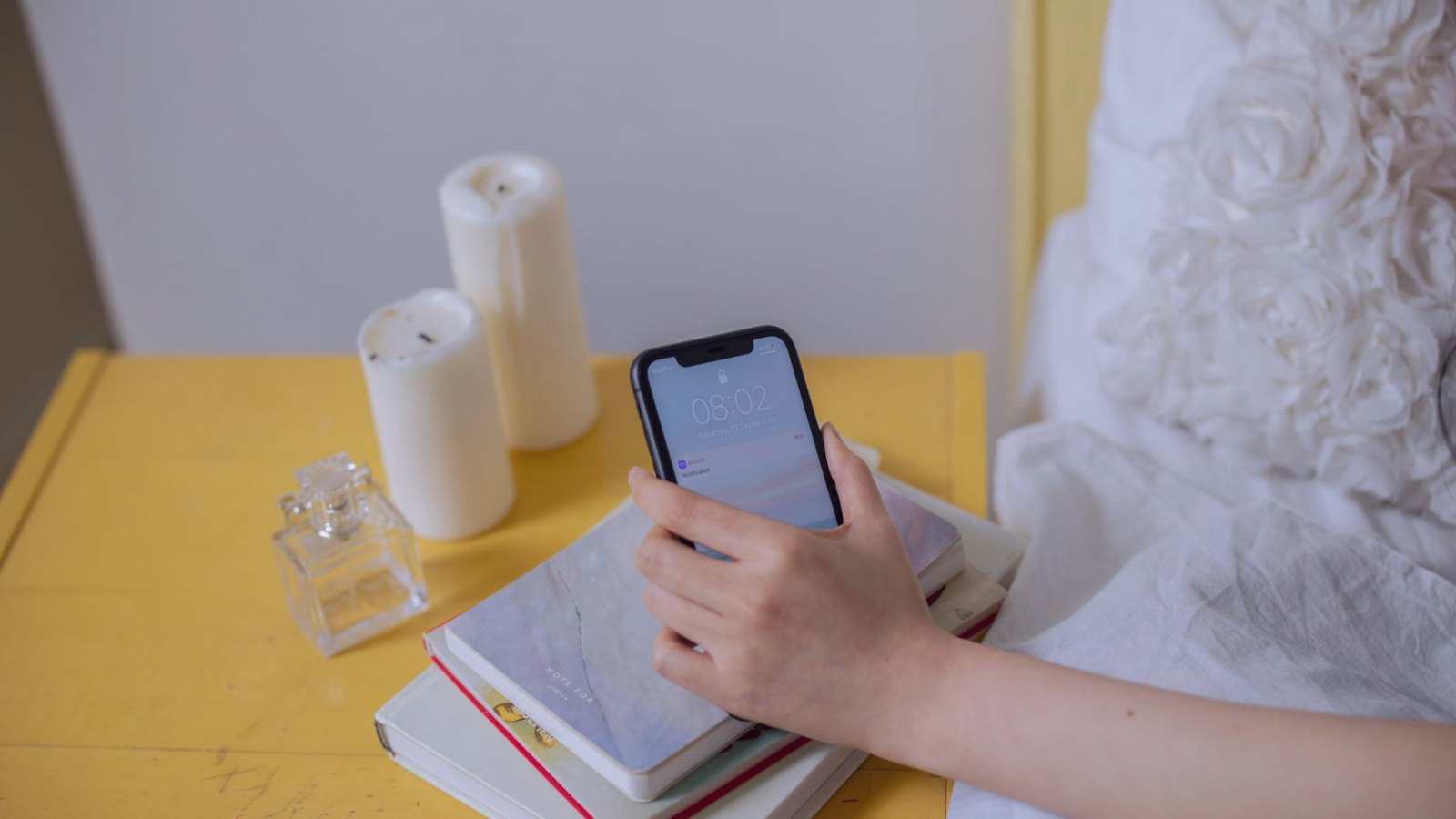
- Turn off non-essential notifications and place the phone out of reach.
- Replace high-arousal content with a quiet activity that can end easily.
- Keep your wake time as consistent as practical, including on non-work days.
- Review the pattern after one week rather than judging one unusually good or bad night.
These steps reflect a broader principle: regular timing and a calming transition into bed are usually more useful than obsessing over a single wavelength. The National Institutes of Health recommends avoiding screens before bed, keeping a regular sleep schedule and creating a dark, quiet sleep environment. Those are practical foundations, even though sleep hygiene by itself is not a complete treatment for chronic insomnia. (nia.nih.gov)
For the next seven evenings, charge your phone outside the bedroom and write down your bedtime, wake time and morning alertness in three words.
ALSO READ The Speed-Accuracy Trade-Off in Trading and Fast Decisions
Where do short cognitive games fit?
Short cognitive games can fit naturally into a daytime or early-evening routine if you enjoy them. They are one small habit-building option, not a sleep intervention and not a substitute for adequate sleep. If a game becomes a reason to stay up later, the sleep routine has won the boss fight by ending the session.
For a brief, clearly bounded activity earlier in the day, Color Clash asks you to respond to the ink color rather than the word. Its simple rule can make it easy to set a short stopping point. Use it as an optional routine, not as evidence that screen-based play improves intelligence or protects against sleep loss.
If you prefer a visual tracking task, Radar Tracker involves memorizing one briefly highlighted dot and following it as the dots scatter and move. Again, the sensible boundary is timing: keep it away from the part of the evening when you are trying to become sleepy, or use a low-brightness setting and a firm stopping time.
When late screens may not be the main problem
Sleep can remain poor even after screen habits improve. Stress, an irregular work schedule, caffeine, alcohol, pain, breathing problems during sleep and mood changes can all affect sleep. A person may also be using a screen because they are already awake, rather than being awake because of the screen.
If difficulty sleeping is persistent, causes significant daytime impairment or comes with loud snoring, gasping, unusual movements or severe mood symptoms, general screen advice is not enough. The key point is not to self-diagnose from a blue-light checklist. Sleep is a whole system, and the right response depends on the pattern.
The best-supported claim is not “blue light causes bad sleep.” It is narrower: evening light can alter circadian biology, and late screen use can combine light exposure with alerting content and delayed bedtimes. That is a strong reason to experiment with less late-night exposure, but not a reason to treat every screen as harmful.
Conclusion: aim for fewer obstacles, not perfect evenings
Blue light is real, but the folklore often turns a real mechanism into an exaggerated rule. Evening light can delay the body clock and reduce melatonin, while screen content and bedtime habits can add their own effects. The evidence for reducing bright, stimulating screen use near bedtime is stronger than the evidence for relying on blue-light glasses alone.
A useful plan is simple: protect a regular wake time, lower evening brightness, stop demanding activities before bed, silence interruptions and make the final part of the night easier to end. Treat short cognitive games as optional daytime habits, not as a way to cancel out lost sleep. Good sleep is not a single setting to unlock; it is a routine built from many small choices.
Player Two: Games to Try Next
Hand-picked from Mentometry and the Brain Games directory, matched to this article.
 Puzzle Games · Hidden Object & Spot the DifferenceFind It Out® – Hidden ObjectGuru Puzzle Game★ 4.9 (422.4K votes)View ratings & details ▶
 Puzzle Games · Board & Card GamesDouble Tile!HungryStudio★ 4.9 (414.1K votes)View ratings & details ▶
 Educational · Memory GamesmemoryOS: Improve Your MemoryEncoder Inc.★ 4.8 (13.2K votes)View ratings & details ▶
Frequently Asked Questions
Does blue light really affect sleep?
Yes, evening light can suppress melatonin and shift circadian timing later. The size of the effect depends on brightness, timing, duration, distance and individual sensitivity.
How long before bed should I stop using screens?
There is no single proven cutoff for everyone. A practical experiment is to reduce demanding or bright screen use during the 30 to 60 minutes before bed and adjust based on your sleep response.
Does night mode prevent sleep problems?
Night mode may reduce short-wavelength light and brightness, but it does not remove stimulating content or delayed bedtimes. It is best viewed as a helpful setting, not a guarantee.
Do blue-light-blocking glasses improve sleep?
Evidence is mixed. Some studies suggest possible benefits, but recent controlled-trial reviews have not established a reliable improvement in objective sleep measures.
Is reading on a phone before bed always bad?
No. The effect depends on the light, duration, content and your sensitivity. A brief, dim and calm activity may be less disruptive than prolonged, bright or emotionally stimulating use.
What should I do if I still cannot sleep after reducing screens?
Look at other factors such as schedule, caffeine, alcohol, stress and possible sleep symptoms. Persistent or disruptive sleep problems may require evaluation beyond general sleep-habit advice.
Sources
- “Evening Use of Light-Emitting eReaders Negatively Affects Sleep, Circadian Timing, and Next-Morning Alertness” / Proceedings of the National Academy of Sciences
- “Systematic Review of Light Exposure Impact on Human Circadian Rhythm” / Journal of Physiological Anthropology
- “Association Between Portable Screen-Based Media Device Access or Use and Sleep Outcomes” / JAMA Pediatrics
- “The Impact of Screen Use on Sleep Health Across the Lifespan” / National Sleep Foundation consensus statement, Sleep Health
- “Interventions to Reduce Short-Wavelength (‘Blue’) Light Exposure at Night and Their Effects on Sleep” / Sleep Medicine Reviews
- “Blue-Light Filtering Spectacle Lenses for Visual Performance, Sleep, and Macular Health in Adults” / Cochrane Database of Systematic Reviews
- “Efficacy of Blue-Light Blocking Glasses on Actigraphic Sleep Outcomes” / Journal of Sleep Research
- “Behavioral and Psychological Treatments for Chronic Insomnia Disorder in Adults” / American Academy of Sleep Medicine clinical practice guideline
- “Healthy Sleep” / National Institutes of Health
Educational content, not medical or financial advice.