#01
Attention
Color Clash
Color Clash trains selective attention — the same skill that helps you ignore distractions while focusing on a task.
28 brain games · one live world leaderboard
Measure your mind. Beat the world.
Fast mini-games that test memory, attention, speed, logic and spatial thinking — each one under a minute, every score ranked against players in every country.
Your brain makes thousands of decisions a day, most of them in a few hundred milliseconds. We turned those moments into games, scores and a world ranking, so you can finally see how sharp you really are.
28 games across five mental skills. No download, no signup to start.
Browse the games →Short, intense rounds that get harder as you go. Your best run is the one that counts.
Start playing →Every score lands on the world, country and per-game leaderboards, with server-verified sessions.
View the leaderboard →Tap a skill to highlight its games.
Color Clash trains selective attention — the same skill that helps you ignore distractions while focusing on a task.
Number Hunt sharpens visual search speed, the ability your brain uses to quickly spot what matters in a cluttered scene.
Grid Memory exercises spatial working memory, the mental sketchpad you use to remember where things are.
Reverse Direction trains cognitive flexibility — switching rules quickly is linked to better multitasking.
Ball Tracker builds sustained visual attention, the same skill drivers use to track moving objects safely.
Quick Count strengthens subitizing, the brain’s ability to judge small quantities instantly without counting one by one.
Pattern Match exercises abstract reasoning, a core part of what IQ tests actually measure.
Visual Balance trains spatial judgment, the same sense that helps you parallel park or arrange furniture.
Odd One Out builds categorical reasoning — quickly spotting what doesn’t belong sharpens decision-making under time pressure.
Color Sequence trains short-term memory span, the same capacity that helps you remember a phone number for a few seconds.
Shadow Match strengthens visual discrimination, the fine-grained pattern recognition used in reading and face recognition.
Time Stop trains interval timing, your brain’s internal clock used for everything from music to sports.
Quick Reaction measures simple reaction time, a benchmark researchers use to track overall brain processing speed.
Reverse Memory trains working memory manipulation — holding info in mind while reordering it, key for mental math.
Sound Sequence trains auditory working memory, a skill closely tied to following multi-step spoken instructions.
Radar Tracker builds divided attention, the ability to monitor several moving things at once.
Go / No-Go is a classic lab test of response inhibition — the brain’s brake pedal for impulsive actions.
Quick Math trains numerical fluency, which research links to better everyday financial decision-making.
Letter Sequence exercises verbal working memory, the same system you use when following a recipe from memory.
1-Back Memory is based on the N-back task, one of the most studied exercises for working memory capacity.
Flanker Arrows is a real cognitive-science test of selective attention amid distracting, conflicting information.
Symbol Pairs trains associative memory — linking two pieces of information, the basis of remembering names and faces.
Mental Rotation trains spatial reasoning, a skill strongly linked to success in engineering and geometry.
Path Memory builds spatial sequence memory, similar to recalling a route you’ve only walked once.
Odd or Even trains rapid rule-based decisions, exercising the same circuits used in fast arithmetic.
Spatial Memory strengthens your mental map-making ability, the skill behind navigating a new city without GPS.
Color Binding trains feature binding — the brain’s job of combining color, shape, and location into one memory.
Obstacle Jump trains fast visuomotor coordination, linking what you see to quick, accurate physical reactions.
Brain Games Directory
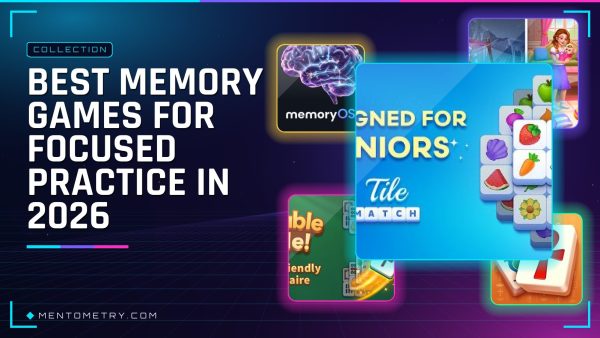
Our own games are only the beginning. The Brain Games directory is a growing catalogue of puzzle, memory, logic and strategy games. Browse it, discover something new and find your next favorite.
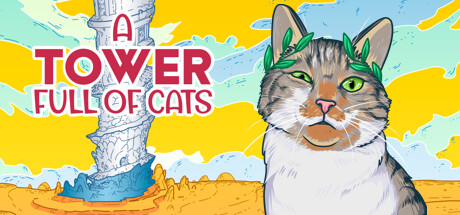
A Tower Full of Cats is a hidden object game where you need to gather cats through the whole history of catkind... and beyond!
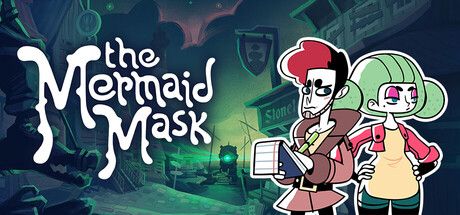
An impossible locked-room murder: Captain Mortuga lies dead beside an ancient cauldron aboard the world’s strangest submarine, crewed by sketchy suspects. A handcrafted point-and-click with sharp…
Project Kat is a short, unconventional RPG horror game in which there is always another way. Solve puzzles, make friends (or not), and guide Kat as she attempts to uncover the mystery behind a…
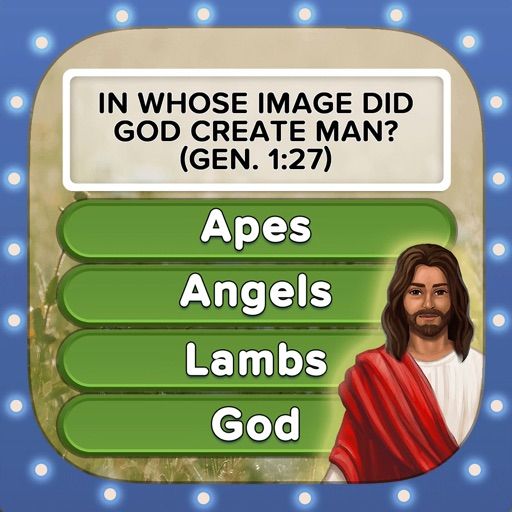
⁕ Explore Your Faith with Daily Bible Trivia, 100% FREE TO PLAY! ⁕ Dive into the ultimate Bible trivia experience with Daily Bible Trivia, the perfect game for believers and enthusiasts of the Holy…
With Word Search Explorer embark on a wondrous quest of adventure and wisdom, where the fun never stops! This FREE TO PLAY word game makes learning new words so easy and much more fun. Flex your…
The "Perpetual Testing Initiative" has been expanded to allow you to design co-op puzzles for you and your friends!
Every game feeds one of five skills, so your results add up to a profile instead of a single number. The chart shows an example profile.
Mentometry is made for short, focused sessions: a minute or two of absorbing play to step away from stress, then back to your day. It is not made for hours at a time, and we think that is the point.
In controlled studies, casual puzzle-style games have been linked to short-term improvements in mood and lower physiological stress. The effects are modest and differ from person to person.
Research reviews find clear gains on the tasks people train. Whether those gains carry over to everyday life is not established, so we show you your own progress in these games and do not promise real-world results.
Large studies of digital engagement suggest moderate use is not intrinsically harmful, while very heavy use shows weak links with lower well-being. That is why Mentometry is built for a few minutes at a time.
Please note: Mentometry is a game and an educational tool. It is not a medical, therapeutic or financial product, and it does not diagnose, treat or prevent any condition or promise better results at work or in trading. If stress feels overwhelming, please talk to a health professional.
Straight from the global leaderboard, as it stands right now.
Plain-language articles on what each game really measures.
Free to play · no download · works on phone and desktop
Pick a game below. Your scores are saved to the leaderboard automatically. Prefer a dedicated page? Open the full game page.