Memory games come in many disguises. One may ask you to remember a visual pattern, another may make you track tiles, while a third wraps recall inside a number or word puzzle. Mentometry’s Best Memory Games collection brings together the highest-rated titles that exercise memory, ranked by a Bayesian score combining store ratings with Mentometry player votes. This guide explains what to look for, then walks through the collection in order.
- The collection covers tile matching, mahjong solitaire, pattern recall, paper-folding puzzles and number challenges.
- A high rating is useful context, but it does not prove that a game improves memory outside the game.
- Choose games that make the memory demand clear, keep sessions manageable and let you notice your own progress.
- A sensible weekly routine mixes short sessions, varied formats and occasional rest rather than chasing endless repetition.
What makes a good memory game?
A memory game should make you remember something specific. That might be the location of a tile, the order of a sequence, the shape of a pattern or the information needed to complete a later move. The clearer that demand is, the easier it is to understand what you are practising.
Some games place memory at the centre. Others combine it with planning, visual reasoning, language or numeracy. That is not a flaw. Mixed puzzles can be engaging and demanding, but a difficult level does not automatically mean that memory is the main skill being tested.
Useful features to look for
- A visible memory challenge: You should be able to explain what must be remembered before you start.
- Manageable difficulty: The game should offer enough challenge to require attention without turning every round into a boss fight.
- Variety: Different layouts, rules or information types can prevent one narrow strategy from doing all the work.
- Feedback: Clear results help you notice whether you are becoming more accurate, faster or simply more familiar with the game.
- A comfortable format: A game you can return to willingly is more useful for building a regular practice habit than one you abandon after one session.
Performance usually improves when people practise a specific task. That improvement can reflect learning the task’s rules and strategies, so it should not be treated as proof of a broad increase in intelligence or memory in everyday life. Think of these games as structured practice and entertainment, not as a guaranteed upgrade to every kind of remembering.
How to read the collection’s ranking
The collection uses a Bayesian score that combines store ratings with Mentometry player votes. In plain English, the ranking is designed to consider both the available store feedback and the experience reported by Mentometry players, rather than relying on a single number alone.
The store figures still provide useful context. For example, a 4.9 rating based on hundreds of thousands of votes gives a different amount of background than a 4.9 rating based on a few hundred votes. Ratings also describe player opinion, not a laboratory measurement of memory benefit.
| What to compare | Why it matters |
|---|---|
| Memory demand | Shows whether the game mainly uses recall or mixes it with other skills. |
| Secondary skills | Planning, strategy, logic, visual reasoning, language and numeracy can change the character of a session. |
| Platform and price | Helps you decide whether the title fits your device and budget. |
| Rating and vote count | Provides a snapshot of player reception, with more context when the vote count is larger. |
| Personal fit | A suitable challenge and a format you enjoy make regular practice more realistic. |
Ratings are not clinical evidence. A popular game may be polished, relaxing or satisfying without producing benefits that transfer to unrelated memory tasks. Use the ranking to discover games, then judge the fit by the kind of challenge you actually want.
1. Tile Match puzzle – Tiletopia
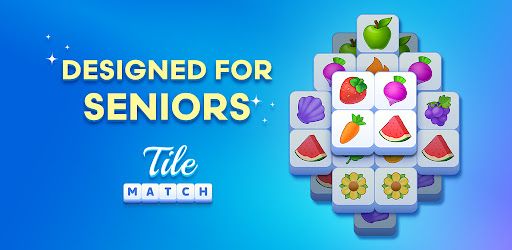
Tile Match puzzle – Tiletopia is a free Puzzle Games and Memory Games title from PlaySimple Games. It is listed for Google Play, carries a 4.9/5 rating from 267,407 votes and is dated 2023. Its listed skill is Memory, while the store description presents it as a triple tile-tapping challenge; because that description is marketing text, the safest takeaway is that this is a tile-focused puzzle with a memory label.
This looks like a straightforward starting point if you enjoy visual objects and repeated tile decisions. Pay attention to whether you are genuinely remembering earlier tiles or mainly relying on a familiar matching routine. That distinction can help you understand what the game is asking from you during each level.
2. Pyramid Mahjong:Match Tile
Pyramid Mahjong:Match Tile comes from UniRise Studio and is listed under Board & Card Games and Memory Games. It is free on the App Store, has a 4.9/5 rating from 74,888 votes and is dated 2025. Its listed skills are Memory and Planning & Strategy, and the store description frames it as a pyramid-themed mahjong solitaire experience.
The combination of recall and planning is the important point here. You are not only considering what you have seen; you also need to think about which choice keeps future options open. Treat each board as a small decision tree, and pause before a tempting move if it could hide or remove a useful path.
3. Double Tile!
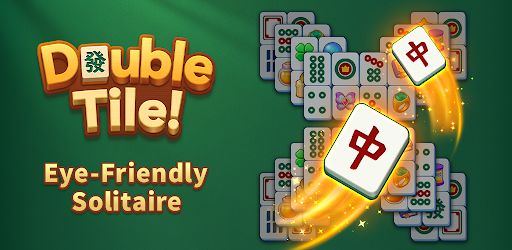
Double Tile! by HungryStudio is a free Puzzle Games and Board & Card Games title for Google Play. It has a 4.9/5 rating from 414,059 votes and is dated 2025. Mentometry lists Memory and Planning & Strategy as its skills, while the store description describes it as a mahjong solitaire and tile-match puzzle.
This is another option for players who like memory challenges with a strategic layer. Try to separate two questions: “What do I remember seeing?” and “What is the best move now?” Keeping those questions distinct can make the session feel less like random tapping and more like a deliberate puzzle.
Play Pattern Match free on Mentometry — no download, and your score joins the global leaderboard.
4. memoryOS: Memory Games
memoryOS: Memory Games is an Educational and Memory Games title from Encoder Inc. It is free on the App Store, has a 4.9/5 rating from 16,326 votes and is dated 2021. Its listed skill is Memory. The store description mentions interactive lessons and a virtual mind-palace game, but those promotional claims are not independently verified here, so focus on the supplied category and listed skill rather than assuming a particular research benefit.
The educational label may appeal to players who prefer a more structured presentation than a traditional tile board. Before starting, decide what you want from the session: a short recall challenge, a lesson-like experience or simply a change of pace. That small decision can stop the game from becoming an unfocused scroll through activities.

5. Story Match
Story Match by LinkDesks Daily Puzzle is listed as a Puzzle Games and Match-3 & Bubbles title for Google Play. It is free, dated 2024 and rated 4.9/5 from 177,510 votes. Mentometry lists Memory as its skill, while the store description presents a match-3 format with a story setting.
This is a useful reminder that a memory game does not need to look like a classic recall test. In a match-3 environment, notice whether you are remembering board positions, possible combinations or a sequence of useful moves. If the session becomes mostly about quick visual scanning, that is still a valid puzzle experience, but the memory component may feel less direct.

6. Vita Mahjong
Vita Mahjong from Vita Studio. is a free Board & Card Games and Memory Games title available on the App Store and Google Play. It is dated 2023 and has a 4.9/5 rating from 7,997,288 votes, the largest listed vote count in this collection. Its listed skills are Memory and Planning & Strategy, and its store description presents it as a mahjong solitaire game with large tiles.
The broad platform availability makes this a convenient choice if you move between Apple and Android devices. Its large listed vote count gives the rating substantial player-feedback context, but popularity still does not tell you whether the difficulty, pace or visual presentation suits you. Play a few short sessions and watch for the balance between remembering tile locations and planning which tiles to clear first.
- Available on both the App Store and Google Play.
- Combines Memory with Planning & Strategy.
- Has the largest listed vote count in this collection.
- The main challenge may involve planning as much as recall.
- A high player rating cannot predict your personal fit.
 Board & Card Games · Memory GamesVita MahjongVita Studio.★ 4.9 (8M votes)View ratings & details ▶
7. Unfoldit – Paper Puzzle Game
Unfoldit – Paper Puzzle Game by Erudite Apps LLC is a free Puzzle Games and Logic Puzzles title for the App Store. It is dated 2019 and rated 4.9/5 from 599 votes. Its listed skills are Memory, Logic & Reasoning, and Spatial & Visual, so it has a broader cognitive profile than the tile-focused entries above.
Expect the memory element to share the spotlight with visualisation and logic. A good way to approach this type of puzzle is to form a mental picture before acting, then compare that prediction with the result. That makes each move a small test of your internal model rather than a guess-and-check sprint.
ALSO READ Homescapes vs Match Masters: Which Puzzle Game Fits You?
8. Math Crossword — Number Puzzle
Math Crossword — Number Puzzle from Tripledot Studios is a free Puzzle Games and Word Games title for the App Store. It is dated 2024 and rated 4.8/5 from 123,417 votes. Mentometry lists Math & Numeracy, Memory, and Language & Vocabulary as its skills, while the store description describes a crossword-style combination of word-puzzle and maths challenges.
This is the collection’s clearest example of memory working alongside several other skills. You may need to retain clues, numbers or partial answers while using the grid to test possibilities. Choose it when you want a more varied mental workout, not when you are looking for a pure matching-pairs format.
Build a sensible weekly routine
A useful routine should be regular enough to create a habit but flexible enough to remain enjoyable. There is no need to turn every session into a high-score chase. Short, attentive play gives you a better chance to notice how the challenge feels than a long session played while distracted.
A simple seven-day template
- Choose two or three formats. For example, pair a tile or mahjong game with a broader puzzle such as Unfoldit – Paper Puzzle Game or Math Crossword — Number Puzzle.
- Set a modest session length. Pick a limit that leaves you feeling engaged rather than worn out. The exact duration can depend on your schedule and attention.
- Use one clear goal. Aim for careful recall, fewer impulsive moves or better planning instead of trying to improve every measure at once.
- Alternate familiar and unfamiliar games. Familiar games let you observe consistency; new formats reduce the chance that you are simply repeating one learned routine.
- Record a small note. After playing, write down the game, your focus and how the session felt. You do not need a complicated spreadsheet.
- Keep at least one lighter day. A rest day or casual session can help keep the routine sustainable.
For a focused visual recall option outside the collection, try Pattern Match. Study the pattern shown, then tap the option that matches it exactly among the choices. Use it as a short, clearly defined practice block rather than adding it to an already overloaded session.
If your routine needs a change of emphasis, Flanker Arrows offers a compact attention challenge: focus on the center arrow only and tap the direction it points, ignoring the arrows around it. It is not a replacement for a memory game, but it can provide a useful contrast between remembering information and filtering distracting information.
Make your notes specific. “Hard” is less useful than “I remembered the layout but rushed the final choices” or “I planned well but forgot an earlier tile.” Specific observations help you choose the next game and goal.
How to keep progress honest
Use more than one sign of improvement. A higher score can reflect better memory, but it can also reflect familiarity with the interface or the game’s recurring patterns. Accuracy, decision quality, comfort with the difficulty and willingness to return are all useful personal signals.
Every few weeks, switch formats and see how your performance feels in a different game. If the skill seems to vanish whenever the rules change, that is valuable information: you may have become better at the original game rather than improving equally across all memory tasks. That is normal for practice and a good reason to keep your routine varied.
Over the next week, play three short sessions in three different formats. After each one, write one sentence identifying the information you had to remember and one decision that depended on it.
Choose the right game for your mood
When you want a direct tile-based challenge, start with Tile Match puzzle – Tiletopia, Pyramid Mahjong:Match Tile, Double Tile! or Vita Mahjong. Their listed skills and formats point toward visual tile decisions, with planning playing a larger role in the mahjong-style entries.
When you want a wider mix, consider Unfoldit – Paper Puzzle Game or Math Crossword — Number Puzzle. Story Match offers a match-3 route, while memoryOS: Memory Games is the collection’s educationally labelled option. These distinctions matter because the most suitable game is not always the one with the highest number; it is the one whose challenge matches your goal and attention on that day.
Across the collection, keep the central idea simple: remember deliberately, make decisions carefully and stop before the session becomes automatic. The best routine is not the one with the most levels completed. It is the one you can repeat while staying curious about what each game is actually asking you to do.
Final thoughts
Mentometry’s Best Memory Games collection offers a varied set of ways to practise recall within puzzles. Its Bayesian ranking combines store ratings with Mentometry player votes, giving you a useful starting point for discovery, while the game categories and listed skills help you compare formats more carefully.
Use the collection as a menu, not a promise. Pick games that make the memory demand understandable, rotate between formats and track your own experience without turning every result into a verdict about your mind. A thoughtful weekly routine can make these games more rewarding, one level at a time.
Frequently Asked Questions
What are the best memory games in 2026?
Mentometry’s Best Memory Games collection includes eight highly rated titles, ranging from tile matching and mahjong solitaire to paper-folding and maths puzzles. The best choice depends on whether you want direct memory practice or memory combined with planning, logic or numeracy.
Do memory games improve memory in everyday life?
Practising a game can improve familiarity and performance with that game. It should not be treated as proof of a broad improvement in everyday memory, intelligence or protection from a medical condition.
Are tile-matching games memory games?
They can involve memory, especially when you must remember tile locations, available combinations or earlier board information. They may also rely heavily on visual scanning, matching and planning.
How often should I play memory games?
A practical approach is to use short, regular sessions several times a week. Rotate formats, set one clear goal per session and include lighter days so the routine remains sustainable.
Which memory game is available on both major mobile platforms?
Vita Mahjong is listed for both the App Store and Google Play. The other games in this collection are listed for one of those platforms in the supplied data.
How should I measure progress in memory games?
Track more than your score. Note accuracy, planning, concentration, how familiar the game feels and whether you can handle a different format without relying on the same learned routine.
This is educational content, not medical or financial advice.