The best word games make language feel like a playground: clues become keys, letter groups turn into pathways, and a difficult answer can feel like a small boss fight. Mentometry’s Best Word Games collection brings together crosswords, word searches, vocabulary builders and story-driven language puzzles for players who enjoy thinking with words.
- Look for the kind of language challenge you actually enjoy: searching, recalling, deducing, spelling or interpreting.
- Difficulty, feedback, pacing and platform matter as much as a game’s rating.
- Word games can provide focused practice with language-related tasks, but they are not proven shortcuts to higher intelligence or protection from disease.
- The collection includes free App Store games alongside free and paid Steam titles.
- A sensible weekly routine alternates familiar formats with occasional new challenges and stops before concentration turns into frustration.
What makes a good word game?
“Word game” covers a surprisingly wide range of experiences. A word search asks you to locate patterns among distractions. A crossword asks you to retrieve answers from clues and fit them into a structure. A language adventure may ask you to infer meaning from context, while a vocabulary builder may focus more directly on unfamiliar words.
Before choosing a game, identify the mental work you want to do. Are you looking for a calm pattern hunt, a competitive puzzle, a story with language at its center or a short daily session? There is no single best format for everyone. The right choice is the one whose challenge keeps you attentive without making every session feel like homework.
| What to compare | Why it matters |
|---|---|
| Core task | Searching, clue solving, word formation and language decoding create different kinds of challenge. |
| Difficulty curve | A gradual increase can keep a game engaging; abrupt jumps may make it feel unfair. |
| Pace | Untimed puzzles suit reflection, while faster formats add pressure and urgency. |
| Feedback | Clear information helps you understand errors instead of guessing blindly. |
| Variety | Changing themes or puzzle structures can prevent a familiar task from becoming automatic. |
| Access and cost | Check whether the game is on your preferred platform and whether its listed price suits your plans. |
Word games naturally exercise skills used during the game, such as vocabulary retrieval, spelling, reading comprehension, attention and reasoning from clues. That does not mean success in one game automatically transfers to every intellectual task. Treat the games as engaging practice and recreation, not as a guaranteed route to higher IQ or a medical benefit.
How to choose your challenge
A useful way to sort this collection is by the kind of friction you enjoy. If you like scanning and spotting, begin with a search-based title. If you prefer uncertainty and deduction, a crossword or word-building game may be a better match. If you want language to be part of a larger mystery, the adventure games offer a different kind of payoff.
Also consider how much support you want. Some players enjoy a generous flow of clues and a relaxing rhythm. Others want ambiguity, competition or a puzzle that refuses to explain itself immediately. Ratings can help you see how widely a game has been received, but they do not tell you whether its pace, style or challenge will suit your taste.
- Several formats let you switch between searching, clue solving and language interpretation.
- The collection includes both free options and one listed paid game.
- App Store and Steam choices cover different play preferences.
- Language and vocabulary are explicit listed skills for every title.
- The supplied information does not fully describe each game’s complete progression or difficulty system.
- Most titles are listed on only one platform.
- A high user rating is not a guarantee that a game will match your preferred pace.
- Some store descriptions use promotional language that should be read cautiously.
Choose by session mood, not only by rating. Keep one gentle search game, one clue-heavy game and one deeper adventure available so your weekly routine has more than one gear.
Word searches and quick pattern hunts
Word Search Explorer®
Word Search Explorer® is a straightforward entry point for players who enjoy finding words inside a visual field. It is listed as a Puzzle Game and Word Game, with Language & Vocabulary as its skill category. The App Store listing shows it as free, released in 2023, with a listed rating of 5.0/5 from 847,979 votes.
The store description presents it as a free-to-play adventure focused on discovering words, but that wording is marketing rather than independently verified evidence about learning outcomes. Choose it if you want a familiar search format and an accessible way to spend a short session with language. Skip it if you need elaborate clue logic or a story whose language system is the main attraction.
Word Search Solitaire
Word Search Solitaire combines the Word Games and Board & Card Games categories, with Language & Vocabulary and Planning & Strategy listed as its skills. It is a free App Store title from 2025, and its listed rating is 4.9/5 from 10,464 votes. The store description frames it as a word-search experience intended for both relaxation and challenge.
That combination makes it a sensible pick for players who want a search format but also like to think about choices and pacing. The supplied information does not establish exactly how its planning layer works, so treat the strategy label as a useful guide rather than a detailed preview. Its newer release year may appeal to players looking for a more recent option in this format.
Serene Word Puzzle
Serene Word Puzzle is listed as a free 2025 App Store Puzzle Game and Word Game, with Language & Vocabulary as its skill category. It has a listed rating of 4.9/5 from 18,202 votes. The store description emphasizes a balance between challenge and relaxation, although claims about the experience should be read as promotional copy.
This looks like a good candidate for a lower-pressure word session, especially when you want a puzzle rather than a competitive match. The title suggests calm, but the available data does not specify its exact puzzle rules, timing or difficulty curve. Use a first session to check whether the atmosphere really matches your preferred level of focus.
Crosswords, clues and word formation
Word Free Time
Word Free Time is a free App Store title from 2020, listed under Puzzle Games and Word Games with Language & Vocabulary as its skill category. Its listed rating is 4.9/5 from 22,720 votes. The store description mentions themed word puzzles and crossword-like play, while also presenting the game as relaxing.
It may suit players who like a familiar vocabulary setting with themes to guide their progress. Because the detailed mechanics are not supplied, it is better to think of this as a themed word-puzzle option rather than assume a specific crossword rule set. The older release year is not a quality verdict; it simply gives you context when comparing it with newer entries.
Crossword Go!
Crossword Go! is a free 2024 App Store Puzzle Game and Word Game with Language & Vocabulary as its listed skill. It has a listed rating of 4.9/5 from 81,393 votes. The store description advertises real-time crossword duels and competition, but because that description is marketing text, the exact competitive structure should be confirmed in the game itself.
This is the clearest choice in the collection for players who want crossword solving with a competitive edge. Time pressure can make familiar clues feel very different from a quiet solo puzzle. If you prefer to think slowly, make notes and revisit an answer, a less hurried title may be more comfortable.
Word Master
Word Master is listed as a free 2025 App Store Puzzle Game and Word Game focused on Language & Vocabulary. Its listed rating is 4.9/5 from 19,203 votes. The store description presents it as a word-swipe puzzle in which players form words and uncover timeless art, while also mentioning strategy.
The swipe-and-form framing makes it a natural fit for players who enjoy assembling words from available letters. The art element may add a sense of progression, but the supplied information does not describe how it works or how much strategic choice it creates. Try it when you want a compact word-building challenge rather than a clue-led crossword.
For one week, rotate three formats: complete one search puzzle, one clue-based puzzle and one word-formation session. After each, write down which type held your attention longest.
Play Radar Tracker free on Mentometry — no download, and your score joins the global leaderboard.

Story-driven language puzzles
Word Game: Episode 0
Word Game: Episode 0 takes a more unusual route. It is listed on Steam as a free Adventure & Point-and-Click and Strategy game, with Language & Vocabulary and Planning & Strategy as its skills. Released in 2021, it has a listed rating of 4.9/5 from 4,552 votes.
The store description says the player controls “I” and finds clues between lines, deletes words to change sentence meanings or shifts words to rewrite facts. That gives the game a stronger emphasis on language, interpretation and consequences than a conventional search grid. Choose it if you enjoy experimenting with wording and reading closely; it may be less suitable if you want a quick, low-commitment puzzle.
Chants of Sennaar
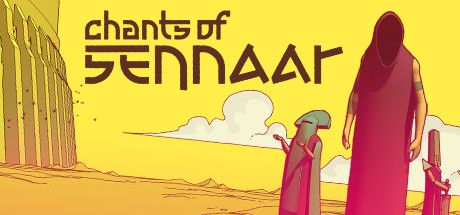
Chants of Sennaar is a paid Steam title listed at $9.99. It is categorized as Adventure & Point-and-Click and Word Games, with Language & Vocabulary as its skill. Released in 2023, it has a listed rating of 4.9/5 from 35,098 votes.
The store description presents it as a puzzle adventure in which the Traveler observes, listens and deciphers ancient languages while trying to reunite the peoples of a tower. That makes it the collection’s strongest fit for players who want language to be part of world-building rather than a series of isolated rounds. Its listed price also makes it a different proposition from the free App Store entries, so consider whether you want a fuller adventure commitment.
Building a sensible weekly routine
A good routine should be repeatable, varied and easy to stop. You do not need a long daily target to get value from a word game. A short, attentive session is more useful than playing while distracted, rushing through familiar moves or continuing after the experience has become purely frustrating.
Start with two or three sessions per week. Give each session a purpose: searching for patterns, solving clues, forming words or interpreting language in context. After a week or two, you can decide whether you want more frequency, longer sessions or simply a wider rotation.
- Pick a baseline format. Use a familiar title such as Word Search Explorer® or Word Free Time so you can settle into the routine without learning a completely new system every time.
- Add one stretch format. Try Word Game: Episode 0 or Chants of Sennaar when you want more interpretation, planning or story context.
- Rotate the task. Avoid making every session a search puzzle. Alternate scanning, clue solving, word formation and language decoding.
- Track experience, not just results. Note the puzzle type, approximate session length and whether the challenge felt too easy, balanced or overwhelming.
- Review once a week. Keep the games that hold your attention and replace those that feel repetitive or mismatched. A routine should serve your curiosity, not become another obligation.
For a simple seven-day pattern, play a familiar search or themed puzzle early in the week, a crossword or word-building game in the middle, and a story-driven title at the weekend. Leave at least one day unstructured. That gap makes it easier to notice whether you genuinely want to play rather than following a rigid schedule.
Scores, streaks and ratings are useful ways to organize play, not proof of improved intelligence. A word game can be enjoyable and demanding without needing to promise benefits beyond the task on screen.
ALSO READ Word Connect Review: Is It a Good Brain Workout?
Pairing word play with other mental tasks
Word games concentrate on language and related puzzle skills. If you want a broader Mentometry session, pair them occasionally with a non-language task rather than playing several similar word puzzles back to back. That gives your routine more variety without claiming that the combination produces a particular cognitive outcome.
Radar Tracker uses visual tracking and memory: one dot flashes gold briefly, then the dots scatter and move before you tap the target after they stop. It is a useful change of pace after a text-heavy puzzle because the screen asks you to monitor location rather than decode words.
Color Binding asks you to remember which color was paired with which shape and then select the correct combination. It offers another non-verbal task to place alongside a word game when you want to vary the kind of information you are handling.
Use a “two gears” session: begin with five to ten minutes of a comfortable word game, then switch to a different task only if you still feel alert. Stop when attention drops, not when a timer tells you that you must.
Final picks by player type
If you want the simplest entry point, start with Word Search Explorer®. Its listed format, free price and large number of votes make it an easy title to sample, though popularity alone should not decide your choice.
If you want a search game with a planning angle, consider Word Search Solitaire. For a calmer-looking option, try Serene Word Puzzle, while remembering that the available information does not confirm how gentle or demanding its actual puzzles feel.
For crossword fans, Word Free Time offers a themed word-puzzle direction, and Crossword Go! is the more obvious pick if the advertised competitive format appeals to you. Players who prefer forming words from letters can test Word Master.
For the most distinctive language experiences, choose Word Game: Episode 0 or Chants of Sennaar. Both move beyond a simple grid, but they ask for more patience with interpretation, context and exploration. In short, pick the game whose mental “boss fight” sounds inviting rather than intimidating.
Conclusion
The Best Word Games collection covers a broad spectrum, from quick searches and themed puzzles to competitive crosswords and language-centered adventures. The smartest way to explore it is to match the format to your mood, compare the actual challenge with the store description and keep your routine varied.
Play for the pleasure of noticing patterns, retrieving words and making sense of clues. Keep the sessions sustainable, measure your enjoyment as well as your progress, and let curiosity—not exaggerated promises—guide your next level.
Frequently Asked Questions
What are the best word games in this collection?
The best choice depends on your preferred format. Word Search Explorer® suits search puzzles, Crossword Go! suits competitive crossword play, and Chants of Sennaar suits players who want a story-driven language adventure.
Are these word games free?
Most of the listed games are free, including the App Store titles and Word Game: Episode 0. Chants of Sennaar is listed on Steam at $9.99.
Which game is best for vocabulary practice?
Every game in the collection is listed with Language & Vocabulary as a skill. Word searches, word formation, crosswords and language-decoding adventures provide different kinds of language-focused practice.
Are word games proven to increase IQ?
No. Word games can exercise skills used during play, such as vocabulary retrieval, spelling and clue interpretation, but they should not be treated as guaranteed IQ training.
How often should I play word games?
Start with two or three short, attentive sessions per week. Rotate formats and adjust the routine according to your enjoyment, focus and available time.
Which word game is best for a story?
Chants of Sennaar and Word Game: Episode 0 are the strongest story-oriented options in this collection. Both are listed as adventure or point-and-click experiences as well as word-related games.
Educational content, not medical or financial advice.