Word Connect is a free word puzzle game built around a familiar idea: swipe through letter blocks, form words, and use clues to solve puzzles. That makes it an easy candidate for a quick brain workout, especially if you enjoy vocabulary challenges. The more important question is what kind of workout it offers. Word Connect appears best understood as a focused language-and-vocabulary activity, not an all-purpose test of intelligence or a proven way to strengthen every area of thinking.
- Directory rating
- ★ 4.8 / 5 (1.3M votes)
- Price
- Free
- Platforms
- Google Play
- Developer
- ZenLife Games Ltd
- Released
- 2017
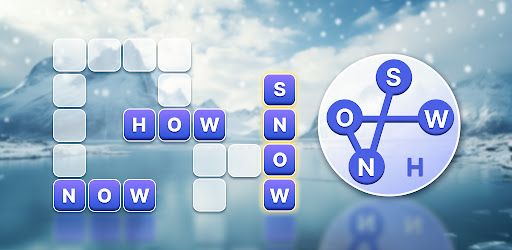
- Word Connect focuses on forming words from letter blocks and solving clue-based crossword puzzles.
- Its strongest plausible cognitive targets are vocabulary access, spelling-related knowledge, verbal retrieval, and flexible word generation.
- Research on cognitive training generally finds the clearest gains on tasks that closely resemble the activities practiced.
- There is not enough evidence to say that playing Word Connect improves general intelligence, memory, or everyday cognition.
- It is a sensible choice for people who want a free, language-focused puzzle on Google Play.
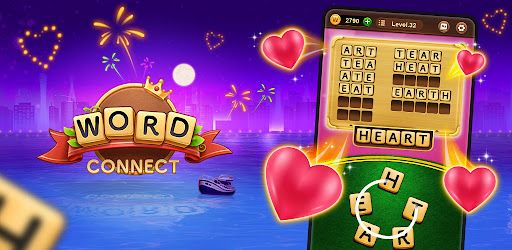 Puzzle Games · Word GamesWord ConnectZenLife Games Ltd★ 4.8 (1.3M votes)View ratings & details ▶
What Is Word Connect?
Word Connect is a puzzle game from ZenLife Games Ltd, released in 2017. It is listed under Puzzle Games and Word Games, with a Language & Vocabulary skill tag. The game is free and available on Google Play.
Its store listing describes a word-building format in which players swipe letter blocks to create words and collect coins. It also refers to clues and crossword puzzles, so the experience appears to combine anagram-like word formation with clue-based solving. Because the store description is marketing text and is cut off before all of its details are visible, it is best not to treat every advertised feature as independently verified.
Word Connect has a listed rating of 4.8 out of 5 from 1,272,191 votes. That is useful context about its popularity and player reception on the listed platform, but ratings do not tell us whether a game produces measurable cognitive benefits. They also cannot show how challenging the game will feel to a particular player.
How It Plays
The central action is straightforward: swipe across the available letters and build words. The description says that successful word formation helps players collect coins, giving the activity a simple reward loop. In practical terms, each puzzle asks you to search your mental vocabulary while testing which letter combinations can produce acceptable words.
The clue-based element adds another layer. Instead of only spotting possible combinations, you may need to interpret a clue and retrieve a word that fits it. That puts more emphasis on meaning and verbal recall than a purely visual letter hunt would. Still, the supplied description does not provide enough information to judge the exact difficulty curve, scoring system, interface quality, advertising experience, or how the puzzles are organized.
The listing mentions authoritative dictionaries and says the game is powered by Oxford Dictionaries. That is a claim made in the store description, not an independently verified feature in the information available for this review. It may reassure some players, but it should not be treated as proof that every accepted or rejected word will match their preferred dictionary.

The store copy also advertises more than 20,000 levels and refers to different modes, including normal and crossword options. Since these details come from promotional text and the description is truncated, they are better treated as advertised content rather than confirmed review findings. The dependable core is narrower: swipe letters, build words, follow clues, and solve word puzzles.
| Review area | What the supplied information supports | What remains unknown |
|---|---|---|
| Core action | Swiping letter blocks to build words | Exact controls and interface details |
| Puzzle style | Word formation and clue-based crossword puzzles | Full range of puzzle formats |
| Rewards | Coins are mentioned in the description | How coins are earned or used |
| Content size | The listing advertises more than 20,000 levels | Whether that figure is current or independently verified |
| Access | Free on Google Play | Any optional purchases or advertising arrangements |
Approach a word puzzle in two passes. First, quickly form the obvious short words. Then return to the remaining letters and clues with a wider search. This keeps the early turns efficient without locking you into the first pattern you notice.
Which Cognitive Skills Could It Exercise?
Word Connect is tagged for Language & Vocabulary, and that is the most defensible place to start. The game’s described actions plausibly recruit several related abilities, although the exact mental demands will vary with the puzzle and the player.
Vocabulary access
When you search for a word that matches a set of letters or a clue, you are drawing on stored knowledge of words. This may involve recognizing familiar words, retrieving them quickly, and checking whether they fit the available pattern. A player who regularly encounters unfamiliar words may also notice gaps in their vocabulary, although encountering a word in a puzzle is not the same as learning its meaning deeply.
Verbal retrieval and fluency
Word formation requires you to generate possibilities rather than passively recognize a single answer. You may try different starting letters, endings, or combinations while keeping the available letters in mind. That resembles a constrained form of verbal fluency: producing language-related responses under rules.
Spelling and orthographic knowledge
Building a word from letter blocks naturally engages knowledge of how words are spelled. The game may encourage attention to letter order, common prefixes, suffixes, and familiar word shapes. These are language-specific skills, so any practice is most likely to be relevant to similar word tasks rather than to unrelated forms of reasoning.
Semantic retrieval
Clues add a meaning-based component. To solve one, you need to connect a clue with a candidate word and then check whether the letters support that answer. That combination of meaning and spelling can make clue-based puzzles feel richer than simply spotting letter strings.
Flexible search and persistence
There is also a modest problem-solving demand. When the first answer does not appear, you have to shift strategy, test alternatives, and tolerate a little uncertainty. That may feel like a small boss fight for attention, but it should not be confused with broad executive-function training. The supplied information does not establish that Word Connect systematically trains attention, inhibition, planning, or working memory.
Research on cognitive training commonly distinguishes between near transfer, meaning improvement on a task similar to the one practiced, and far transfer, meaning improvement on broader abilities or everyday performance. Reviews generally find stronger and more reliable evidence for task-specific or closely related gains than for broad cognitive improvement. (pmc.ncbi.nlm.nih.gov)
What Does the Research Say?
The research background supports a cautious verdict. Language activities can be engaging and mentally active, but a game’s resemblance to vocabulary practice does not automatically demonstrate that it changes vocabulary ability outside the game. To establish that, researchers would need controlled studies comparing Word Connect with an appropriate control activity and measuring outcomes before and after play.
Broader reviews of computerized cognitive training have found that people can improve on tasks resembling the activities they practice. However, results are much less consistent when researchers test untrained abilities such as general reasoning, broad verbal ability, everyday functioning, or other distant outcomes. One meta-analysis of working-memory training found near-transfer effects but no convincing evidence of improvement in several far-transfer measures, including general verbal ability and nonverbal ability. (pmc.ncbi.nlm.nih.gov)

A separate systematic review and meta-analysis of commercially available brain-training programs concluded that such programs may be suitable for enjoyment, while finding insufficient evidence that they improve general cognition, memory, or everyday functioning. That review examined several commercial programs, not Word Connect specifically, so it cannot be used as a direct test of this game. It does, however, explain why broad “brain training” claims deserve skepticism. (pubmed.ncbi.nlm.nih.gov)
For Word Connect, the most reasonable interpretation is therefore modest. Repeatedly solving similar word puzzles may make you more practiced at the vocabulary search and letter-combination process involved in those puzzles. It is not established that the game improves intelligence, prevents cognitive decline, or produces wide-ranging benefits beyond the kinds of language tasks it resembles.
There is also an important distinction between practice and learning. If a game presents an unfamiliar word but does not require you to understand, use, and revisit it, the long-term vocabulary value may be limited. A player who pauses to check meanings, make example sentences, or return to new words later is doing a broader learning activity than simply completing the puzzle.
Word Connect can be a worthwhile mental pastime without being a scientifically validated brain-training program. Treat the game’s “train your brain” language as promotional wording, not as evidence that it raises intelligence or protects against decline.
Pros and Cons
- Free to access on Google Play.
- Clear language-and-vocabulary focus.
- Simple central action: swipe letters and build words.
- Clue-based puzzles may add meaning and retrieval demands.
- Very large player rating sample and a high listed rating.
- Suitable for short sessions or relaxed word practice.
- No evidence supplied that Word Connect improves general cognition.
- The store description is promotional and partly truncated.
- Exact features, modes, levels, and progression details cannot be independently confirmed from the supplied data.
- Word-puzzle practice may transfer mainly to similar word tasks.
- Players seeking visual, numerical, memory, or reaction-time challenges may find the focus narrow.
- A high store rating reflects player sentiment, not scientific effectiveness.
Who Should Play Word Connect?
Word Connect is a good fit for adults who already enjoy word games and want a low-friction way to spend a few minutes searching for words. It may also appeal to players who like the feeling of gradually clearing a puzzle through trial, recall, and pattern spotting. The free price lowers the barrier to trying it on Google Play.
It is particularly suitable if your personal goal is language-focused practice: retrieving familiar words, checking spelling patterns, and responding to clues. That is a narrower and more honest goal than expecting a complete cognitive workout. Think of it as training one stat in your mental game profile rather than leveling up every attribute at once.

It may be less satisfying for players who want evidence-based training for a specific non-language skill. The supplied information does not support claims about mathematical reasoning, visual memory, reaction speed, or broad executive control. It is also not the right tool to treat a health concern or to replace professional assessment.
How to get more from a session
- Play with a language goal, such as noticing unfamiliar words rather than rushing only for coins.
- When you meet a new word, check its meaning using a trusted dictionary outside the game.
- Use the word in a short sentence or connect it with a familiar word.
- Return to the word later instead of assuming one successful guess means it is firmly learned.
- Stop when the activity feels frustrating; a brain workout should remain a sustainable pastime, not a test of willpower.
During your next session, write down three unfamiliar words. After playing, define each one in your own words and use each in a sentence.
ALSO READ Impulse Control at the Trade Button: What Go/No-Go Tasks Teach About Discipline
Similar Alternatives
If you like Word Connect’s language focus, these alternatives occupy a similar corner of the puzzle map. Their listed ratings, descriptions, and release years differ, but all three are presented as free Google Play word games with a Language & Vocabulary skill tag.
Word Search Explorer is listed as a free word game from PlaySimple Games, released in 2021. Its description emphasizes a word-game adventure and making learning new words more fun. Based on the supplied information, it may suit players who want another vocabulary-centered option with an exploratory presentation.
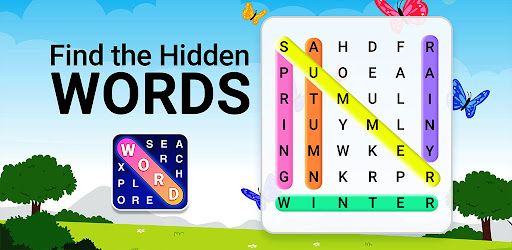
Words of Wonders: Crossword is a free Google Play word game from Fugo Games, released in 2018. Its description specifically mentions crossword gameplay and says it is designed around vocabulary and spelling. That makes it the closest alternative for players who want the clue-and-crossword side of Word Connect to be central.
Word Trip – Word Puzzle Game is a free Google Play word game from PlaySimple Games, released in 2017. Its description presents word puzzles as a journey and refers to vocabulary and brainpower in promotional language. As with Word Connect, those claims should be treated as marketing rather than proof of broad cognitive effects.
Final Verdict
Word Connect is a reasonable choice for a free, language-focused puzzle break. Its described combination of swiping letters, forming words, and solving clues plausibly exercises vocabulary access, spelling-related knowledge, and verbal search. Those are legitimate mental demands, even when the game is played purely for fun.
The limits matter just as much as the appeal. There is no supplied evidence that Word Connect itself has been tested in a controlled cognitive study, and general research does not justify claims that ordinary brain-training games improve intelligence or prevent decline. Play it because you enjoy word puzzles and want practice with similar language tasks—not because the store description promises a complete brain upgrade.
For that purpose, Word Connect earns a measured recommendation: a focused word workout with a large player base, a high listed rating, and a clear vocabulary identity, but not a proven all-purpose cognitive training program.
Frequently Asked Questions
Is Word Connect a good brain game?
It is a reasonable word-focused puzzle game for practicing similar language tasks, such as forming words and responding to clues. There is not enough evidence to call it a proven all-purpose brain-training program.
Does Word Connect improve vocabulary?
It may give you practice retrieving and spelling words, but the supplied information does not prove that it improves vocabulary outside the game. Checking unfamiliar words and using them in sentences may support deeper learning.
Does Word Connect improve intelligence?
There is no evidence here that Word Connect improves general intelligence. Research on cognitive training generally finds stronger effects on practiced or closely related tasks than on broad abilities.
Is Word Connect free?
The supplied game data lists Word Connect as free on Google Play. The available information does not specify whether the game includes optional purchases or advertising.
What skills does Word Connect train?
Its strongest plausible targets are vocabulary access, verbal retrieval, spelling-related knowledge, semantic retrieval, and flexible word search. It should not be assumed to train every cognitive skill equally.
What are good alternatives to Word Connect?
Similar listed alternatives include Word Search Explorer, Words of Wonders: Crossword, and Word Trip – Word Puzzle Game. All are free Google Play word games tagged for Language & Vocabulary.
Sources
- Working Memory Training Does Not Improve Performance on Measures of Intelligence or Other Measures of “Far Transfer”: Evidence From a Meta-Analytic Review / Perspectives on Psychological Science
- A Game a Day Keeps Cognitive Decline Away? A Systematic Review and Meta-Analysis of Commercially-Available Brain Training Programs in Healthy and Cognitively Impaired Older Adults / Neuropsychology Review
- Controlling for Placebo Effects in Computerized Cognitive Training Studies With Healthy Older Adults From 2016–2018: Systematic Review / Frontiers in Aging Neuroscience
- The Impact of Behavioral Interventions on Cognitive Function in Healthy Older Adults: A Systematic Review / Ageing Research Reviews
Educational content only; this is not medical or financial advice.


[…] ALSO READ Word Connect Review: Is It a Good Brain Workout? […]
[…] ALSO READ Word Connect Review: Is It a Good Brain Workout? […]