Two free Google Play puzzle games can both test logic and numeracy while offering very different kinds of challenge. Blockudoku®: Block Puzzle Game blends block placement with a Sudoku-style grid, while Sudoku Master® – Sudoku Puzzle stays closer to the classic number-grid format. Here is a fair comparison of their listed features, audience fit, ratings and likely cognitive demands.
- Choose Blockudoku®: Block Puzzle Game if you prefer visual planning, shape placement and clearing lines or squares.
- Choose Sudoku Master® – Sudoku Puzzle if you want a more traditional number-based Sudoku experience with multiple grid sizes.
- Both games are listed as free Google Play puzzle games with Logic & Reasoning and Math & Numeracy as their skills.
- Sudoku Master has the higher listed rating, 4.8/5, but Blockudoku has a much larger vote count. The ratings are therefore not directly comparable.
- Research suggests that Sudoku-style tasks engage reasoning, working memory and executive control, but playing a puzzle should not be treated as proof of broad intelligence gains.
Verdict: pick the puzzle style you will actually play
Best for block placement and visual board management: Blockudoku®: Block Puzzle Game. Its listed format combines a 9×9 Sudoku-style board with blocks of various shapes, asking you to decide where pieces should go before clearing lines and squares.
Best for classic number-grid solving: Sudoku Master® – Sudoku Puzzle. Its listed features include 6×6, 9×9 and 16×16 grids, giving players a more recognisably Sudoku-based progression from quick puzzles to larger challenges.
There is no universal winner because the games create different decision loops. Blockudoku puts more emphasis on fitting shapes into an evolving board. Sudoku Master puts more emphasis on placing numbers under grid rules. The best choice is the one whose core puzzle feels satisfying rather than repetitive.
The listed ratings come from different vote counts: 4.6/5 from 1,295,456 votes for Blockudoku and 4.8/5 from 227,773 votes for Sudoku Master. A rating based on nearly 1.3 million votes and one based on about 228,000 votes should not be treated as a like-for-like popularity contest.
Blockudoku®: Block Puzzle Game
Blockudoku®: Block Puzzle Game is listed as a free Google Play title by Easybrain, released in 2019. Its listed type is Puzzle Games, Sudoku & Number Grids, and its listed skills are Logic & Reasoning and Math & Numeracy.
The game’s store description presents it as a combination of Sudoku and block-puzzle play. The central idea is to place blocks on a 9×9 grid, complete lines and squares, and keep the board clear. Because blocks come in different shapes, each turn can become a small planning problem: place a piece for an immediate clear, or preserve space for a more awkward shape later.
The description also lists Daily Challenges with trophies and Seasonal Events. These are store-listed marketing claims rather than independently verified findings, so they are best understood as advertised features. The same applies to promotional language about challenge, addiction or IQ.
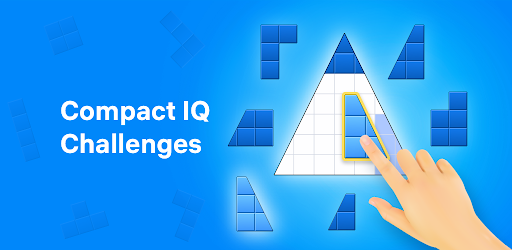
- Combines block placement with a Sudoku-style 9×9 grid.
- Different block shapes create a visual planning challenge.
- Listed as free on Google Play.
- Has a very large listed vote count: 1,295,456.
- Daily Challenges and Seasonal Events are listed in the store description.
- The listed rating is 4.6/5, below Sudoku Master’s 4.8/5.
- The game is listed only for Google Play in the supplied data.
- Players seeking traditional number-only Sudoku may prefer a more conventional format.
- Some promotional claims in the store description are marketing language, not verified research findings.
How its challenge feels
Blockudoku’s main tension comes from limited board space. A move can look excellent because it completes a line, yet still create a poor position if it leaves isolated gaps that do not suit the next shapes. The board becomes a planning surface where short-term points compete with long-term flexibility.

This makes the game a natural fit for players who enjoy visual organisation and incremental optimisation. It is less about finding one correct number for one cell and more about comparing several placements, forecasting possible clears and avoiding a board that becomes difficult to manage.
Sudoku Master® – Sudoku Puzzle
Sudoku Master® – Sudoku Puzzle is listed as a free Google Play title by Malpa Games, released in 2024. Its listed type is Puzzle Games, Sudoku & Number Grids, and its listed skills are Logic & Reasoning and Math & Numeracy.
The store description presents it as a Sudoku app for beginners and experienced players. Its listed grid sizes are 6×6, 9×9 and 16×16. That range gives the game a clear format advantage for players who want to move between a smaller warm-up puzzle, the familiar classic grid and a substantially larger challenge.
The description also refers to additional modes for advanced players. Because the supplied information does not specify all of those modes, this comparison does not assume what they contain or how they work. The reliable comparison point is the listed emphasis on different grid sizes and Sudoku-based number solving.
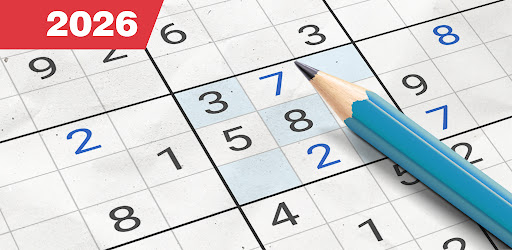
- Offers listed 6×6, 9×9 and 16×16 grid sizes.
- Provides a more traditional Sudoku identity.
- Listed as free on Google Play.
- Has the higher listed rating at 4.8/5.
- Designed in the description for both beginners and experienced players.
- Its listed vote count, 227,773, is much smaller than Blockudoku’s.
- The higher rating is not directly comparable because the vote counts differ.
- The supplied data does not specify the details of its advanced modes.
- The game may feel less visually varied to players who prefer shape placement.
How its challenge feels
Sudoku Master is the more focused choice when you want the familiar logic of rows, columns and regions. The smaller 6×6 grid can suit a quick session, while 9×9 offers the standard format and 16×16 raises the scale of the problem.
The larger grid is not automatically harder in every respect, because difficulty also depends on the puzzle’s clues and design. Still, a 16×16 board presents more cells and more relationships to track than a 6×6 board. For players who enjoy gradually increasing the size of the mental chessboard, that range is a meaningful advantage.
Comparison table
| Category | Blockudoku®: Block Puzzle Game | Sudoku Master® – Sudoku Puzzle |
|---|---|---|
| Type | Puzzle Games, Sudoku & Number Grids | Puzzle Games, Sudoku & Number Grids |
| Skills listed | Logic & Reasoning; Math & Numeracy | Logic & Reasoning; Math & Numeracy |
| Platforms | Google Play | Google Play |
| Price | Free | Free |
| Rating and votes | 4.6/5 from 1,295,456 votes | 4.8/5 from 227,773 votes |
| Developer | Easybrain | Malpa Games |
| Year listed | 2019 | 2024 |
| Core format | Block placement on a 9×9 Sudoku-style board | Number-based Sudoku with listed 6×6, 9×9 and 16×16 grids |
The table shows how closely matched the two games are at the category level. Both are free Google Play puzzle games, and both are assigned the same listed skills. The important difference is the interaction style: one is built around shapes and board space, while the other is built around numbers and Sudoku constraints.
Do not choose solely from the star rating. First decide whether you want to place shapes or place numbers, then use the rating as supporting information rather than as the final boss.
Play Odd or Even free on Mentometry — no download, and your score joins the global leaderboard.
Choose Blockudoku if you want visual planning
Choose Blockudoku®: Block Puzzle Game if you enjoy looking at a board as a changing spatial layout. The various block shapes make each turn a fitting problem, and clearing lines or squares can create a satisfying chain of local decisions.
It is also the more obvious choice if you like score-chasing and board maintenance. The store description specifically mentions keeping the board clean and beating a high score. That framing suggests a loop built around repeated attempts, better placements and gradually improved judgment.
- Choose it for shape-based decisions rather than number-only deduction.
- Choose it if you enjoy managing open space and avoiding awkward gaps.
- Choose it if Daily Challenges and Seasonal Events, as listed in the description, appeal to you.
- Choose it if a large existing vote count matters to your confidence in a listing.
Choose Sudoku Master if you want classic Sudoku variety
Choose Sudoku Master® – Sudoku Puzzle if your ideal puzzle is a grid of numbers governed by clear rules. The listed 6×6, 9×9 and 16×16 sizes offer a simple way to vary the scale of the challenge without changing the basic identity of the game.
It is also the stronger fit for players who want a more direct Sudoku progression. Beginners can start with a smaller grid, while experienced players can test themselves on the classic 9×9 format or move to the listed 16×16 option.
- Choose it for number placement, deduction and familiar Sudoku structure.
- Choose it if multiple grid sizes are more important than block shapes.
- Choose it if you want a puzzle that is explicitly presented for beginners and experienced players.
- Choose it if the higher listed rating appeals to you, while remembering that it comes from fewer votes.
ALSO READ Cognitive Training for Older Adults: What Trials Show
What each game trains according to general cognitive research
Both games are listed with Logic & Reasoning and Math & Numeracy. Those labels fit the broad demands of their formats, but they should not be read as proof that either game improves general intelligence or transfers automatically to everyday problem-solving.
Blockudoku: likely task demands
Blockudoku requires players to inspect shapes, compare possible placements and anticipate how the board may change after a line or square is completed. That combination plausibly draws on visual organisation, planning, rule maintenance and some visuospatial working memory: the ability to keep track of a changing arrangement while deciding what to do next.
Research on spatial puzzle games suggests that training effects, when they appear, are often specific to skills resembling the practiced task. Reviews also caution that improvement in a game or closely related test does not automatically generalise to broad reasoning or memory abilities. For Blockudoku, the most defensible description is therefore that it exercises visual planning and puzzle-specific decision-making, not that it raises overall intelligence. (doi.org)
Sudoku Master: likely task demands
Sudoku solving requires maintaining rules, eliminating possibilities, checking conflicts and making deductions across rows, columns and regions. A recent systematic review of Sudoku neuroimaging research describes Sudoku tasks as engaging working memory, reasoning, executive control and metacognitive monitoring, while also stressing that more evidence is needed to establish transfer to everyday functioning. (pmc.ncbi.nlm.nih.gov)
That makes Sudoku Master a reasonable exercise in rule-based reasoning and sustained attention during a puzzle. It does not justify claims that playing Sudoku prevents dementia, treats a medical condition or produces broad cognitive benefits. Evidence from cognitive-training research remains mixed, with some gains tending to be task-specific and transfer to unrelated abilities often limited or uncertain. (tandfonline.com)
The safest research-based wording is “this task engages particular cognitive processes,” not “this game upgrades the whole brain.” Enjoyment, persistence and regular practice may make a puzzle a useful mental activity, but game performance and general cognitive ability are not the same thing.

How to use either game as a practical puzzle habit
A good comparison is not only about which app has more features. It is also about whether the challenge matches your goal for a short session. Try the following approach before deciding which one deserves a permanent place on your device.
- Play Blockudoku for several sessions and notice whether you enjoy planning around shapes, gaps and clears.
- Play Sudoku Master using more than one listed grid size, if available to you, and notice whether number deduction stays engaging.
- Track your own experience rather than assuming the higher rating will predict your enjoyment.
- Separate puzzle improvement from real-world claims. Getting faster or solving harder boards mainly shows that you are learning that puzzle format.
- Choose the game you are most likely to return to without forcing yourself through sessions that feel dull.
If you want to complement these games with short numerical judgments, Mentometry’s Quick Math presents an equation with an answer already filled in, then asks you to judge whether it is Correct or Incorrect before time runs out.
For a simpler speed-and-accuracy contrast, Odd or Even asks you to quickly identify whether a number flashing on screen is odd or even. It is a much narrower task than either comparison game, which makes it useful as a distinct mental warm-up rather than a replacement for Sudoku or block placement.
Try one session of each game on three separate days. After each session, write down one sentence: “I preferred this because…” Choose the game that earns the most convincing answer.
Final recommendation
Blockudoku®: Block Puzzle Game is the better pick for players who want a visual, shape-based puzzle with a 9×9 board, line and square clears, and a high-score-oriented feel. Its 4.6/5 rating comes from a much larger listed vote count than its rival, which gives the figure broad user coverage but does not make it directly comparable with the other rating.
Sudoku Master® – Sudoku Puzzle is the better pick for players who want a recognisably traditional Sudoku experience and the option of listed 6×6, 9×9 and 16×16 grids. Its 4.8/5 rating is higher, but it is based on 227,773 votes rather than Blockudoku’s 1,295,456, so the numbers should be read as separate store signals, not a definitive ranking.
In short, choose the board you want to solve. If shapes, space and placement sound like your kind of boss fight, start with Blockudoku. If numbers, deduction and grid size are more appealing, Sudoku Master is the cleaner match.
Frequently Asked Questions
Which is better, Blockudoku or Sudoku Master?
It depends on the puzzle style you prefer. Choose Blockudoku for shape placement and board management; choose Sudoku Master for traditional number-based Sudoku and multiple listed grid sizes.
Are Blockudoku and Sudoku Master free?
Both games are listed as free in the supplied data. Both are listed for Google Play.
Which game has the higher rating?
Sudoku Master is listed at 4.8/5 from 227,773 votes, while Blockudoku is listed at 4.6/5 from 1,295,456 votes. The ratings come from different vote counts and are not directly comparable.
Does Blockudoku improve intelligence?
There is not enough evidence to claim that playing Blockudoku raises general intelligence. It may exercise puzzle-specific skills such as visual planning and decision-making.
Does Sudoku train memory and reasoning?
Sudoku tasks engage reasoning, working memory and executive control during play. Research does not establish that playing Sudoku automatically produces broad improvements in everyday cognition.
Which game is better for beginners?
Sudoku Master is explicitly described as suitable for beginners and experienced players, and it lists a 6×6 grid as a smaller starting format. Blockudoku may suit beginners who prefer learning through visual block placement.
Sources
- Neural correlates of Sudoku play: a systematic review of brain imaging studies / Frontiers in Neuroimaging
- Computer Games in Education / Annual Review of Psychology
- What explains the relationship between spatial and mathematical skills? A review of evidence from brain and behavior / Psychonomic Bulletin & Review
- Can we enhance working memory? Bias and effectiveness in cognitive training studies / Psychological Bulletin
- Working memory training revisited: A multi-level meta-analysis of n-back training studies / Cognition
- Efficacy of cognitive training on executive functions in healthy older adults: a systematic review with meta-analysis of randomized controlled trials / Psychology & Health
Educational content, not medical or financial advice.