Homescapes and Match Masters are both free Google Play games released in 2017, but they present very different reasons to keep playing. Homescapes combines match-3 puzzles with home decoration and a storyline, while Match Masters is built around live player-versus-player competition on a shared match-3 board. Both are listed under memory-focused games, yet neither should be treated as a proven brain-training program. This comparison looks at what the supplied data actually supports, where the games differ, and which one may suit your preferred style of play.
- Choose Homescapes if you want a solo-friendly match-3 game with home restoration and story elements.
- Choose Match Masters if you want competitive match-3 play with live opponents and a stronger head-to-head focus.
- Both games are free on Google Play and list Memory as a skill.
- Match Masters has the higher listed rating, 4.8/5 versus Homescapes at 4.7/5, but the ratings come from different, non-comparable vote counts.
- General cognitive research supports cautious claims about practice on closely related tasks, not promises of higher intelligence or broad real-world benefits.
Verdict: Homescapes for relaxed progression, Match Masters for competition
Homescapes is the better fit for players who want a broader solo package. Its supplied description combines match-3 combinations, room-by-room interior restoration, a storyline, characters, events, power-ups, boosters, and thousands of levels. That gives the game a clear progression loop beyond the puzzle board.
Match Masters is the better fit for players who want direct competition. Its description emphasizes live play with friends or opponents from around the world, turn-taking on the same board, and the need to consider both your own score and the opportunities you create for your opponent. That makes the central appeal more tactical and confrontational.
The listed ratings are not a clean scientific or consumer comparison. Match Masters is rated 4.8/5 from 2,526,453 votes, while Homescapes is rated 4.7/5 from 13,375,300 votes. Because the vote counts, rating distributions, audience mix, and review timing are different, the 0.1-point gap should not be treated as proof that one game is definitively better.
Homescapes vs Match Masters at a glance
| Category | Homescapes | Match Masters |
|---|---|---|
| Type | Memory Games | Match-3 & Bubbles, Memory Games |
| Listed skills | Memory | Memory |
| Platforms | Google Play | Google Play |
| Price | Free | Free |
| Rating and votes | 4.7/5 from 13,375,300 votes | 4.8/5 from 2,526,453 votes |
| Developer | Playrix | Candivore |
| Year | 2017 | 2017 |
The table shows a close statistical matchup, but the games are not identical in format. Homescapes is categorized only as Memory Games in the supplied data, while Match Masters is categorized as both Match-3 & Bubbles and Memory Games. Both list Memory as the skill, so memory is the clearest common thread for this comparison.
There is also an important limit to what can be concluded from the store descriptions. The descriptions are supplied as marketing text and are not verified. They can explain how each game presents itself, but they do not establish that every advertised feature produces a measurable cognitive benefit.
Homescapes: a match-3 journey with home restoration
Homescapes, by Playrix, is listed as a free Memory Games title for Google Play. Its supplied description presents a combination of match-3 puzzles, interior decoration, room restoration, and an ongoing storyline featuring Austin the butler. The description also mentions thousands of levels, power-ups, boosters, events, expeditions, challenges, prizes, and encounters with new friends.
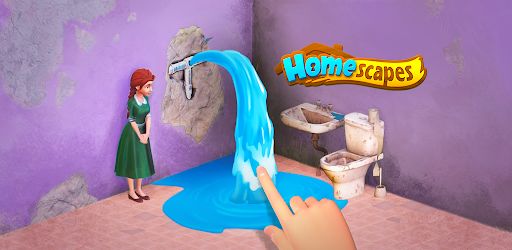 Memory GamesHomescapesPlayrix★ 4.7 (13.4M votes)View ratings & details ▶
That combination makes Homescapes feel like a progression game rather than a narrowly competitive puzzle match. The board is one part of the experience; restoring the home and moving through the story provide the surrounding structure. For players who enjoy unlocking the next room or seeing a larger project develop, that broader loop may be more appealing than a pure score chase.
What Homescapes does well
- Offers match-3 play alongside home restoration and story elements.
- Listed as free on Google Play.
- Has a very large listed voting base: 13,375,300 votes.
- Includes a progression structure with rooms, levels, events, power-ups, and boosters in its supplied description.
- The supplied data lists only Google Play as its platform.
- The game’s advertised cognitive value is not established by the store description.
- Its rating is slightly lower than Match Masters’ listed rating, although the vote counts are not comparable.
- Players seeking direct live competition may prefer the format described for Match Masters.
Homescapes may be the easier recommendation for a player who wants a game that can be approached at their own pace. The supplied data does not state whether particular modes require an internet connection or how much content is available without additional purchases, so those details should not be assumed.

If you choose Homescapes, pay attention to the decisions you make rather than tapping automatically. Briefly scan the board, identify possible combinations, and then decide whether a move supports your immediate objective.
Match Masters: a head-to-head match-3 contest
Match Masters, by Candivore, is listed as a free Match-3 & Bubbles and Memory Games title for Google Play. Its supplied description focuses on live multiplayer, either with friends or against opponents from around the world. Players take turns on the same match-3 board and must consider not only the points from their own moves, but also the opportunities those moves may create for the opponent.
 Match-3 & Bubbles · Memory GamesMatch MastersCandivore★ 4.8 (2.5M votes)View ratings & details ▶
That shared-board structure gives Match Masters a different mental rhythm from a primarily solo progression game. A strong move is not necessarily just the move with the biggest immediate score; according to the supplied description, players also need to think about what the board will offer next and how the opponent may benefit. The description also mentions boosters charged by matching blue stars and several ways to play.
What Match Masters does well
- Places live player-versus-player competition at the center of its description.
- Encourages consideration of both personal scoring and opponent opportunities.
- Has the higher listed rating: 4.8/5.
- Is listed as free on Google Play.
- Its 2,526,453 votes are not directly comparable with Homescapes’ 13,375,300 votes.
- Competitive play may be less appealing to players who prefer a relaxed solo experience.
- The supplied data lists only Google Play as its platform.
- The store description does not prove that playing improves memory or other abilities outside the game.
Match Masters is the clearer choice when the opponent is part of the fun. Its appeal depends less on decorating a space or following a story and more on adapting to a shared board under competitive pressure. If you enjoy games where a move changes the other player’s options, this is the more direct match.
In your next Match Masters session, pause before each move and name two possible consequences: one for your score and one for the opponent’s next opportunity.
Play Reverse Memory free on Mentometry — no download, and your score joins the global leaderboard.
What might each game train?
The supplied data lists Memory as the skill for both games. That label is useful as a broad categorization, but it does not tell us how much memory a player uses, which memory system is involved, or whether any improvement transfers to everyday life.
General cognitive research draws an important distinction between near transfer and far transfer. Near transfer means improving on tasks that resemble the activity practiced. Far transfer means improvement on less similar abilities or real-world outcomes. Reviews of cognitive and video-game training commonly find that task-specific gains are more plausible than broad, automatic improvements across unrelated abilities. (pmc.ncbi.nlm.nih.gov)
Homescapes and memory-related practice
For Homescapes, the most defensible claim is modest: match-3 play may require players to remember or maintain information about board positions, possible combinations, recent patterns, and the consequences of earlier moves. Those demands could overlap with visual attention, short-term maintenance, and planning during play, but the supplied game data does not provide a study showing that Homescapes itself improves those abilities.
Research on video-game training suggests that effects can depend on specific gameplay features rather than broad labels such as “casual,” “puzzle,” or “action.” A meta-analysis found evidence of cognitive training effects in the studies it reviewed, but also noted publication bias and difficulty identifying which features drive results. It did not establish that any particular commercial game produces general intelligence gains. (pmc.ncbi.nlm.nih.gov)
Match Masters and memory-related practice
Match Masters may add a second layer of mental demand because its supplied description emphasizes live opponents, turn-taking, and the need to consider how a move affects the other player. In practical terms, that could involve holding several possible moves in mind, updating a plan after the board changes, and monitoring the opponent’s potential opportunities. These are reasonable descriptions of the decisions presented in the marketing text, not measured findings about the game’s cognitive effects.
The research literature does not support treating competitive puzzle play as a guaranteed way to strengthen memory in general. Even when a training task produces improvement, the result may be limited to similar tasks, and evidence for far transfer remains mixed. This is why “may practice” is more accurate than “trains your brain” as a broad promise. (pmc.ncbi.nlm.nih.gov)
Memory is not one single skill. Remembering a board layout, holding a possible move in mind, learning a repeated pattern, and recalling a sequence involve overlapping but distinct processes. Games can give you practice in the demands they repeatedly present, but research does not justify promising higher intelligence, dementia prevention, or reliable improvement in unrelated daily abilities.
If you want a more direct memory-focused activity, Mentometry’s Reverse Memory asks you to memorize a sequence and repeat it in reverse order. That is a clearer example of working with an explicit sequence-memory demand than either store description provides for these commercial games.

Mentometry’s Sound Sequence offers another focused option: listen to a sequence of sounds and tap the pads back in the same order. It targets a different format of recall, which can make it a useful complement to visual puzzle play rather than a replacement for entertainment games.
Choose Homescapes if…
- You prefer a solo-oriented experience to a live head-to-head contest.
- You like the idea of combining match-3 puzzles with home decoration and room restoration.
- You enjoy story elements, characters, events, and a long progression path.
- You want a game whose supplied description emphasizes thousands of levels, power-ups, boosters, and evolving spaces.
- You are comfortable treating the memory label as a broad game category rather than a clinical or scientific claim.
ALSO READ Transfer Effects: Do Skills From Brain Games Actually Carry Over to Real Life?
Choose Match Masters if…
- You want live competition with friends or other opponents.
- You enjoy taking turns on a shared board and thinking about how your move affects someone else.
- You prefer tactical pressure and score-based decisions over home restoration and story progression.
- You want the game whose supplied description most clearly centers on player-versus-player interaction.
- You find the 4.8/5 listed rating appealing, while understanding that it comes from a much smaller and different vote count than Homescapes’ rating.
How to make the comparison useful in practice
The best choice may depend less on the rating and more on the type of attention you want to give the game. A rating summarizes other players’ responses, but it does not tell you whether you will enjoy competitive pressure, decorating, story progression, or repeated board analysis.
- Decide whether the opponent matters. If the main attraction is playing against people, start with Match Masters. If you would rather progress through a setting, start with Homescapes.
- Choose your preferred feedback loop. Homescapes supplies restoration and story progression in its description. Match Masters supplies live turns, scores, boosters, and opponent reactions.
- Use the memory label carefully. Both games list Memory, but the data does not establish a measured training effect for either title.
- Compare ratings with context. Look at the score and vote count together rather than treating a 0.1-point difference as a decisive result.
- Notice your own engagement. A game that keeps you actively scanning, planning, and remembering possibilities may feel more mentally involving than one you play through automatic taps.
Try each game for a short, consistent session and note what you actually enjoy: story progression, board scanning, competition, or planning around an opponent. Personal fit is more informative than a small difference between two store ratings.
Final verdict
Homescapes and Match Masters are not really rivals for exactly the same audience. Homescapes is the broader progression experience, pairing match-3 play with home restoration and story elements. Match Masters is the sharper competitive option, built around live opponents, turn-taking, and shared-board decisions.
For a relaxed puzzle journey, choose Homescapes. For a head-to-head match-3 contest, choose Match Masters. Both list Memory as a skill, but the responsible conclusion is limited: they may involve memory-related decisions during play, while general research does not support promising broad cognitive transformation from either game.
Frequently Asked Questions
Which is better, Homescapes or Match Masters?
It depends on your preferred style. Choose Homescapes for match-3 puzzles combined with home restoration and story elements; choose Match Masters for live head-to-head competition.
Are Homescapes and Match Masters free?
Both games are listed as free. The supplied data lists Google Play as the platform for each game.
Which game has the higher rating?
Match Masters has the higher listed rating at 4.8/5, compared with 4.7/5 for Homescapes. The ratings come from different, non-comparable vote counts, so the 0.1-point gap is not decisive.
Do Homescapes and Match Masters improve memory?
Both games list Memory as a skill, but the supplied data does not establish that either game improves memory. General research suggests that practice effects are more credible for similar tasks than for broad, everyday abilities.
Which game is more competitive?
Match Masters is the more explicitly competitive game. Its supplied description centers on live play with friends or opponents and turns taken on the same match-3 board.
What should I play for more focused memory practice?
Consider a dedicated memory task such as Mentometry’s Reverse Memory or Sound Sequence. These activities state their sequence-memory demands more directly than the commercial game descriptions.
Sources
- A game-factors approach to cognitive benefits from video-game training: A meta-analysis — Frontiers in Psychology / National Library of Medicine
- The effectiveness of serious games for training of attention and executive functions: a systematic review — National Library of Medicine
- Effects and Moderators of Computer-Based Training on Children’s Executive Functions: A Systematic Review and Meta-Analysis — National Library of Medicine
- Are Video Game Training Gains Specific or General? — National Library of Medicine
- Video Games for Well-Being: A Systematic Review on the Application of Computer Games for Cognitive and Emotional Training in the Adult Population — Frontiers in Psychology / National Library of Medicine
- A Systematic Review of Commercial Cognitive Training Devices: Implications for Use in Sport — Frontiers in Psychology / PubMed
Educational content only; it is not medical or financial advice.
[…] ALSO READ Homescapes vs Match Masters: Which Puzzle Game Fits You? […]
[…] ALSO READ Homescapes vs Match Masters: Which Puzzle Game Fits You? […]