Puzzle games and cognitive training games can look remarkably similar: both present challenges, track performance and reward improvement. But they are not automatically doing the same job. A mahjong board, a paper-folding puzzle and a memory sequence may all feel like “brain games,” yet the research question is more specific: what skill is being practiced, and does improvement carry over to anything beyond the game?
- Puzzle games are usually designed around a satisfying problem, pattern or goal. Cognitive training games are more deliberately built around measurable mental processes such as working memory, attention or processing speed.
- The strongest and most reliable gains are usually closest to the trained task. This is called near transfer.
- Far transfer, such as becoming broadly better at reasoning or everyday decision-making, remains debated and appears more limited than advertising often suggests.
- Good game design can make practice engaging, but enjoyment is not proof of a cognitive benefit.
- The most useful choice depends on your goal: relaxation, a challenging puzzle, practice with a particular mental skill, or simply a sustainable routine.
What separates a puzzle game from cognitive training?
A puzzle game is primarily organized around a game problem. You might arrange tiles, find hidden objects, fold paper mentally or plan a sequence of moves. The challenge may involve memory, logic, spatial reasoning, attention or several of these at once. Its central promise is usually the experience: solve the puzzle, beat the level and improve your personal best.
A cognitive training game starts with a mental ability that researchers or designers want to measure and practice. Examples include remembering items in order, updating information in working memory, switching between rules, tracking moving objects or responding quickly to relevant signals. The game layer can make the exercise more appealing, but the underlying task is often narrower and more controlled.
The boundary is not perfectly clean. A puzzle game can repeatedly exercise a specific skill, while a cognitive training program can borrow the structure and reward systems of a conventional game. The more useful distinction is not the label on the app store. It is whether the activity has a clearly defined target, adaptive difficulty, repeated practice and outcome measures that are separate from the game itself.
| Feature | Puzzle game | Cognitive training game |
|---|---|---|
| Main purpose | Solving an engaging challenge | Practising a specified cognitive process |
| Typical structure | Levels, puzzles, boards or stories | Repeated trials, scoring and performance tracking |
| Skills involved | Often mixed and game-specific | Usually defined in advance, such as memory or attention |
| Best-supported outcome | Getting better at similar puzzles | Improving the trained task and closely related tasks |
| Main open question | Whether benefits extend beyond the game | How far benefits transfer to untrained abilities |
Why “brain training” needs a careful definition
Research on cognitive training does not treat every mentally stimulating activity as equivalent. In clinical and laboratory studies, training often involves a planned schedule, repeated sessions, standardised tasks and comparison groups. Commercial products may use similar language while offering a much wider mix of activities, goals and levels of evidence.
The National Institute on Aging describes cognitive training as structured activity aimed at abilities such as memory, reasoning and processing speed. It also notes that evidence from formal clinical trials should not automatically be assumed to apply to every commercially available computer-based brain-training application. (nia.nih.gov)
That distinction matters because “I played a challenging game” and “I completed a validated training protocol” are different statements. Both may be worthwhile. They simply support different conclusions.
Researchers often distinguish between near transfer and far transfer. Near transfer means improvement on the trained task or a very similar task. Far transfer means improvement on a substantially different ability, such as using a trained memory skill to make better everyday decisions. Near transfer is much easier to demonstrate than far transfer.
What research says about transfer
Transfer is the boss fight in this field. Practising a task usually makes people better at that task. The harder question is whether the improvement reflects a broad change in cognition or a more specific learning effect, such as recognising familiar patterns, developing a strategy or becoming faster at the game’s rules.
Reviews of working-memory training have repeatedly found strong or reliable improvement on tasks closely related to the training. Findings become less consistent as the test becomes more different. A study published in Translational Psychiatry noted that later meta-analyses often failed to find far-transfer effects, particularly when training was compared with an active control group that also practised a demanding activity. (nature.com)

This does not mean training is useless. It means that the claim must match the evidence. If a sequence game improves your performance on similar sequence tasks, that is a legitimate result. It is not the same as proving a general increase in intelligence, better judgement in every setting or protection against cognitive decline.
Some researchers argue that transfer is more likely when the game and the outcome task share important demands. For example, a task requiring rapid attentional switches, peripheral monitoring or multiple-object tracking may be more likely to influence a similar laboratory measure than an unrelated reasoning test. This “common demands” view helps explain why some studies find specific transfer while broader claims remain uncertain. (pubmed.ncbi.nlm.nih.gov)
A higher score in a game is meaningful evidence that you are learning the game. It is not, by itself, evidence that you have become smarter in a general sense. Look for studies using untrained tasks, active control groups and follow-up testing before accepting a broad transfer claim.
Focus: what might games actually train?
Focus is not one single mental stat. It can include sustaining attention over time, filtering distractions, switching between rules, monitoring several moving objects or responding quickly without losing accuracy. Different games place different demands on these processes, even when they all describe themselves as attention games.
Radar Tracker, for example, asks you to remember a briefly highlighted location, follow it while the dots move and then identify the correct dot after the movement stops. That makes it a focused exercise in visual tracking and maintaining information while attention is occupied. It does not prove that someone will automatically concentrate better during a long meeting, a difficult book or a noisy commute.
Evidence from video-game research suggests that gameplay features may matter more than broad genre labels. A 2023 meta-analysis of video-game cognitive interventions found overall training effects and reported that specific gameplay features showed selective relationships with outcomes, while labels such as “action” or “casual” were less informative by themselves. (pubmed.ncbi.nlm.nih.gov)
That is a useful principle for players. Instead of asking whether a game is “good for focus,” ask what kind of focus it demands. Does it require sustained monitoring, rapid selection, resisting distractions or switching rules? The answer gives you a more realistic expectation of what practice may resemble.
For a short visual-attention challenge, Radar Tracker is a good example of a narrowly defined task. Use it as practice in tracking and location memory, not as a promise of universal concentration.
Play Shadow Match free on Mentometry — no download, and your score joins the global leaderboard.

Memory games and the difference between recall and strategy
Memory is also a family of abilities rather than a single switch. Remembering a short sequence, holding information in mind while solving a problem, recognising a familiar face and recalling an appointment all involve different combinations of memory, attention and strategy.
Color Sequence asks you to watch colors light up and repeat them in the exact order. Shadow Match uses a similar sequence principle with rows of icons and visually similar answer choices. These activities make the target relatively clear: encode a sequence, maintain it and reproduce it accurately.
Practice may help you discover useful strategies. You might group items, rehearse them silently or focus on distinctive features. Those strategies can support similar tasks, especially when the test format is familiar. But a game result should not be treated as a complete measure of real-world memory, which is influenced by sleep, stress, attention, prior knowledge and the importance of the information.
Formal cognitive-training research has found that structured interventions can improve performance in trained areas, including memory, reasoning or processing speed. In the large ACTIVE trial, improvements were reported in the trained domains among healthy older adults, with some benefits in reasoning and processing speed lasting years. However, that evidence came from a specific intervention and should not be assumed to validate every consumer game. (nia.nih.gov)
When practising memory, pay attention to accuracy before speed. A fast guess can inflate a score while teaching a less reliable strategy. Try to notice whether you are using grouping, visual imagery, verbal rehearsal or simple repetition.
Color Sequence is a straightforward option when you want a short exercise built around ordered recall. Shadow Match adds visual discrimination because the answer choices are intentionally similar-looking. Neither should be presented as a treatment or as proof of a general memory upgrade; they are focused practice tasks.
Decision-making: puzzles, planning and real-world judgement
Many puzzle games feel like decision-making practice because they require choices under constraints. You may need to select a move, estimate consequences, manage limited space or decide whether to act now or wait. These are useful ingredients, but game decisions are usually cleaner than real decisions.
In a puzzle, the rules are stable, the goal is visible and feedback is immediate. Real-world decisions are often noisy. Information may be incomplete, outcomes may be delayed and emotional or social consequences may matter. A player can become excellent at planning within a particular puzzle system without showing the same advantage in financial choices, workplace judgement or personal relationships.
This is another form of transfer. A game may train planning within its own rule set, and perhaps related planning tasks, without improving every kind of judgement. Research on action games and other genres has found promising but mixed patterns, with effects depending on the task, the game features and the design of the comparison condition. (pubmed.ncbi.nlm.nih.gov)

Unfoldit – Paper Puzzle Game is a good example of a puzzle built around spatial and logical operations. Its directory information lists memory, logic and reasoning, and spatial and visual skills. Those labels describe the kind of challenge it offers; they do not establish that playing it improves general reasoning outside the game.
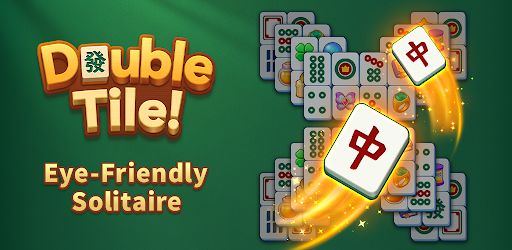
Double Tile! and Vita Mahjong are tile-based puzzle experiences listed with memory and planning-related skills. They may be enjoyable ways to practise visual scanning, matching and move selection. Treat those skills as game-relevant abilities first, and consider any wider benefit a question for research rather than a guaranteed feature.
Hidden Object Games: Seek It is listed with spatial and visual skills plus attention and focus. Searching an image can encourage systematic scanning and comparison. That may make it a pleasant attention challenge, but it should not be confused with a validated clinical assessment of attention.

Puzzle games and cognitive training games: strengths and limitations
- Puzzle games can make mental effort enjoyable enough to repeat.
- Cognitive training games can target a specific process more clearly than a broad puzzle.
- Scores and levels provide immediate feedback.
- Short sessions can fit into a regular routine.
- Many games allow players to practise accuracy, speed or strategy at their own pace.
- Improvement may remain specific to the game or a similar task.
- Scores can be affected by familiarity, strategy, motivation and device controls.
- Commercial claims may go beyond the evidence.
- Short-term practice effects do not establish long-term benefits.
- A game cannot replace sleep, physical activity, social connection or professional care when those are needed.
The best choice depends on what you want from the session. Choose a puzzle game if you want open-ended problem-solving, variety or relaxation with a challenge. Choose a more targeted training game if you want to repeat one mental operation and observe changes in accuracy or speed.
Neither category wins automatically. A brilliantly designed puzzle may demand more flexible thinking than a repetitive training drill. A simple-looking training task may offer cleaner practice of a specific ability than a complex game with many overlapping demands.
ALSO READ CodyCross vs Stupid Test: Which Puzzle Game Fits You?
How to use these games more intelligently
A practical routine should be modest and measurable. The aim is not to chase a dramatic transformation. It is to practise a defined challenge, notice how performance changes and avoid claiming more than the exercise can support.
- Choose one target. Decide whether you are practising sequence memory, visual tracking, spatial reasoning, sustained scanning or planning.
- Keep the session consistent. Use similar conditions when possible, including device, screen size and time of day.
- Track accuracy and speed separately. A faster response is not necessarily better if errors increase.
- Change the test. Occasionally try an unfamiliar puzzle or a non-game task to see whether your ability carries over beyond the practiced format.
- Stop before quality collapses. Fatigue can turn practice into random clicking and make the score less informative.
- Review your strategy. Ask what helped: grouping, scanning order, rehearsal, elimination or planning ahead.
For one week, practise the same game for a few short sessions. Record your accuracy, speed and strategy. At the end, try a different task that uses a related skill and note whether the improvement appears outside the original format.
This approach also helps separate learning from transfer. If your original score rises but your performance on a different task does not change, you may have achieved useful task-specific learning. That is still learning. It simply has a narrower description.
What the research still cannot answer
Several questions remain open. Researchers are still working out which game features matter most, how much training is enough, who benefits most and how long any gains last. Results can also vary with age, education, baseline ability, motivation, the control group and whether the study measures an untrained outcome.
Meta-analyses of video-game interventions have reported positive effects in some cognitive domains, while other studies have found smaller or more limited effects. One reason is that “video game” covers many different activities, from action games to spatial puzzles to physically active games. Pooling them together can obscure the details that determine whether transfer is plausible. (pubmed.ncbi.nlm.nih.gov)
There is also a difference between statistical improvement and meaningful everyday change. A study may find a measurable difference on a laboratory test without showing that people make fewer mistakes at work, manage daily tasks more easily or function independently for longer. Those real-world outcomes require direct measurement.
Be cautious with claims that a game raises intelligence, prevents dementia or treats a condition. Current evidence does not justify treating ordinary commercial games as medical interventions. Enjoy games for the challenge they genuinely provide, and judge broader claims by the quality of the research behind them.
Conclusion: choose the right level of claim
Puzzle games and cognitive training games overlap, but their emphasis differs. Puzzle games put the problem and the player’s experience first. Cognitive training games usually put a measurable mental process first. Both can support practice, enjoyment and a repeatable mental routine.
The most defensible expectation is also the least flashy: you can become better at the task you practise, and sometimes at closely related tasks. Whether that improvement reaches broad decision-making, general focus or everyday memory depends on the demands shared by the game and the real-world activity. Keep the claim at the right level, and the experience becomes more useful, more honest and more fun.
Player Two: Games to Try Next
Hand-picked from Mentometry and the Brain Games directory, matched to this article.

Frequently Asked Questions
Are puzzle games the same as cognitive training games?
No. Puzzle games are usually built around solving an engaging problem, while cognitive training games are more deliberately designed to practise a defined mental process. The categories can overlap.
Do brain training games improve intelligence?
Research most consistently supports improvement on the trained task and similar tasks. Evidence that these gains produce a broad increase in intelligence remains limited and debated.
Can memory games improve everyday memory?
They may improve performance on similar memory tasks, but everyday memory is influenced by attention, sleep, stress, strategies and prior knowledge. Transfer beyond the game should not be assumed.
What is near transfer?
Near transfer means improvement on the trained task or a closely related task. It is generally easier to demonstrate than far transfer to unrelated abilities such as broad reasoning or everyday decision-making.
Are puzzle games good for focus?
They can provide practice in particular forms of attention, such as visual scanning, tracking or monitoring. Whether that improves concentration in daily life depends on how similar the game’s demands are to the real-world task.
How should I choose a cognitive game?
Start with a specific goal, such as sequence memory, visual tracking or spatial reasoning. Prefer games that give clear feedback, and treat broad claims about intelligence, dementia prevention or medical benefits with caution.
Sources
- Preventing Alzheimer’s Disease: What Do We Know? / National Institute on Aging
- National Academies Committee Sees Promising but Inconclusive Evidence on Interventions to Prevent Cognitive Decline and Dementia / National Institute on Aging
- Are Videogame Training Gains Specific or General? / Frontiers in Psychology
- Action Video Game Training for Healthy Adults: A Meta-Analytic Study / Frontiers in Psychology
- A Game-Factors Approach to Cognitive Benefits from Video-Game Training: A Meta-Analysis / Psychological Bulletin
- Adaptive Working Memory Training Does Not Produce Transfer Effects in Cognition and Neuroimaging / Translational Psychiatry
- Video Games for Well-Being: A Systematic Review on the Application of Computer Games for Cognitive and Emotional Training in the Adult Population / International Journal of Environmental Research and Public Health
- The Effect of Active Video Games on Cognitive Functioning in Clinical and Non-Clinical Populations: A Meta-Analysis of Randomized Controlled Trials / Neuroscience & Biobehavioral Reviews
Educational content only; not medical or financial advice.