Timed games often look simple: see the target, make the move, beat the clock. But strong performance usually depends on a more interesting question: when should you hurry, and when should you wait? The answer is not always “go faster.” In many tasks, a rushed decision creates mistakes that cost more time than a brief pause would have. In others, excessive caution means missing opportunities, losing a combo, or allowing the timer to become the real opponent.
- Speed and accuracy are usually linked by a trade-off: faster responses tend to contain less evidence and more errors.
- The best strategy depends on the game’s scoring system, error penalty, information quality and time limit.
- Build accuracy first, then increase speed gradually rather than chasing a personal-best time immediately.
- Improvement on a practiced game is not the same as broad improvement in intelligence or everyday decision-making.
- Track accuracy, reaction time and consistency together. One impressive score can hide an unstable strategy.
Why speed and accuracy pull in opposite directions
When you make a decision, your brain does not simply “know” the answer and then press a button. It gathers information, weighs competing possibilities and reaches a point at which one option feels good enough to select. A classic family of decision models describes this as evidence accumulation: a higher decision threshold generally produces slower but more accurate choices, while a lower threshold produces faster choices with a greater risk of error. (pmc.ncbi.nlm.nih.gov)
This is the speed–accuracy trade-off. It appears in laboratory tasks, visual search, motor responses and everyday decisions. The trade-off is not a sign that you are playing badly. It is a basic feature of making choices with incomplete or noisy information.
Timed games make this tension visible. A correct answer that arrives too late may be worth less than a slightly faster answer. But a rapid miss can also trigger a penalty, break a streak or force a recovery move. Your real goal is therefore not maximum speed or maximum accuracy in isolation. It is the best balance for the scoring rules in front of you.
In decision-making research, speed and accuracy are often modeled as competing response priorities. The important variable is not only how quickly you respond, but also the decision threshold you adopt and whether that threshold fits the task.
Start with the game’s error economy
Before changing your strategy, identify what an error actually costs. A game with no penalty for a wrong tap rewards exploration and rapid responding. A game that resets progress after one mistake demands a more cautious threshold. The same reaction time can be excellent in one game and wasteful in another.
| Game condition | Usually favor | Why |
|---|---|---|
| Wrong answers cost little or nothing | Speed with controlled risk | More attempts may compensate for occasional mistakes. |
| Wrong answers cause a large penalty | Accuracy first | A single error can erase the benefit of several fast responses. |
| Targets are clear and predictable | Fast execution | There is less uncertainty to resolve before acting. |
| Targets are crowded or ambiguous | Brief verification | A fraction of a second spent checking may prevent a costly miss. |
| The timer is generous | Consistency | Stable decisions often outperform frantic bursts. |
| The timer is extremely tight | Prepared speed | Pre-positioning attention and reducing hesitation become central. |
Think of this as the game’s error economy. You are spending time to buy confidence, or spending accuracy to buy speed. The better choice depends on the exchange rate.
Use expected value, not pride
Players often protect a fast reaction time because it feels impressive. Yet a slower run with fewer mistakes may produce more points, more progress or a higher average score. Compare outcomes across several rounds instead of judging a strategy by its most exciting moment.
A practical measure is useful performance: successful actions per minute, points per attempt, or average score across a session. If the game does not show such a metric, record a simple combination of time and errors. A fast score that collapses under pressure may be less useful than a slightly slower score you can repeat.
Run three short tests: one accuracy-focused, one speed-focused and one balanced. Compare the average result across all three rather than choosing the session with the single best score.

Choose your strategy by uncertainty
Speed is most valuable when the information is already clear. If you can instantly distinguish the target from the distractors, the main challenge may be motor execution: seeing the answer, moving efficiently and tapping without hesitation.
Accuracy deserves more weight when the visual scene is uncertain. Crowded displays, similar symbols, changing rules and unexpected events all increase the chance that the first impression is wrong. In those situations, a quick confirmation can be more valuable than a reflexive response.
This distinction separates perceptual uncertainty from motor delay. If you know what to do but your hand is slow, practice smooth execution. If you move quickly but often choose the wrong target, more speed practice may simply rehearse the mistake.
Number Hunt is a straightforward example of a visual search task: you find and tap the target number among other numbers as quickly as possible. A useful approach is to begin by stabilizing target recognition, then reduce unnecessary eye movements and hesitation once the correct number is consistently identified.
Build speed in layers
Speed is not one skill. It is a chain of smaller processes: orienting attention, identifying the target, selecting a response and executing the movement. If one link is unreliable, pushing the entire chain harder can reduce accuracy.
- Learn the rule. Make sure the task feels predictable before chasing time.
- Find a reliable baseline. Record several rounds at a pace where mistakes are occasional rather than constant.
- Remove wasted movement. Keep your attention near the likely target area and use a consistent motor action.
- Increase pressure slightly. Shorten your decision window or aim for a modest improvement, not an all-out sprint.
- Check the error rate. If accuracy drops sharply, return to the previous pace and consolidate it.
This is similar to leveling up a character. First you make the basic action reliable. Then you improve efficiency. Only after that should you attempt the boss fight against the clock.
Reaction tasks are especially sensitive to anticipation. Quick Reaction asks you to tap when the circle turns green, while avoiding early taps on other colors. The most useful strategy is not simply to tense up and guess the timing. It is to stay ready without committing until the relevant signal appears.
A faster reaction-time score does not automatically mean broader improvements in focus, intelligence or everyday decision-making. It may reflect better familiarity with that particular task, improved motor preparation or a strategy tailored to its exact signals.
Play Number Hunt free on Mentometry — no download, and your score joins the global leaderboard.
Accuracy is an active skill, not passive caution
Accuracy does not mean playing timidly. It means directing attention toward the information that matters and rejecting tempting but irrelevant signals. In a timed setting, accurate players often look fast because they do not waste time recovering from preventable errors.
One useful technique is to create a short internal checkpoint before acting. It might be as simple as: “target, rule, tap.” The checkpoint should be brief enough not to become a new source of hesitation. Its purpose is to stop impulsive responses when the cost of a mistake is high.
Another technique is to separate recognition from movement during practice. First ask whether you identified the correct option. Then ask whether the tap or key press was executed cleanly. This helps reveal whether your main problem is attention, decision-making or motor control.
Obstacle Jump illustrates a different form of timing. You must tap the JUMP button, or press Space, to clear incoming obstacles and continue for as long as possible. Here, accuracy involves both detecting the obstacle and timing the response early enough for the movement to succeed. A useful practice goal is to find the latest reliable moment rather than reacting randomly earlier and earlier.
How decision-making changes under pressure
Time pressure can change more than your response time. It can alter what information you notice, how much evidence you require and how willing you are to accept a guess. Research on the speed–accuracy trade-off suggests that decision criteria are flexible: people can shift toward urgency or caution depending on instructions, rewards and perceived consequences. (pmc.ncbi.nlm.nih.gov)
That flexibility is useful, but it also creates a trap. If you always practice under maximum pressure, you may become fast at committing before the evidence is adequate. If you always practice slowly, you may develop excellent checking habits that fail when the clock becomes unforgiving.
Use mixed-pressure practice
A balanced session should include different goals. Spend some rounds protecting accuracy, some rounds testing speed and some rounds trying to maximize the actual score. This teaches you to adjust your decision threshold instead of treating one pace as universally correct.
- Accuracy rounds: respond only when you are confident.
- Speed rounds: accept a small increase in errors while testing faster recognition.
- Score rounds: follow the strategy that best matches the game’s reward structure.
- Recovery rounds: practice returning to a stable pace after a mistake.
Complete five rounds using an accuracy-first strategy, then five using a speed-first strategy. Write down average score, average time and errors. Keep the strategy that performs best across the full set, not the one that produces the most dramatic single result.
What cognitive-game research can—and cannot—tell us
Research on cognitive training and video games reports some encouraging findings, especially for abilities closely related to the practiced task. A 2023 meta-analysis of video-game-based cognitive interventions found overall training effects and reported that specific gameplay features were more informative than broad genre labels such as “action” or “strategy.” (pmc.ncbi.nlm.nih.gov)
That distinction matters. A game may demand rapid visual selection, inhibition, planning or divided attention, but the relevant question is whether those demands resemble the ability you want to practice. “Puzzle game” or “brain game” is too broad a category to predict the outcome by itself.
The major caveat is the transfer debate. Improvement on the trained task is called near transfer when it carries over to a similar task. Far transfer means improvement on a substantially different ability or a real-world outcome. Reviews commonly find that training gains are strongest and most reliable on the practiced task or closely related measures, while broader transfer is more variable and difficult to establish. (pmc.ncbi.nlm.nih.gov)

There are several reasons for caution. Studies differ in their control groups, training duration, participant age, game design and outcome measures. Some comparisons also struggle to separate the effect of the cognitive challenge from motivation, novelty, expectation or simple familiarity with the testing format. Reviews of digital attention games have noted that many games are not evaluated with the same psychometric standards used for established cognitive tests. (pubmed.ncbi.nlm.nih.gov)
The safest conclusion is specific: practicing a task can improve performance on that task, and sometimes on closely related abilities. It is not established that ordinary brain games raise general intelligence, prevent dementia or produce sweeping improvements across daily life.
Use planning games to train a different decision mode
Timed reaction games reward rapid perception and controlled execution. Planning games ask for a different skill profile: holding several possibilities in mind, anticipating consequences and resisting the urge to make the first plausible move.
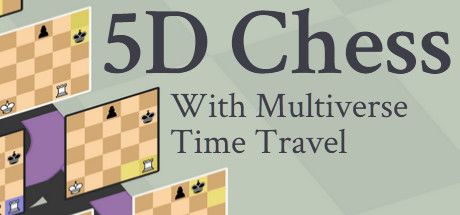
5D Chess With Multiverse Time Travel is described as a chess variant involving spatial, temporal and parallel dimensions. Its branching timelines make it a natural choice for players who want to practice deliberate planning rather than split-second tapping. The right mindset is to treat each move as a commitment with consequences, not as a race to act first.
These two styles should not be treated as interchangeable. Fast visual tasks can challenge response selection and timing. Complex planning tasks can challenge analysis and sequencing. They may both feel mentally demanding, but “difficult” does not identify which cognitive process is being trained or whether the skill will transfer beyond the game.
- Timed games provide clear feedback about speed, errors and consistency.
- Changing the speed–accuracy balance makes practice more deliberate.
- Different game mechanics can expose different decision habits.
- Short sessions make it easier to compare strategies over time.
- Improvement may remain specific to the practiced task.
- High scores can reflect familiarity or optimized game-specific habits.
- Leaderboard pressure may encourage risky play rather than useful learning.
- Reaction time is affected by sleep, stress, device input and other factors.
ALSO READ How to Improve Your Quick Reaction Score with Science
Track the stats that actually explain performance
A single score is a noisy snapshot. To understand your strategy, track at least three measures: speed, accuracy and variability. Variability matters because a strategy that produces occasional brilliant runs but frequent collapses may not be as strong as a slightly slower strategy that remains stable.
Where possible, also note the type of error. Did you miss the target because you reacted too early? Did you choose the wrong item? Did you recognize the answer but fail to execute the movement? Each error points to a different adjustment.
| If your pattern looks like this | Try this adjustment |
|---|---|
| Fast time, many wrong responses | Raise your decision threshold and add a brief verification step. |
| Slow time, high accuracy | Reduce hesitation and practice faster target recognition. |
| Good average, high variability | Use shorter sessions and focus on repeatable pacing. |
| Errors cluster after one mistake | Practice resetting attention before the next round. |
| Performance changes sharply by device | Keep device, input method and setup consistent when comparing scores. |
Also remember that cognitive performance is state-dependent. Fatigue, stress, distractions and unfamiliar controls can all influence results. A poor session is information, not a verdict about your ability.
A practical strategy for your next session
Use this five-step routine whenever you start a timed game:
- Read the penalty. Determine whether errors, hesitation or missed opportunities cost more.
- Set a baseline. Play enough rounds to estimate your normal speed and accuracy.
- Name the bottleneck. Decide whether the problem is seeing, choosing, moving or recovering.
- Change one variable. Practice faster recognition, cleaner movement or more cautious checking—not everything at once.
- Review averages. Compare several rounds and look for a repeatable improvement.
The best strategy is usually progressive rather than extreme. First make the correct response dependable. Then compress the time needed to produce it. Finally, test whether the faster approach survives pressure without allowing error rates to run away.
Conclusion: play the right game at the right pace
Speed and accuracy are not opposing personality types. They are adjustable settings in a decision system. Strong timed-game performance comes from recognizing when information is clear enough to act quickly, when uncertainty deserves a pause and how much an error will cost.
Use games as structured practice and feedback, not as proof of sweeping cognitive change. If you track the balance between speed, accuracy and consistency, every round becomes more informative—and the timer becomes less of a threat and more of a strategy tool.
Player Two: Games to Try Next
Hand-picked from Mentometry and the Brain Games directory, matched to this article.


Frequently Asked Questions
Should I focus on speed or accuracy in timed games?
Start with accuracy, then increase speed gradually. If mistakes carry a large penalty, accuracy should remain the priority; if errors are cheap, a faster strategy may produce the better score.
What is the speed–accuracy trade-off?
It is the common pattern in which faster decisions tend to be less accurate, while slower decisions allow more information to be gathered. The best balance depends on the task and its scoring rules.
How can I improve reaction time without making more mistakes?
Practice recognizing the relevant signal before trying to respond faster. Improve one step at a time: target detection, decision selection and then motor execution.
Do brain games improve intelligence?
Evidence is strongest for improvement on the practiced task and closely related abilities. Broad improvements in general intelligence or everyday decision-making remain uncertain and debated.
How should I measure progress in cognitive games?
Track average speed, accuracy and consistency across several sessions. Also record the type of mistake, because early responses, wrong choices and motor slips require different adjustments.
Why does my performance change from one session to another?
Fatigue, stress, distractions, sleep, device input and familiarity can all affect timed performance. Compare sessions under similar conditions and use averages rather than one unusually good or bad run.
Sources
- “Brain and Behavior in Decision-Making” / Frontiers in Human Neuroscience
- “Speed-accuracy trade-off under response deadlines” / Cognitive, Affective, & Behavioral Neuroscience
- “The Speed-Accuracy Tradeoff: History, Physiology, Methodology, and Behavior” / Frontiers in Neuroscience
- “A Game-Factors Approach to Cognitive Benefits from Video-Game Training: A Meta-Analysis” / Perspectives on Psychological Science
- “Learning and Transfer: A Perspective From Action Video Game Play” / Current Opinion in Behavioral Sciences
- “Cognitive Enhancement Through Action Video Game Training: Great Expectations Require Greater Evidence” / Dialogues in Clinical Neuroscience
- “The Making and Evaluation of Digital Games Used for the Assessment of Attention: Systematic Review” / Journal of Medical Internet Research
Educational content, not medical or financial advice.