The Brain Games for Kids collection brings together kid-friendly puzzles and learning games that aim to make focus, logic and memory practice feel more like play than homework. The selection is broad: it includes maths drills, matching and word puzzles, point-and-click adventures, and a few darker story-driven games. That variety is useful, but it also means that age fit, tone, difficulty and device matter as much as the label “brain game.”
- Choose games by task, tone, reading level, maths level and platform rather than by marketing claims alone.
- The collection includes eight free games across Steam, Google Play and the App Store.
- Ratings and vote counts can help you shortlist games, but they do not replace checking the actual experience.
- Short, regular sessions with room for breaks are more sensible than turning every game into a test.
- Use games as one enjoyable activity among many, not as a promise of higher intelligence or a treatment for any condition.
What makes a good brain game for kids?
A useful game gives a child a clear task, understandable feedback and a difficulty level that is challenging without becoming baffling. In practical terms, look for games that explain the rules quickly, let the player try again, and make progress visible without making speed or scores the only measure of success.
It is also worth separating the skill a game uses from the benefit it may claim to provide. A memory-matching game plainly asks a player to remember locations. A maths game asks for calculation. That does not automatically mean playing it will improve every kind of memory or mathematics outside the game. The most defensible description is often the simplest one: the game offers practice with a particular task.
| What to check | Why it matters |
|---|---|
| Core task | Does the child want puzzles, arithmetic, words, matching or exploration? |
| Difficulty | Can the player begin comfortably and increase the challenge at a sensible pace? |
| Tone and content | Story themes, suspense and frightening imagery may matter as much as the puzzle itself. |
| Platform | Check whether the game is available on Steam, Google Play or the App Store. |
| Session length | Short activities can be easier to fit around school, rest and other play. |
| Feedback | Helpful explanations are more useful than a stream of unexplained right-or-wrong messages. |
A high user rating is a useful signal, not a scientific result. Ratings reflect player experience and opinion; they do not prove that a game raises intelligence, prevents dementia or transfers its effects to unrelated skills.
How to choose from this collection
Start with the child, not the category. A player who enjoys stories may engage more readily with an adventure puzzle, while a child who likes clear answers and quick rounds may prefer arithmetic or matching. Interest is not a minor detail: it determines whether the game gets played with attention or abandoned after one level.
Next, check the game’s emotional temperature. Two of the adventure entries below use dark or horror-related descriptions. They may be intriguing for some older children, but “for kids” does not automatically mean “comfortable for every child.” An adult should preview the description and, where appropriate, play a section first.
Finally, treat the listed skills as a guide to the main activity, not a guarantee. The collection includes games tagged for maths, logic, language and memory, as well as games whose listed skills are “n/a.” That can still be valuable: exploration and problem-solving may be enjoyable even when a game does not fit neatly into one training label.
- Wide mix of puzzles, maths, memory, words and adventure.
- Every listed game is free according to the supplied collection data.
- Several games have clear task-based descriptions.
- Different platforms give families more than one way to browse.
- Age guidance is not supplied for every game.
- Some descriptions use broad marketing language rather than specific learning details.
- The adventure games may have darker themes than some families expect.
- Platform availability is divided between Steam, Google Play and the App Store.
Games in Brain Games for Kids
The Children of Clay
The Children of Clay is a short stop-motion archaeology horror game for Steam, listed as free and released in 2025. Its supplied description centres on studying an ancient artefact and discovering its dark secret, so this is best understood as a story-led puzzle adventure rather than a conventional memory or maths exercise.
The appeal is atmosphere and investigation: the player is invited to examine clues and work through an unusual mystery. The caution is equally clear. The horror framing may not suit younger or more sensitive players, and the collection data does not provide a recommended age range. Its listed rating is 5.0/5 from 4,076 votes, but that rating should be read as player feedback rather than evidence of a learning effect.

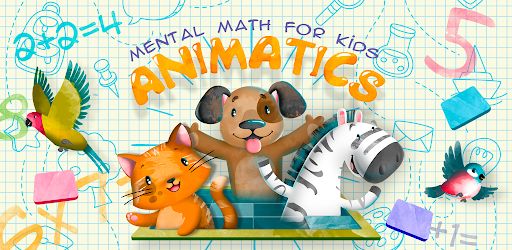
Mental math for kids ANIMATICS
Mental math for kids ANIMATICS is a free Google Play game listed under Educational and Math & Numbers, with the skill tag Math & Numeracy. The supplied description presents it as a mental-calculation practice game for children aged 7 to 12 and mentions daily sessions of 10 to 15 minutes, though that store description is marketing text and should not be treated as a verified outcome.
This is one of the clearest choices in the collection for a child who wants arithmetic practice in a game format. Before starting, check whether the level matches the child’s current schoolwork and whether the pace feels motivating rather than pressuring. It is free, listed from 2017, and has a 5.0/5 rating from 231 votes.
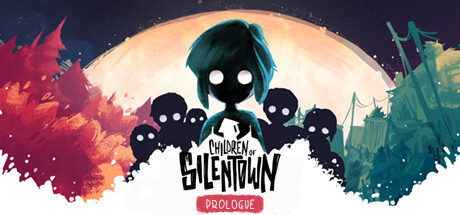
Children of Silentown: Prologue
Children of Silentown: Prologue is a free Steam adventure and point-and-click puzzle game from 2020. Its supplied description follows Lucy, a young girl in a forest village where people are disappearing and monsters are present. The listed skills are “n/a,” so it is more accurate to describe this as narrative exploration with puzzles than as a targeted memory or maths game.
The prologue format may make it a convenient way to sample the setting before deciding whether the full style is a good fit. The dark premise deserves an adult’s attention before a child plays, especially if suspense or monsters are unwelcome. The game is listed at 4.9/5 from 1,038 votes, which suggests strong player approval but does not establish an educational effect.
Worm Out: Tricky riddle games
Worm Out: Tricky riddle games is a free App Store puzzle game tagged for Logic & Reasoning. The supplied description says that players rescue fruit from pests and solve levels involving coloured worms with different difficulties. That points to visual problem-solving and rule discovery, with each level acting like a compact logic challenge.
This could suit a child who enjoys trying several approaches instead of following a single worked example. Encourage the player to explain why a move works, not just to chase a quick completion. The game is listed from 2021 with a 4.8/5 rating from 5,866 votes, one of the larger vote counts in this collection.
All 4 One Word-Whiz: The #1 memory game for kids and adults. Perfect for brain training.
All 4 One Word-Whiz: The #1 memory game for kids and adults. Perfect for brain training. is a free App Store word and memory game, tagged for Language & Vocabulary and Memory. Its central task is to look at four different pictures and guess the word they have in common. That makes it a vocabulary-and-association puzzle, rather than a simple card-matching exercise.
The four-picture format may encourage a player to compare clues, generate possibilities and test the shared connection. It can work well as a conversation starter: ask which picture provided the strongest clue and what other words were considered. The title uses “brain training” language, but the responsible takeaway is narrower: it provides word and association puzzles. It is listed from 2013 and has a 4.8/5 rating from 450 votes.

Memory Game for kids
Memory Game for kids is a free Google Play memory game from 2024. The supplied description calls it “Memo Kids” and “Memorama Kids,” and presents it as an activity designed for younger players that can be enjoyed with friends. The listed skill is Memory, with no further details supplied about the number of cards, modes or difficulty settings.
That makes it a straightforward option to investigate if the child likes remembering locations and finding pairs. Keep the first sessions relaxed and let the player talk through a strategy, such as remembering a row or grouping turns by location. The game is listed at 4.8/5 from 673 votes; because the available description is brief, check the actual interface and challenge level before settling on it.
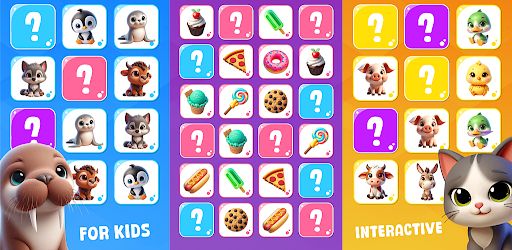 Memory GamesMemory Game for kidsDisisa Estudio★ 4.8 (673 votes)View ratings & details ▶
Math Problems 1st – 12th Grade
Math Problems 1st – 12th Grade is a free App Store educational maths game listed for Math & Numeracy. The supplied description says it covers addition, subtraction, multiplication and division across levels described as suitable for a wide range of learners, from preschoolers to older students. The title suggests a broad progression, but the collection data does not specify how each level is structured.

This may be useful when a family wants one place to sample different arithmetic levels. Start with a level that feels manageable, then move up only when accuracy and understanding are comfortable. A child should not have to guess whether an answer is wrong; if the game does not explain mistakes, use the moment for a quick discussion away from the screen. It is listed from 2020 with a 4.7/5 rating from 12,640 votes.
King of Math
King of Math is a free App Store educational maths game from 2011, tagged for Math & Numeracy. Its supplied description calls it fast-paced, says it is intended for the whole family, and describes the maths level as roughly middle school, or Grades 6–8, while also saying the game suits others.
The “king” framing gives this entry a playful level-up feel, but the real question is whether the arithmetic is at the right level and whether speed helps or distracts. It may be a good fit for a child who enjoys timed challenges, while another player may learn more from a calmer format. The game is listed at 4.7/5 from 3,088 votes. As with the other entries, the rating reflects users’ views rather than proof that the game improves general maths ability.
Play 1-Back Memory free on Mentometry — no download, and your score joins the global leaderboard.
Build a sensible weekly routine
A good routine should be easy to repeat, flexible enough for real family life and modest enough to leave room for sleep, schoolwork, outdoor play, creativity and social time. The games do not need to become a daily performance test. Think of the week as a small campaign with varied levels, not an endless score chase.
A practical seven-day pattern
- Choose two or three game types. Pair a maths activity with a memory, word or logic activity. Add an adventure game only if its tone suits the player.
- Set a clear session boundary. Decide in advance whether the child will play one puzzle, one level or a short agreed period. Use the game’s own structure where possible rather than forcing a stopwatch onto every activity.
- Keep the first session observational. Watch for confusion, boredom, frustration and genuine curiosity. A game that looks suitable on paper may still be a poor match for the individual child.
- Ask one reflection question. Try “What was your strategy?” or “What clue helped?” This shifts attention from the score to the thinking process.
- Repeat with variation. Return to a familiar game later in the week, then change the task or choose another genre. Variety helps prevent one narrow activity from becoming the whole routine.
- Stop on a useful note. If the child is tired or frustrated, pause rather than turning the final level into a boss fight. Ending calmly makes it easier to return another day.
| Day | Possible focus | Simple reflection |
|---|---|---|
| Monday | Maths game | Which problem type felt easiest? |
| Tuesday | Memory or word game | What helped you remember or connect the clues? |
| Wednesday | Break or non-screen activity | What other activity was enjoyable? |
| Thursday | Logic puzzle | What did you try first, and what changed? |
| Friday | Maths review or a favourite | Did the challenge feel too easy, too hard or about right? |
| Weekend | Optional family session | Could someone else explain the rules? |
Use a “one strategy, one celebration” rule: after a puzzle, the child names one tactic they tried and one part they enjoyed. This keeps the conversation focused on process without pretending every session has to produce a measurable gain.
Pair collection games with focused practice
Mentometry also has short activities that can complement the collection without replacing it. 1-Back Memory asks the player to compare each new symbol with the one shown immediately before and decide whether it repeats or is new. It is a compact way to practise staying with a changing stream of information.
Flanker Arrows asks the player to focus on the centre arrow and tap its direction while ignoring the surrounding arrows. This gives children and adults a simple focus challenge with a clear rule: attend to the target, not the distractions around it.
These activities are best treated as focused tasks, not as universal measures of ability. A child may be tired, unfamiliar with the instructions or simply more interested in a different kind of game on a given day. Keep the tone curious: “What made that round tricky?” is more useful than treating a single score as a verdict.
Research on cognitive training generally supports careful, task-specific language. Practice can make someone more familiar with the practiced activity, while broader transfer to unrelated real-world abilities is less certain and depends on the task and evidence. That is why this guide describes what each game asks players to do rather than promising changes in intelligence or overall memory.

ALSO READ Arrows – Puzzle Escape Review: Calm Logic, Real Limits
How adults can make play more useful
Adults do not need to hover over every move, but occasional participation can improve the experience. Solve a puzzle together, take turns explaining a maths answer, or ask the child to teach the rules. Explaining a strategy can reveal whether the player understands the task or is relying on trial and error.
Keep comparisons gentle. Siblings and adults may have different familiarity, reading ability, reaction speed and interest. A leaderboard or rating can add excitement for some players, but it should not become the family’s main definition of success.
Also check practical details before installing or launching a game. Confirm the platform, review the tone of story-driven titles, and look at the first level rather than assuming that a promising title will fit. The listed games are free in the supplied data, but families should still use their normal device and app-store checks.
Choose one maths game and one puzzle or memory game this week. After each session, write down one strategy the child used and one adjustment to try next time.
Final level: keep the goal realistic
Brain Games for Kids works best as a menu, not a prescription. Mental math, matching, word associations, logic puzzles and adventures offer different kinds of engagement, and no single title needs to do everything. The strongest choice is the one that matches the child’s interests, current challenge level, available device and comfort with the game’s tone.
Use scores as feedback, not identity. Let children retry, explain their thinking and move on when a game stops being enjoyable. With that approach, the collection can provide a varied set of playful challenges while staying honest about what a game can and cannot show.
Frequently Asked Questions
Are these brain games suitable for all children?
No single game suits every child. Check the platform, difficulty, reading or maths demands, and the tone of story-driven games before play.
Are the games in Brain Games for Kids free?
The supplied collection data lists all eight games as free. They are available across Steam, Google Play and the App Store.
Which games are best for maths practice?
Mental math for kids ANIMATICS, Math Problems 1st – 12th Grade and King of Math are the collection’s maths-focused entries. Choose based on the child’s current level and preference for slower or faster challenges.
Which games focus on memory?
All 4 One Word-Whiz: The #1 memory game for kids and adults. Perfect for brain training. uses picture-to-word associations, while Memory Game for kids uses a memory-game format. Mentometry’s 1-Back Memory offers another short memory task.
Do brain games increase intelligence?
The game data does not establish that claim, and this guide does not make it. These games provide practice with particular tasks such as arithmetic, matching, word associations or logic puzzles.
Are the adventure games appropriate for young children?
The Children of Clay and Children of Silentown: Prologue have dark, horror or monster-related descriptions. Adults should review their themes and, when appropriate, preview the experience before a child plays.
This is educational content, not medical or financial advice.