The best chess and strategy games make you think several moves ahead, test a plan against changing conditions and learn from mistakes without turning every session into a high-stakes match. Mentometry’s Best Chess & Strategy Games collection brings together chess, checkers and strategy-themed titles with a broader selection of logic, spatial and planning puzzles.
- Look for games that make your decisions visible, meaningful and repeatable.
- Chess is only one route into strategic thinking; grid puzzles, word manipulation and number logic can also require careful planning.
- Use ratings, price and platform as practical filters, not as proof that a game will suit every player.
- A sensible routine mixes focused sessions, review and variety rather than chasing endless playtime.
What to look for in a strategy game
“Strategy” covers a surprisingly large map. A traditional chess game asks you to manage threats, trade pieces and evaluate positions. A Sokoban-style puzzle may remove the opponent entirely, then make one irreversible push feel like a boss fight. A word or number puzzle can turn planning into a question of sequence, constraints and consequences.
The common thread is not a particular theme or difficulty level. It is the need to choose an action, anticipate what follows and adjust when the result does not match your plan. Strong strategy games usually give you enough information to reason with, while still leaving room for uncertainty, trade-offs or a clever twist.
| Feature to check | Why it matters | What to ask yourself |
|---|---|---|
| Decision depth | Shows whether choices have consequences beyond the next move. | Will I need to compare several possible lines? |
| Feedback | Clear feedback helps you understand why a plan worked or failed. | Can I identify the mistake, or did I simply lose? |
| Information | Visible rules and constraints make thoughtful play possible. | Do I have enough clues to build a reasonable plan? |
| Reset cost | Easy restarts encourage experimentation instead of fear of failure. | Can I try another approach without a long wait? |
| Fit and variety | The right game matches your preferred pace and type of challenge. | Do I want competition, quiet puzzles or a story-led experience? |
Ratings can help you narrow the field, but they are not a personal compatibility score. A highly rated game may still be a poor fit if you dislike arithmetic, wordplay, slow exploration or repeated grid experiments. Platform and price matter too: the collection includes Steam games and one App Store title, with both free and paid options.
Practice usually produces the clearest improvement on the task being practised. Success in a puzzle or chess game should not be presented as proof of higher intelligence, broad cognitive improvement or protection from a health condition. Treat these games as engaging practice and entertainment, not as a medical or IQ intervention.
How this collection approaches planning
This list is usefully broader than a set of standard chess boards. It includes direct chess play, chess-inspired movement, block pushing, number logic, hexagonal deduction, word manipulation and an auto-battler built around tile placement. That variety lets you compare different kinds of planning rather than repeating one format.
Some games are about calculation: you can map a sequence before committing. Others are about constraint management: each move changes what remains possible. A few appear to frame planning through exploration or narrative. The store descriptions are marketing text and are not independently verified, so the notes below stick to the supplied game information.
- Several free entries make it easy to sample the collection.
- The games cover language, spatial reasoning, logic, maths and planning.
- Ratings provide a useful first-pass signal from listed player votes.
- Chess-inspired options sit alongside more unusual strategy formats.
- The games vary widely in pace, genre and depth.
- Most listed titles are on Steam, while Chess – Chess Online is on the App Store.
- A high rating cannot tell you whether the rules or presentation suit your taste.
- Not every title is a conventional chess or checkers game.
Games 1–3: words, spaces and automated battles
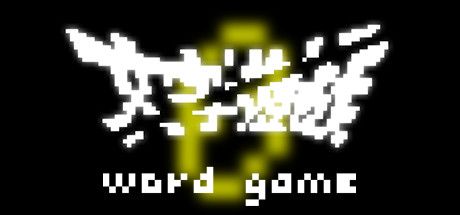
Word Game: Episode 0
Word Game: Episode 0 is an unusual first entry for a chess and strategy collection. It is listed as an adventure and point-and-click strategy game, with Language & Vocabulary and Planning & Strategy as its associated skills. The store description says you control “I” while finding clues between lines, deleting words to change sentence meaning and shifting words to rewrite facts.

That description points to planning through language rather than pieces on a board. You may enjoy it if you like testing how a small change affects a larger statement. It is free on Steam, released in 2021, and has a listed rating of 4.9/5 from 4,552 votes. Because its premise is quite specific, it is better viewed as a word-based strategy experiment than as a substitute for traditional chess.
Linelith
Linelith combines strategy with Sokoban and block-pushing puzzles. Its listed skills are Logic & Reasoning, Spatial & Visual and Planning & Strategy. The store description presents puzzles embedded in rocks and crystals within a colorful, serene alien asteroid, with clever twists appearing as you progress.
This is a good candidate for players who prefer quiet, spatial problem solving to head-to-head competition. Block-pushing games often make order matter: a move that looks helpful can close off a later route. Linelith costs $2.39 on Steam, was released in 2022 and has a listed rating of 4.9/5 from 1,507 votes.
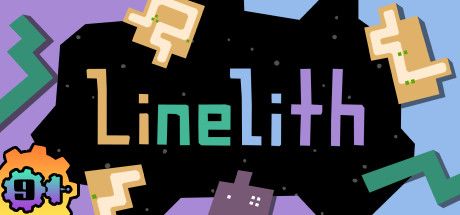 Strategy · Sokoban & Block PushingLinelithPatrick Traynor★ 4.9 (1.5K votes)View ratings & details ▶
Clockwork Cleanup
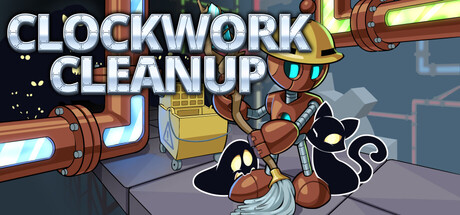
Clockwork Cleanup is listed as a puzzle and strategy game, with Planning & Strategy as its associated skill. Its store description calls it an auto-battler in which your actions are dictated by tiles of various shapes placed in a grid, with waves of enemies to defeat while saving the factory.
The interesting planning question here is how much control you can exert before the automated battle unfolds. Tile placement gives the game a spatial layer, while enemy waves create a sequence of problems rather than one isolated puzzle. It is free on Steam, released in 2025, and has a listed rating of 5.0/5 from 445 votes. The description does not establish how deep or long the experience is, so treat that as something to discover rather than assume.
Before moving, say your plan in one sentence: “I am placing this tile to create space later,” or “I am changing this word to reveal a clue.” If you cannot explain the purpose, pause and inspect the alternatives.
Games 4–6: chess movement, exploration and classic play
Chessformer
Chessformer is a chess-inspired grid-based puzzle platformer. The supplied description says each level asks you to capture an opposing king that never moves, so you do not need to worry about losing pieces. It is listed under Strategy and Chess & Checkers, with Logic & Reasoning and Planning & Strategy as its skills.
That setup changes the usual emotional rhythm of chess. Rather than managing a full competitive position, you can focus on how chess-piece movement interacts with a level’s layout. It may suit players who like chess rules but want a contained puzzle format. Chessformer is $4.99 on Steam, released in 2022, and has a listed rating of 5.0/5 from 323 votes.
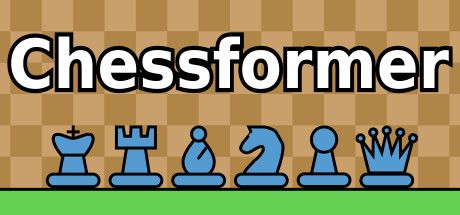 Strategy · Chess & CheckersChessformerRobert Alvarez★ 5.0 (323 votes)View ratings & details ▶
At Home Alone Final
At Home Alone Final is listed as an adventure and point-and-click strategy game, with Planning & Strategy as its associated skill. The store description calls it a casual healing RPG about a young girl moving through a house while home alone and encountering strange things.
Its place in this collection suggests a broader interpretation of strategy: planning actions and exploring possibilities within an adventure setting. The supplied information does not describe a chess-like system or specify the exact planning mechanics, so it is best approached as a story-led option rather than a pure strategy puzzle. It is free on Steam, released in 2021, and has a listed rating of 4.9/5 from 8,217 votes.

Chess – Chess Online
Chess – Chess Online is the collection’s straightforward chess entry. It is listed as a puzzle game and as Chess & Checkers, with Planning & Strategy and Logic & Reasoning as its associated skills. The store description positions it for both beginners and advanced players, but that wording is marketing text rather than an independently verified assessment.
If you want the familiar chess framework, this is the clearest place to start. Use it to practise basic planning habits such as checking threats, comparing candidate moves and considering what your opponent can do next. The game is free on the App Store, released in 2021, and has a listed rating of 4.9/5 from 6,665 votes.
Chess experience can sharpen your familiarity with chess positions and decision patterns, but a game session is not a reliable test of general intelligence. Choose Chess – Chess Online because you want to play chess, not because a listing can promise broad mental benefits.
Play Radar Tracker free on Mentometry — no download, and your score joins the global leaderboard.
Games 7–8: number logic and endless hexagonal puzzles
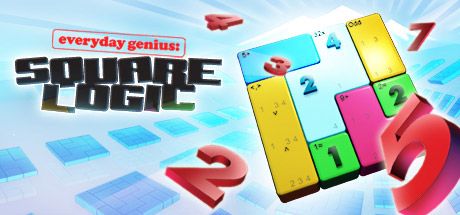
Everyday Genius: SquareLogic
Everyday Genius: SquareLogic is a puzzle and strategy game that adds Math & Numeracy to Planning & Strategy. Its store description says it combines simple arithmetic with colorful cages and logical problem solving, while emphasizing that players should not need to guess.
This makes it a natural choice for players who enjoy turning a set of constraints into a complete solution. The arithmetic may be simple, but the planning challenge can come from deciding which cage or deduction to resolve first. SquareLogic costs $4.99 on Steam, was released in 2009, and has a listed rating of 4.9/5 from 443 votes.
Hexcells Infinite
Hexcells Infinite is a puzzle and strategy title listed with Planning & Strategy as its associated skill. The supplied store description calls it an ambient logic puzzle game for PC, Mac and Linux. Its hexagonal format sets it apart from square-grid and chessboard designs, even though the core appeal is still careful deduction.
The “Infinite” in the title makes it appealing if you want a large supply of compact logic challenges, but the supplied data does not specify the exact number of puzzles or how they are generated. It costs $1.49 on Steam, was released in 2014, and has a listed rating of 4.9/5 from 4,718 votes. Choose it for focused deduction rather than competitive play.
 Puzzle Games · StrategyHexcells InfiniteMatthew Brown★ 4.9 (4.7K votes)View ratings & details ▶
Pick one puzzle and write down your first planned action before making it. Afterward, mark whether the move confirmed, changed or contradicted your expectation.
How to build a sensible weekly routine
A useful routine should be repeatable, varied and easy to stop. More time is not automatically better, especially when attention has faded and every move becomes a guess. Start with short sessions that leave you able to explain what you were trying to do.
A practical four-part cycle
- Choose one target. Decide whether the session is about chess calculation, spatial planning, word manipulation, arithmetic deduction or experimentation with a new game.
- Play with a process rule. For example, identify two candidate moves before committing, or predict the next consequence of a tile placement.
- Review one mistake. Do not replay every detail. Find one decision that changed the outcome and describe what information you missed.
- Finish with variety or rest. Switch formats on another day, or stop when your decisions become rushed and automatic.
One possible week might include a chess session on Monday, a spatial puzzle on Tuesday, a rest day on Wednesday, a word or adventure strategy game on Thursday, a number or hex-grid puzzle on Friday and a free-choice session at the weekend. This is a template, not a prescription. The best schedule is one you can follow without turning leisure into a chore.
| Day type | Suggested focus | Useful reflection |
|---|---|---|
| Focused strategy | Chess – Chess Online or Chessformer | What threats did I check before acting? |
| Spatial planning | Linelith or Clockwork Cleanup | Which move changed the available space? |
| Language or exploration | Word Game: Episode 0 or At Home Alone Final | What clue or action changed my interpretation? |
| Logic and numbers | Everyday Genius: SquareLogic or Hexcells Infinite | Which constraint narrowed the possibilities? |
| Review and choice | Return to a favourite or try a new title | Did I play deliberately or simply rush? |
For extra variety between strategy sessions, Mentometry’s Radar Tracker asks you to memorize one gold dot, follow it as the dots scatter and move, then tap where you believe it stopped. It is a different kind of attention challenge, so use it as a change of pace rather than pretending it measures the same skill as chess.
Ball Tracker offers another short change of format: watch one cup hide a ball as the cups shuffle, then tap the cup you believe still contains it. A brief tracking game can make a weekly routine feel less repetitive while keeping the session focused on a clear task.
ALSO READ Best Logic Puzzles for Careful Thinking in 2026
How to choose your first game
Start with your preferred kind of difficulty, not with the highest rating. If you want direct chess rules and a familiar board, try Chess – Chess Online. If you want chess movement without a conventional match, Chessformer is the more distinctive choice.
For spatial planning, Linelith offers block-pushing puzzles, while Clockwork Cleanup puts tile placement inside an auto-battler structure. For deduction, compare the arithmetic constraints of Everyday Genius: SquareLogic with the ambient hex-grid logic of Hexcells Infinite. If words and interpretation are more appealing, Word Game: Episode 0 provides the most obvious language-led route.
Price can narrow the list quickly. Word Game: Episode 0, Clockwork Cleanup, At Home Alone Final and Chess – Chess Online are listed as free. Linelith, Chessformer, Everyday Genius: SquareLogic and Hexcells Infinite are listed at $2.39, $4.99, $4.99 and $1.49 respectively. Check the platform before planning a purchase, since most entries are listed for Steam and Chess – Chess Online is listed for the App Store.
Use a three-session test before judging a game. Play once to learn the rules, once to try a deliberate strategy and once to decide whether the challenge feels satisfying enough to keep.
What progress should look like
Track process signals rather than grand claims. Can you explain your plan before moving? Do you notice threats earlier? Are you making fewer random resets? Can you identify why a puzzle failed instead of only seeing that it failed?
You can keep a small note after each session: game, puzzle or match, intended plan, turning point and one idea to try next time. This turns a string of levels into a visible learning loop. It also protects the routine from becoming a blur of wins, losses and half-remembered frustration.
Progress will not look identical across the collection. In chess, it may mean comparing candidate moves more carefully. In block pushing, it may mean preserving escape routes. In SquareLogic or Hexcells Infinite, it may mean using constraints in a more orderly sequence. The useful result is a better understanding of the game’s decision system, not a promised change in your overall ability.
Final recommendation
The Best Chess & Strategy Games collection works best as a sampler. It includes conventional chess, chess-inspired puzzles and several titles that stretch the meaning of strategy into language, exploration, arithmetic and spatial deduction.
Pick one game that matches your preferred challenge, play with a clear process rule and review one decision afterward. Then rotate formats during the week. That approach keeps the collection engaging, gives each game room to show its character and turns every level into a small, honest planning exercise.
Frequently Asked Questions
What are the best chess and strategy games in this collection?
The collection includes Chess – Chess Online for conventional chess and Chessformer for a chess-inspired puzzle format. It also includes broader strategy games such as Linelith, Hexcells Infinite and Everyday Genius: SquareLogic.
Are any of these strategy games free?
Yes. Word Game: Episode 0, Clockwork Cleanup, At Home Alone Final and Chess – Chess Online are listed as free. The other games in the collection have listed prices ranging from $1.49 to $4.99.
Which game is best for beginners?
Chess – Chess Online is listed for beginners and advanced players, making it the clearest conventional starting point. Linelith or Hexcells Infinite may suit beginners who prefer quiet logic puzzles, although the best choice depends on your preferred format.
Which games focus on logic and planning?
Linelith, Chessformer, Chess – Chess Online, Everyday Genius: SquareLogic and Hexcells Infinite all list planning or logic-related skills. Their challenges differ, covering spatial movement, chess positions, arithmetic constraints and hexagonal deduction.
Can strategy games improve intelligence?
You should not treat these games as proof of higher intelligence or broad cognitive improvement. They can provide practice in the rules and decision patterns of the games themselves, along with an engaging way to exercise planning.
How often should I play strategy games?
A sensible routine uses short, focused sessions across the week with variety and occasional review. Stop or switch formats when play becomes rushed, repetitive or frustrating.
Educational content, not medical or financial advice.