No Wi-Fi? No problem. This collection brings together eight free games designed for offline play, making them useful companions for flights, train journeys, waiting rooms and daily commutes. The mix includes number grids, logic puzzles, matching games, trivia, word association and relaxed number merging, so you can choose a challenge that fits your mood rather than forcing every session into the same mold.
- Offline games are most useful when their rules are clear, sessions are easy to pause and progress does not depend on a connection.
- This collection covers logic, numeracy, attention, memory, vocabulary and general knowledge in different formats.
- Game ratings and store descriptions are supplied as listing information; they are not independent tests of learning or offline performance.
- A sensible routine varies the type and difficulty of play instead of chasing long sessions or personal-best scores every day.
What to look for in an offline brain game
An offline game should do more than launch without Wi-Fi. Look for a format that explains its rules clearly, lets you make progress in manageable sessions and gives you enough feedback to understand mistakes. A good travel game should feel like a reliable pocket puzzle, not a boss fight against menus, loading screens or unclear instructions.
It is also worth checking the practical details before a trip. The games in this collection are listed as free, but store pages can change, and a listing alone does not establish every feature of the app. Check the relevant store listing and test the game before travelling if offline access is especially important to you.
| What to check | Why it matters offline |
|---|---|
| Clear rules | You should be able to start playing without searching for help online. |
| Short, pausable sessions | Useful for commutes, queues and journeys with interruptions. |
| Varied challenge | Different levels or puzzle types can help prevent every session feeling identical. |
| Low dependence on live features | Core play should remain usable when there is no connection. |
| Readable presentation | Clean layouts reduce friction when playing on a small screen. |
Before leaving home, open each game, start a puzzle and switch your device to flight mode. That quick test is more useful than assuming an app will behave offline because it appears in an offline collection.
How to choose the right challenge
Start with the kind of thinking you actually want to practise in the moment. A number grid may suit a quiet morning, while a matching game can be easier to dip into when your attention is divided. Trivia and word association offer a change of pace when formal logic puzzles begin to feel repetitive.
Difficulty is another important filter. A demanding puzzle can be satisfying when you have uninterrupted time, but a short commute may call for something with a simple entry point. Think of the collection as a set of different levels: rotate between deliberate problem solving, visual matching, recall and language rather than treating one game as the universal winner.
- Works across several puzzle and quiz styles.
- All listed games are free in the supplied collection data.
- Suitable for choosing by mood, available time or preferred skill area.
- Includes options for both focused and more relaxed play.
- Platforms vary between Google Play and the App Store.
- Not every listing supplies a skill category.
- Store descriptions are marketing text and are not independently verified here.
- Offline behaviour should be tested on your own device before travel.
Play Color Sequence free on Mentometry — no download, and your score joins the global leaderboard.
The offline games, from number grids to word links
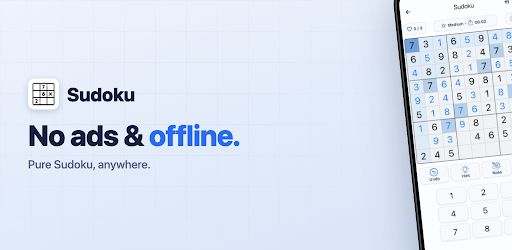
Sudoku – Classic Number Puzzle
Sudoku – Classic Number Puzzle is the most traditional logic option in the collection. Its listed skills are Logic & Reasoning and Math & Numeracy, and its type is Sudoku & Number Grids. The Google Play game is listed as free, from 2025, with a 5.0/5 rating from 596 votes. Its store description markets a no-ads, no-distractions approach, but that claim is not independently verified here.
This is a good choice when you want a structured puzzle with a familiar rule set and a clear sense of progress. Sudoku rewards careful elimination rather than hurried tapping, so it suits a seat on a train or a quiet break when you can give the grid steady attention. If you are new to the format, begin with puzzles that leave room for methodical deductions rather than treating speed as the main stat.
Pawdoku-Logic Puzzle
Pawdoku-Logic Puzzle is listed as a logic puzzle for the App Store, free, from 2026, with a 4.9/5 rating from 5,261 votes. Its listed skill is Logic & Reasoning. The store description presents it as a minimalist Queens-style puzzle and says each puzzle has one solution, but those are marketing claims supplied by the store listing rather than findings independently checked for this guide.
The appeal here is the different flavour of deduction. If standard Sudoku feels too familiar, a Queens-style board can provide a fresh rule system while keeping the focus on reasoning. It may work particularly well for players who enjoy testing possibilities, ruling out conflicts and finding a clean route to a final board.
Math Grid – Number Puzzle Game
Math Grid – Number Puzzle Game combines the listed categories of Logic Puzzles and Math & Numeracy. It is listed on the App Store as free, from 2024, with a 4.9/5 rating from 5,232 votes. The store description compares its format with crossword puzzles and maths problems, so it may suit players who like working through a grid while keeping numerical relationships in view.
Choose this one when you want more direct numerical thinking than a conventional logic grid provides. The crossword comparison also suggests a useful change of rhythm: instead of scanning only rows and columns, you may be moving between clues, entries and constraints. That makes it a practical option for a focused session, especially when you want a puzzle with a more academic texture.
Brain Number Match
Brain Number Match is listed as a free App Store puzzle from 2025, with a 4.9/5 rating from 2,573 votes. No specific skill tags are supplied in the collection data. Its store description presents it as a number puzzle built around finding pairs, with a relaxed yet challenging tone; because that wording is marketing text, it should be read as a description of the intended experience rather than an independent assessment.
Pair-finding games can be a useful low-barrier choice when you have only a few minutes. The basic idea is easy to understand, while the challenge can come from scanning the board carefully and deciding which matches to make. It is a sensible alternative to a multi-step grid when you want something immediately playable between stops.
 Puzzle GamesBrain Number MatchForge Games★ 4.9 (2.6K votes)View ratings & details ▶
Onet – Connect & Match Puzzle
Onet – Connect & Match Puzzle is a free App Store puzzle listed from 2020, with a 4.9/5 rating from 10,251 votes. Its listed skills are Memory and Attention & Focus. The store description centres on matching and connecting images, so the game offers a visual alternative to the number-heavy choices earlier in the collection.
This could be a good fit when you want to shift from calculation to visual scanning. Matching tasks can feel lighter than a Sudoku-style board, but they still ask you to notice details and maintain a clear view of available choices. Try it when you are travelling and want a game that feels active without requiring you to remember a long set of rules.

Trivia Star: Trivia Games Quiz
Trivia Star: Trivia Games Quiz is listed as a free App Store trivia game from 2020, with a 4.9/5 rating from 314,514 votes. No specific skills are supplied in the collection data. Its store description mentions subjects including movies, sports and science, as well as a wide variety of questions, but the exact content and offline behaviour should be checked in the current store listing.
Trivia changes the goal from discovering a logical solution to retrieving or recognising information. That makes it a useful choice when you want variety, a quick question-by-question format or a friendly contest with your own memory. Treat missed questions as information about what you did not recall in that moment, not as a verdict on your overall knowledge.
Merge Hexa™ Number Puzzle Game
Merge Hexa™ Number Puzzle Game is listed as a free App Store puzzle from 2020, with a 4.9/5 rating from 64,127 votes. It is categorised as a relaxing and zen puzzle, with no specific skills listed in the collection data. The store description focuses on merging numbers and a calm presentation, although its claims about brain training are marketing language and are not adopted here.
Merge-style play can provide a slower tactical option for a journey. You make choices in the present while considering how the board may develop after the next move, which gives the game a gentle planning loop. It is a reasonable pick when you want to think ahead without committing to a conventional clue-and-solution puzzle.
Word Bond – Association Game
Word Bond – Association Game is listed as a free App Store word puzzle from 2025, with a 4.9/5 rating from 2,573 votes. Its listed skills are Language & Vocabulary and Logic & Reasoning. The store description places it among word association, word sorting, word search and word matching games, giving it the broadest language-oriented profile in this collection.
Choose it when you want to exercise your vocabulary through connections rather than arithmetic or visual matching. Association puzzles can have a satisfying “aha” moment because the challenge is not only knowing words but spotting the relationship that joins them. It also makes a useful change of genre after several number-based sessions.
Different games place different demands on attention, memory, language or problem solving, but performing well in one game should not be treated as proof of a broad change in intelligence. Research on cognitive training is mixed and often depends on the specific task, comparison group and outcome being measured. Enjoy these games as structured mental activities, not as treatments or guarantees of long-term health effects.
How to build a sensible weekly routine
A useful routine should be regular enough to become familiar but flexible enough to survive real life. You do not need marathon sessions. A short, attentive session with a clear stopping point is often easier to fit around work, study, travel and rest than an ambitious plan that turns every spare minute into a score chase.
A practical seven-day pattern
- Choose three or four sessions. Begin with a realistic amount of time, such as a short session on several days rather than one long block at the weekend.
- Rotate the format. Pair a logic game such as Sudoku – Classic Number Puzzle or Pawdoku-Logic Puzzle with a visual game such as Onet – Connect & Match Puzzle, then add trivia or word association for variety.
- Match the game to your attention. Use a demanding grid when you can concentrate and a simpler matching or merging game when your journey is interrupted.
- Keep one observation after each session. Note whether the puzzle felt clear, rushed, frustrating or satisfying. This helps you choose better sessions without turning the routine into a performance test.
- Stop before fatigue makes the game unpleasant. A difficult level is not automatically a better session. Change games, lower the challenge or take a break when concentration has clearly dropped.
One possible week might include Sudoku – Classic Number Puzzle on Monday, Onet – Connect & Match Puzzle on Tuesday, a rest day on Wednesday, Math Grid – Number Puzzle Game or Pawdoku-Logic Puzzle on Thursday, Trivia Star: Trivia Games Quiz on Friday and Word Bond – Association Game at the weekend. Brain Number Match and Merge Hexa™ Number Puzzle Game can fill short gaps when you want something less formal.
For an additional memory-focused activity, try Color Sequence, which asks you to watch a sequence of colors and repeat it in the same order.
Another option is 1-Back Memory. It asks you to compare each new symbol with the one shown immediately before it and decide whether it repeats or is new, making it a compact way to add a different kind of comparison task to the week.
For one week, play four short sessions and use a different game category each time: logic, numbers, visual matching and words or trivia. After each session, write one sentence about the experience rather than recording only the score.
ALSO READ Inside Sequence Memory: The Science Behind the Game and What Your Score Really Measures
Make offline play work better
Prepare your device before the journey. Install the games you want, open them once, test a sample round without a connection and make sure your battery plan is sensible. Headphones, screen brightness and notifications can also affect the experience, so remove avoidable distractions when you want a focused puzzle.
Keep your expectations grounded. A higher rating may indicate that many store users enjoyed a game, but it does not tell you whether the game suits your preferred difficulty, device or travel routine. The best choice is the one you can open easily, understand quickly and enjoy returning to without feeling pressured to keep playing.
Offline access is a practical feature, not evidence that a game improves intelligence, prevents dementia or treats a health condition. The collection is best viewed as a set of convenient recreational challenges that can make idle time more engaging.
Choose your next level
The Brain Games That Work Offline collection is strongest when treated as a menu rather than a ranking. Sudoku – Classic Number Puzzle and Pawdoku-Logic Puzzle offer deduction, Math Grid – Number Puzzle Game brings numerical structure, and Brain Number Match adds quick pair finding. Onet – Connect & Match Puzzle shifts towards visual matching, Trivia Star: Trivia Games Quiz tests recall, Merge Hexa™ Number Puzzle Game offers number merging and Word Bond – Association Game brings language into the mix.
Pick one game for today’s journey, keep another ready for a change of pace and let your routine remain enjoyable. There is no need to turn every session into a high-score showdown. The win is finding a clear, accessible way to spend a few offline minutes with your attention switched on.
Frequently Asked Questions
What are the best offline brain games for travel?
The best choice depends on your preferred format and available time. This collection includes Sudoku, logic puzzles, matching games, trivia, number merging and word association, so you can switch between focused and lighter sessions.
Do these brain games work without Wi-Fi?
They are included in Mentometry’s collection of games intended for offline play. Because apps and store requirements can change, test each game in flight mode before relying on it during a journey.
Are the games in this collection free?
The supplied collection data lists all eight games as free. Store listings and app features can change, so check the current listing for the game and platform you plan to use.
Which offline game is best for logic puzzles?
Sudoku – Classic Number Puzzle, Pawdoku-Logic Puzzle and Math Grid – Number Puzzle Game are the clearest logic-focused choices in the collection. Their formats differ, so try more than one to see which rules you prefer.
Are offline brain games good for memory?
Some games involve matching, attention or recall, including Onet – Connect & Match Puzzle and Trivia Star: Trivia Games Quiz. Enjoy them as recreational challenges, but do not treat performance in a game as proof of a broad improvement in memory or intelligence.
How often should I play brain games?
A practical routine is three or four short sessions per week, with different game types rotated across the week. Adjust the length and difficulty to your attention, schedule and enjoyment rather than forcing long sessions.
Educational content, not medical or financial advice.
[…] ALSO READ Best Offline Brain Games for Travel and Commutes in 2026 […]