
A strong score in Mentometry’s Odd or Even is not mainly about frantic tapping. It comes from making the parity decision accurately, reducing unnecessary mental steps, and practicing in a way that keeps the skill available when you need it. The best approach is simple: build a reliable rule first, add speed gradually, and treat fatigue as a real performance variable rather than a personal failure.
- Accuracy should lead the training process; speed is useful only when the decision rule remains reliable.
- For whole numbers, parity is determined by the final digit, so avoid rereading the entire number.
- Short, regular sessions are usually more useful than one long practice marathon.
- Track both correct decisions and speed when possible. A faster score with more mistakes may not represent progress.
- Sleep, attention and fatigue can affect rapid decisions, especially when the task demands sustained focus.
- Improvement on Odd or Even is mainly evidence of improvement on this task or closely related tasks. It does not automatically raise general intelligence or transfer to every cognitive ability.
Understand what the game is asking you to do
Odd or Even combines two steps: identifying the number and applying a simple rule. You then make a rapid response. That means your score can be affected by several different bottlenecks, including number recognition, rule retrieval, hesitation, motor response and lapses in attention.
The useful distinction is between knowing the rule and executing the rule quickly. If you occasionally forget which numbers are odd or even, your first job is rule stability. If the rule feels automatic but your responses are slow, your focus should shift toward reducing hesitation and making the response routine.
For whole numbers, the final digit determines parity. Numbers ending in 0, 2, 4, 6 or 8 are even; numbers ending in 1, 3, 5, 7 or 9 are odd. This is a practical example of reducing a task to its relevant information: once you have identified the final digit, scanning the rest of the number adds work without adding useful evidence.
Rapid decisions often involve a trade-off between speed and accuracy. Pushing response time lower can increase errors, while taking more time can improve accuracy. The aim is not to choose one forever, but to find the fastest pace at which your decisions remain dependable. (pmc.ncbi.nlm.nih.gov)
Build accuracy before chasing speed
A common mistake is to treat every round like a boss fight from the beginning. Players rush, miss several decisions, then try to compensate by rushing even more. That usually trains hurried responding rather than clean parity judgment.
Start by aiming for a calm, highly accurate run. Give yourself enough time to identify the relevant digit and choose the correct category. Once the rule feels stable, increase your pace in small steps. If accuracy drops sharply, step back to the previous comfortable level.
This approach follows a broad principle from skill learning: practice is more useful when it targets a specific weakness, includes feedback and presents a manageable challenge. Deliberate practice is not simply repeating the task for as long as possible. It involves observing performance, setting small goals, rehearsing the relevant action and checking whether the change actually helped. (pmc.ncbi.nlm.nih.gov)
A practical accuracy-first progression
- Play a short set with the goal of making clean decisions, not setting a record.
- Notice the main error type: misreading, hesitation, wrong category or accidental tap.
- Choose one adjustment for the next set.
- Increase speed only if the adjustment remains reliable.
- Stop or take a break when errors begin to cluster because of fatigue.
Do not judge progress from one unusually good or bad attempt. Rapid tasks naturally vary with attention, sleep, distractions and mental state. Look for a pattern across several sessions instead of treating a single score as your permanent skill level.
Use a two-stage goal: first, protect accuracy; second, reduce hesitation. If you reverse those priorities, you may become faster at producing mistakes.
Use the shortest reliable decision rule
The most useful strategy for Odd or Even is to identify the smallest part of the number that answers the question. For a whole number, that means checking the final digit rather than mentally processing every digit from left to right.
This is a form of chunking, but keep the claim modest. You are not increasing the size of your general working memory. You are organizing a familiar task so that fewer unnecessary steps compete for attention. With practice, the relevant final-digit categories can become easier to retrieve.
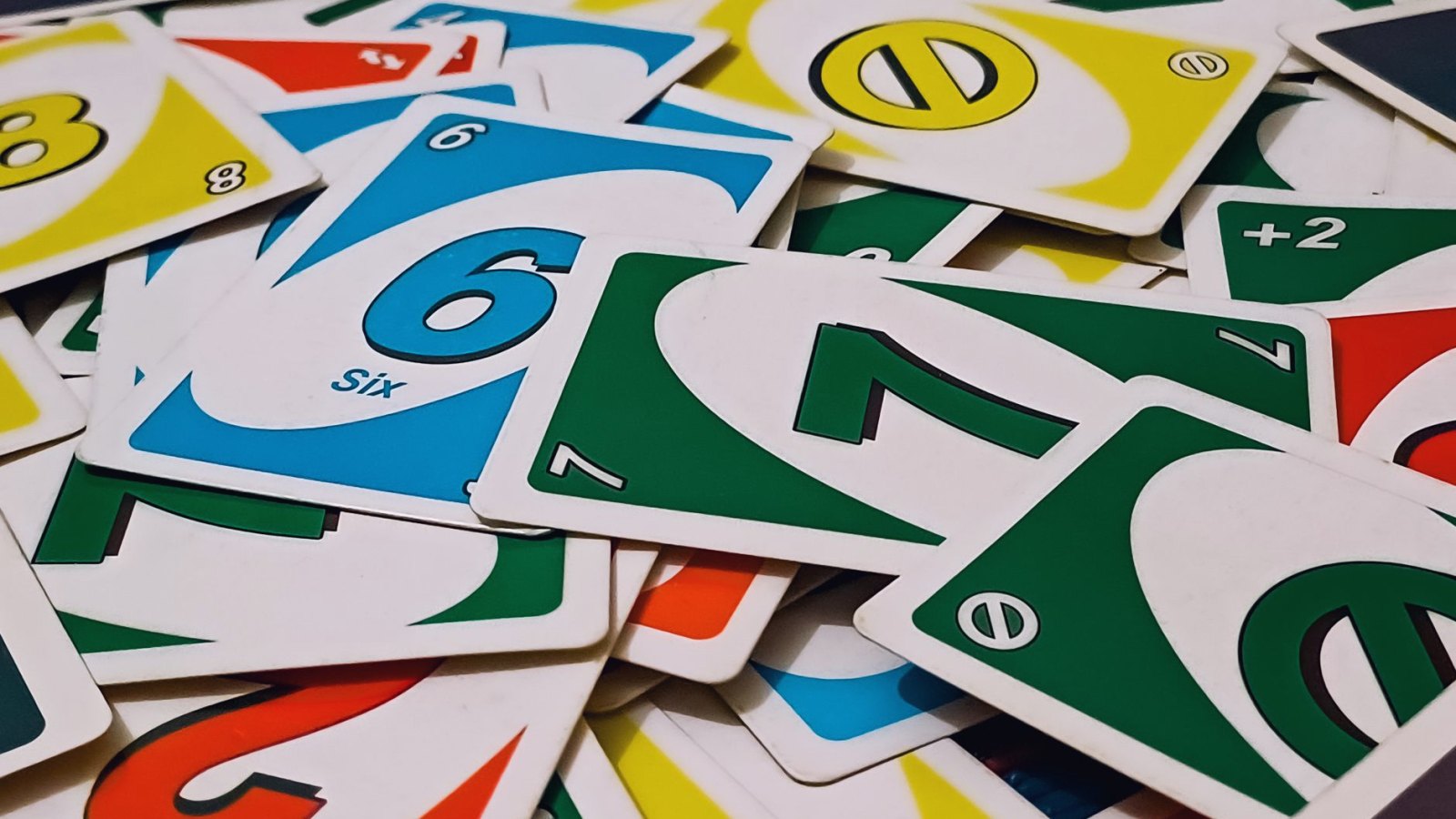
You can also group the final digits into two compact sets:
| Final digit group | Decision | Useful mental label |
|---|---|---|
| 0, 2, 4, 6, 8 | Even | Closed or paired set |
| 1, 3, 5, 7, 9 | Odd | Alternating set |
The labels are optional. Do not force a mnemonic if it slows you down. The best strategy is the one that reduces uncertainty without adding another layer of thought.
Avoid verbalizing the entire number in your head. Reading every digit aloud internally can create an extra processing step. Instead, direct your attention to the final digit and make the category decision. The goal is a clean sequence: spot, classify, tap.
For your next three short sessions, focus only on the final digit. Do not try to go faster at first. Afterward, compare whether your accuracy feels steadier and whether hesitation decreases.
Practice in short, spaced sessions
One long session can feel productive because the numbers become familiar and your score may rise during the same sitting. But immediate improvement is not the same as durable learning. Spacing practice across separate sessions gives you repeated opportunities to retrieve the rule and rebuild your rhythm after a gap.
Research on spacing and retrieval practice consistently supports distributing learning over time rather than concentrating all repetitions together. The strongest evidence comes from learning research across many kinds of material and tasks, so it should not be treated as a guarantee about any one game. Still, it gives a sensible training principle for a rule-based skill: return regularly instead of relying on a single marathon. (doi.org)
A simple weekly structure
- Session 1: establish a comfortable accuracy baseline.
- Session 2: repeat the final-digit strategy and work on hesitation.
- Session 3: add a small amount of speed while protecting accuracy.
- Session 4: test yourself when the previous session is no longer fresh.
- Optional session: play for enjoyment, but do not treat a tired score as a meaningful verdict.
Sessions do not need to be long to be useful. A brief, focused visit can give you better information than a prolonged run in which attention gradually deteriorates. Leave enough time between sessions that you have to retrieve the rule rather than simply continuing an active mental rhythm.
Spacing also helps you separate genuine progress from temporary warm-up effects. If your score improves only after many consecutive rounds, you may be measuring short-term adjustment. If it remains solid after returning later, that is stronger evidence that the skill is becoming more stable.
Play Odd or Even free on Mentometry — no download, and your score joins the global leaderboard.
Warm up without wasting your best effort
A warm-up can help you settle attention and bring the decision rule to the front of your mind. It should be brief and purposeful, not an excuse to spend your entire practice session chasing a perfect rhythm.
Begin with a small number of easy mental checks. Remind yourself that 0, 2, 4, 6 and 8 are even, while 1, 3, 5, 7 and 9 are odd. Then take a short practice run at a controlled pace before attempting a faster score.

The warm-up is especially useful if you are switching from another activity. Your mind may still be carrying unfinished work, a conversation or a different rule set. A short transition period can help you focus on the relevant information instead of starting cold and interpreting early mistakes as evidence that you have lost skill.
Use the same brief pre-game routine each time: sit comfortably, remove obvious distractions, recall the two digit groups and begin with controlled decisions. Consistency makes your scores easier to compare.
Manage the speed-accuracy trade-off
Speed is part of the challenge, but “faster” is not automatically “better.” A score that comes from rapid but unreliable tapping may reflect a poor speed-accuracy balance. If the game rewards correct decisions, accuracy remains part of the performance, not a side quest.
Try using speed bands rather than one all-or-nothing target. First, find a pace at which decisions feel nearly automatic and errors are uncommon. Then experiment with a slightly faster pace. If you start guessing, rereading numbers or losing track of the final digit, return to the earlier pace.
| What you notice | Likely issue | Training response |
|---|---|---|
| Many wrong classifications | Rule retrieval or rushed processing | Slow down and rehearse the two digit groups |
| Correct decisions but hesitation | Extra checking or uncertainty | Focus on the final digit and use one decision rule |
| Good early score, poor late score | Attention or fatigue | Use shorter sessions and take a break |
| Fast taps with inconsistent results | Speed target is too aggressive | Return to the fastest reliable pace |
If you track your results, record more than your top score. Note the date, approximate session length, whether you were tired and whether the run felt accurate. This creates a more useful performance picture than a leaderboard number alone.
A higher score on one day may reflect better sleep, fewer distractions or a stronger warm-up. It does not necessarily mean your underlying ability changed overnight.
Protect attention with sleep and fatigue management
Odd or Even may look simple, but rapid repeated decisions depend on sustained attention. Fatigue can make it harder to maintain a consistent response rule, especially when the task requires repeated focus with little time between decisions.
Sleep loss is associated with poorer attention and slower or less reliable responses across attention-demanding tasks. That does not mean one tired session is meaningless, but it does mean you should be cautious about interpreting a low score after a poor night as a pure measure of skill. (pmc.ncbi.nlm.nih.gov)
Use fatigue as information. If you notice more missed classifications, delayed responses or careless taps, take a break rather than trying to force your way through. A short pause may restore attention; if it does not, end the session and return when you are more alert.
Other basic conditions matter too. Reduce interruptions, use a comfortable posture and avoid practicing when you are mentally overloaded. These are not magical performance enhancers. They simply remove avoidable sources of variation.

Sleep supports attention and memory processes, but research does not justify promising that a game session will improve sleep, prevent cognitive decline or treat a health condition. Here, sleep is best understood as a condition that can influence your day-to-day performance.
Use related practice carefully
Some nearby tasks may make practice more varied, but variety should not be confused with guaranteed transfer. Odd or Even directly trains rapid parity judgment and the response habits needed for that task. A puzzle involving logic, patterns or visual differences may be enjoyable and may overlap with some broad demands, but it will not automatically improve your Odd or Even score.
If you want a related Mentometry activity, Pattern Match offers a different rule-following challenge: study a pattern, then select the option that matches it exactly. Treat it as a change of cognitive flavor, not as a proven substitute for parity practice.
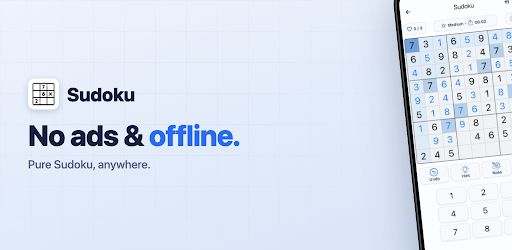
For an outside puzzle option, Sudoku – Classic Number Puzzle is described in the directory as a Sudoku and number-grid puzzle focused on logic and numeracy. It may suit players who enjoy deliberate number reasoning, but it should not be presented as a direct training method for rapid odd-or-even decisions.
- Related tasks can keep practice interesting.
- Changing activities may reduce boredom.
- Different puzzles can exercise different rule-following demands.
- Transfer to unrelated abilities is not guaranteed.
- Time spent on another puzzle is not the same as direct Odd or Even practice.
- A varied routine can make it harder to identify what actually improved your score.
Keep direct practice as the main ingredient if your goal is a higher Odd or Even score. Use other games as optional cross-training or recreation, not as evidence that general intelligence is increasing.
ALSO READ Reaction Time Research: The Science of Human Speed Limits
Know what your score can—and cannot—tell you
Improvement on a practiced task is a meaningful result. It may show that you have learned the rule, reduced unnecessary processing, improved response consistency or become more comfortable with the task format. Those are useful gains, especially if your goal is to perform better in Odd or Even.
But task-specific improvement should not be inflated into a claim about overall intelligence. Cognitive training research distinguishes between improvement on the trained task, improvement on similar tasks and broader transfer to different abilities. Transfer is often limited, debated or dependent on how closely the tasks share processes. (pmc.ncbi.nlm.nih.gov)
In practical terms, a better Odd or Even score does not automatically mean better memory, stronger reasoning in general, improved school performance or superior real-world decision-making. It means that your performance on this particular rapid parity task has improved, unless separate evidence shows otherwise.
That honest boundary makes the training more useful, not less. You can pursue a clear target, test whether your method works and enjoy the satisfaction of leveling up without turning one game into a claim about the whole mind.
A four-week improvement plan
Use the following plan as a flexible template. The key is to make one change at a time and judge progress across multiple sessions.
- Week 1: establish control. Play short sessions at a comfortable pace. Focus on the final digit and aim for dependable accuracy.
- Week 2: reduce hesitation. Keep the same rule, but notice whether you are rereading numbers or checking your answer unnecessarily.
- Week 3: add measured speed. Increase pace slightly for brief attempts. Return to the previous pace whenever errors become frequent.
- Week 4: test durability. Practice on separated days and compare your performance after a gap rather than only during a single sitting.
At the end of each session, ask three questions: Was I accurate? Was I hesitating? Was I tired or distracted? Your answers will usually point to the next adjustment more clearly than a vague instruction to “try harder.”
For four weeks, complete three short sessions per week. Record your score, accuracy if available, perceived fatigue and one sentence about what you practiced. Look for steadier performance, not just one record attempt.
Conclusion
Improving at Odd or Even is a compact lesson in skill learning. Use the final digit, make accuracy your foundation, practice in short spaced sessions and increase speed only when the rule remains reliable. Warm up briefly, respect fatigue and judge progress across repeated sessions.
The most useful goal is not to become reckless with faster taps. It is to make the correct decision with less wasted effort. That is a clear, measurable target—and a much more honest definition of leveling up.
Player Two: Games to Try Next
Hand-picked from Mentometry and the Brain Games directory, matched to this article.
 Logic PuzzlesCan of Wormholesmunted finger★ 5.0 (596 votes)View ratings & details ▶
 Puzzle Games · Logic PuzzlesBullpen: Logic Puzzle GameDavid Williames★ 4.9 (1.4K votes)View ratings & details ▶
 Puzzle Games · Logic PuzzlesBlock Jam Out: No Timer PuzzlePLAY2EVER GAMES LIMITED★ 4.9 (3.1K votes)View ratings & details ▶
Frequently Asked Questions
How can I get faster at Odd or Even?
First make the parity rule reliable, then focus on the final digit rather than the whole number. Increase speed gradually and keep the fastest pace at which accuracy remains dependable.
Should I practice Odd or Even every day?
Short, regular sessions can be useful, but daily practice is not required. Spacing practice across separate sessions may support more durable learning than one long, concentrated session.
Why does my Odd or Even score change from day to day?
Attention, sleep, fatigue, distractions and warm-up can all affect rapid decisions. Compare results across several sessions instead of treating one score as a complete measure of your ability.
Does improving Odd or Even improve intelligence?
Not automatically. Improvement is most certain on the practiced task, while transfer to unrelated abilities is limited and depends on how closely the tasks overlap.
What is the best strategy for whole numbers?
Check the final digit. A whole number is even if its final digit is 0, 2, 4, 6 or 8, and odd if its final digit is 1, 3, 5, 7 or 9.
Should I play other puzzle games to improve my score?
Other games may add variety, but they are not guaranteed to improve Odd or Even. Keep direct parity practice central if that is your specific goal.
Sources
- The Science of Effective Learning with Spacing and Retrieval Practice / Nature Reviews Psychology. (doi.org)
- Training Principles to Advance Expertise / Psychological Science in the Public Interest. (pmc.ncbi.nlm.nih.gov)
- The Speed-Accuracy Tradeoff: History, Physiology, Methodology, and Behavior / Frontiers in Neuroscience. (pmc.ncbi.nlm.nih.gov)
- Predicting and Mitigating Fatigue Effects Due to Sleep Deprivation: A Review / Frontiers in Physiology. (pmc.ncbi.nlm.nih.gov)
- Working Memory Training Does Not Improve Performance on Measures of Intelligence or Other Measures of “Far Transfer” / Perspectives on Psychological Science. (pmc.ncbi.nlm.nih.gov)
- The Brain-Games Conundrum: Does Cognitive Training Really Sharpen the Mind? / Perspectives on Psychological Science. (pmc.ncbi.nlm.nih.gov)
Educational content only; this is not medical or financial advice.

[…] ALSO READ How to Improve Your Odd or Even Score Without Guessing […]