
Mental arithmetic is more than doing sums without a calculator. It is a compact demonstration of how the mind represents quantity, retrieves learned facts, holds information in working memory, chooses strategies, checks plausibility and manages attention under pressure. A quick calculation at a checkout, a percentage estimate at work or a comparison between two prices may look simple on the surface, but each can involve several interacting cognitive processes.
- Mental arithmetic combines numerical knowledge, working memory, attention, strategy selection and error monitoring.
- It matters because everyday numeracy depends on interpreting and using numbers, not merely recalling school procedures.
- Researchers measure it through accuracy, response time, strategy use, estimation and transfer to unfamiliar problems.
- Practice usually improves the practiced skills most directly. Evidence for broad gains in intelligence or unrelated abilities is weak.
- Short game-based sessions can provide structured repetition and feedback, but they are best treated as practice tools, not cure-alls.
What mental arithmetic means in cognitive science
In cognitive science, mental arithmetic refers to solving numerical problems internally, without writing out the calculation or relying on an external device. It includes simple fact retrieval, such as recalling that 7 × 8 equals 56, as well as more complex procedures, such as calculating 18% of a bill or adding several two-digit numbers.
The skill sits at the intersection of numerical cognition and executive control. Numerical cognition concerns how people represent quantities, symbols and arithmetic relationships. Executive control helps a person hold intermediate results in mind, ignore distractions, select a useful method and detect when an answer does not make sense.
There is no single “mental arithmetic centre” in the brain. Research describes a distributed network involving systems that represent quantity, retrieve verbal facts, support working memory and guide attention. The exact balance changes with the problem, the person’s experience and the strategy being used. A memorised multiplication fact places different demands on the mind than a multi-step percentage calculation.
Arithmetic answers can be reached in more than one way. A person may retrieve an answer from long-term memory, count or decompose numbers, use a rule-based procedure, or combine several approaches. Skilled performance is often flexible rather than tied to one universal method.
Retrieval, procedures and estimation
For very familiar facts, people may retrieve an answer rapidly from long-term memory. Less familiar or more complicated problems often require a procedure. For example, 46 + 28 can be solved by adding tens and ones, rounding 28 to 30 and compensating, or breaking 46 into 40 and 6.
Estimation is another important component. Someone deciding whether a grocery total is roughly $40 or $400 is not solving an exact equation, but is still using numerical magnitude and plausibility. Approximate judgments can guide decisions before exact calculation begins.
Why mental arithmetic matters in everyday life and performance
Everyday numeracy involves accessing, interpreting, using and communicating mathematical information in real situations. Mental arithmetic is one part of that broader ability. It supports practical judgments involving prices, time, measurements, rates, quantities, comparisons and uncertainty.
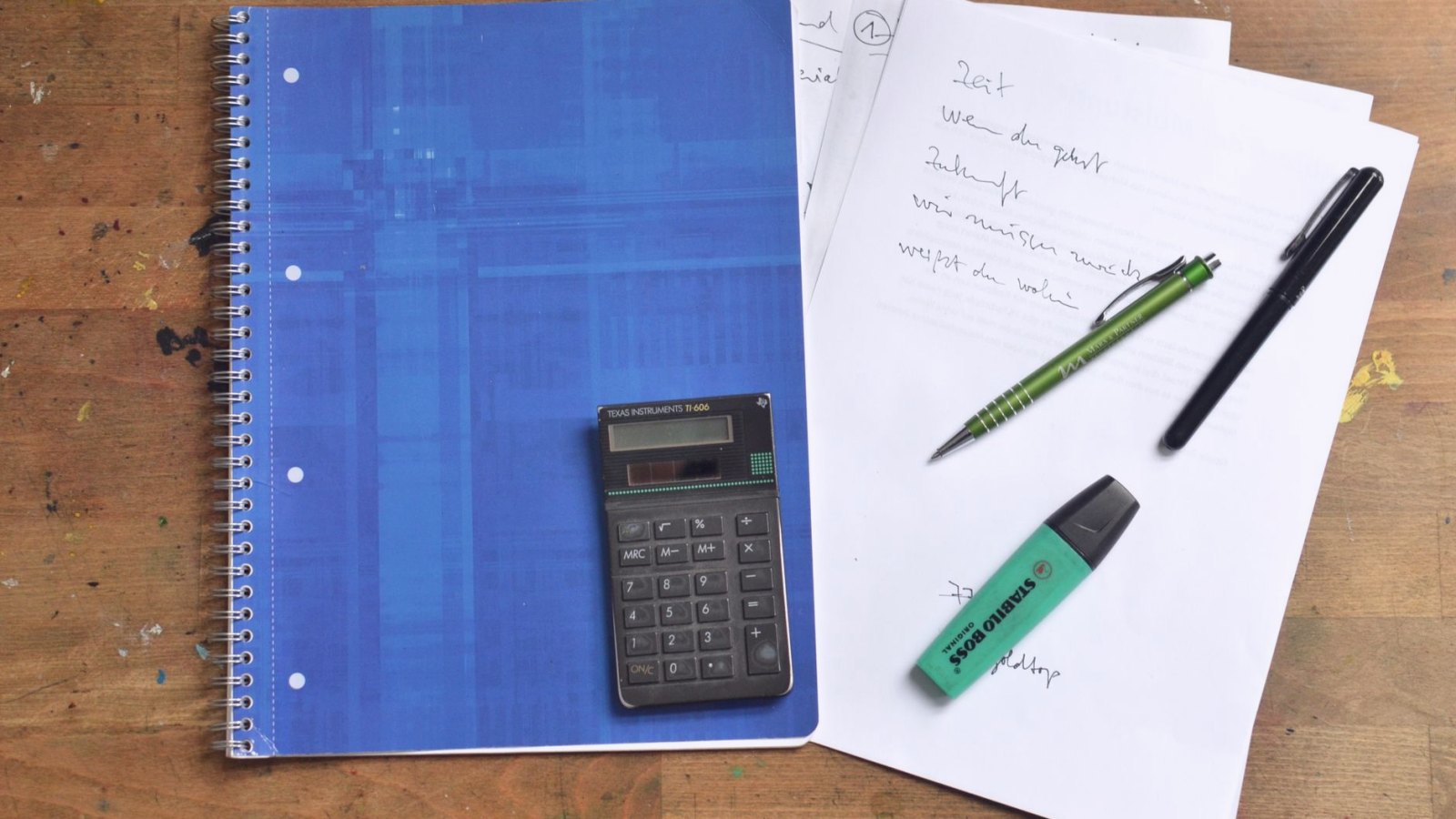
Consider a few ordinary examples: working out whether a discount is genuinely worthwhile, estimating how long a journey will take, adjusting a recipe, comparing unit prices or checking whether a receipt looks plausible. A calculator can produce an answer, but mental arithmetic helps a person frame the problem, choose the right operation and notice an obviously unreasonable result.
The skill also matters in performance settings. In education, arithmetic fluency can reduce the effort needed for basic calculations, leaving more attention available for reasoning and problem solving. In workplaces, numerical confidence may help with quantities, schedules, stock, measurements, budgets and data displays. These benefits should not be confused with a claim that fast calculation alone guarantees better decisions.
Numeracy is broader than speed. A person can calculate quickly and still misread a graph, confuse percentage points with percentages or accept an implausible conclusion. Conversely, a person who calculates more slowly may reason carefully and reach an accurate result. Good mental arithmetic is therefore best understood as a combination of fluency, flexibility and monitoring.
| Component | What it involves | Everyday example |
|---|---|---|
| Fact retrieval | Recalling familiar arithmetic relationships | Knowing that 9 × 6 is 54 |
| Procedural calculation | Applying steps to reach an answer | Adding a multi-item total mentally |
| Working memory | Holding intermediate values while continuing | Keeping a running total while shopping |
| Estimation | Judging approximate magnitude | Checking whether a bill is plausible |
| Monitoring | Detecting errors and revising a method | Noticing that a discount calculation is too large |
When practising, do not track speed alone. Record whether you were accurate, whether the method felt efficient and whether you could explain why the answer was plausible.
What researchers measure
Researchers rarely treat mental arithmetic as one simple score. They vary the problem type and examine several outcomes at once. Common measures include accuracy, response time, error patterns, confidence, strategy choice and performance under distraction or time pressure.
Accuracy and response time
Accuracy shows whether the answer is correct. Response time indicates how efficiently the person reached it, although speed is meaningful only when accuracy is considered alongside it. A participant who answers rapidly but makes frequent errors is not necessarily demonstrating stronger arithmetic performance than someone who works more slowly and accurately.
Researchers may calculate a combined efficiency measure, compare correct and incorrect trials, or inspect how performance changes as problems become larger or more complex. In cognitive arithmetic, problem size effects are especially informative: larger numbers and more difficult combinations often take longer and produce more errors.
Strategy and process measures
Some studies ask participants to describe how they solved a problem. Others use verbal reports, eye movements, response patterns, dual-task methods or brain-imaging techniques to infer the demands placed on memory and attention. These methods help distinguish rapid fact retrieval from a longer calculation procedure.

Researchers also use tasks involving number comparison, estimation, arithmetic fluency, multi-digit calculation and mathematical word problems. A short addition test may measure something quite different from a task requiring a person to interpret a discount, identify relevant information and calculate a final amount.
Near transfer and far transfer
Training studies need to ask whether improvement is limited to the practiced task or extends to a related skill. Near transfer might mean becoming better at similar arithmetic problems. Far transfer would mean an improvement in a different ability, such as general reasoning or unrelated academic performance.
This distinction is central because a higher score on a familiar task can reflect learning the task’s patterns, strategies or interface. It does not automatically show that a broad cognitive capacity has increased.
A leaderboard score is a performance snapshot, not a complete measurement of numeracy. It can reflect arithmetic skill, familiarity with the format, attention on that day and comfort with time pressure.
What published research says about training mental arithmetic
The most defensible conclusion is straightforward: practice can improve the skills and strategies that are practised, especially when the training provides repeated problems, feedback and an appropriate level of difficulty. This is consistent with research on arithmetic learning, which shows that performance develops through the interaction of numerical representations, memory, attention, strategy use and instruction.
Practice can make familiar facts easier to retrieve and procedures more efficient. It can also teach useful strategies, such as decomposing numbers, using compensation or checking an answer against an estimate. Improvements may be especially visible when assessment problems resemble the training problems.
The evidence becomes less convincing when the claim expands from “this helps with arithmetic” to “this improves general intelligence.” Meta-analytic research on working-memory training has found short-term improvements on tasks similar to the training, but little convincing evidence that such training produces broad improvements in unrelated real-world cognitive skills. A second-order review of cognitive training likewise concluded that benefits are largely domain-specific.

That does not mean training is pointless. It means the target should be stated precisely. Arithmetic practice is a reasonable way to practise arithmetic. It should not be marketed as a guaranteed route to higher intelligence, protection from dementia or treatment for a medical condition.
What makes practice more useful?
- Use varied problems. Mix addition, subtraction, multiplication, division, percentages, estimation and comparisons rather than repeating one narrow format.
- Keep difficulty manageable. Problems should require effort but remain solvable. Excessive difficulty can turn practice into guessing.
- Review errors. Identify whether the mistake came from a fact, a place-value slip, a missed step, distraction or an unreasonable estimate.
- Practise retrieval and reasoning. Fast facts matter, but flexible methods and plausibility checks matter too.
- Test outside the practice format. Use paper problems, everyday examples or unfamiliar question styles to see what transfers.
For one week, spend five minutes on exact calculations and five minutes on estimation. After each session, write down one error pattern and one strategy that worked.
How short game-based practice fits the evidence
Short games can make repeated practice easier to start and easier to sustain. They can provide a clear goal, immediate feedback and a compact session that feels more like a level than a worksheet. Those features may support engagement, but engagement is not the same as proven transfer.
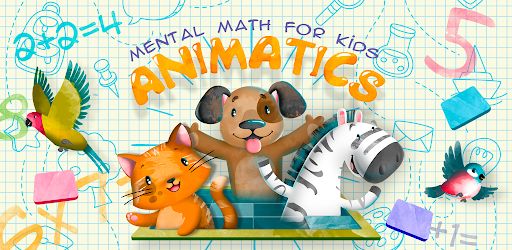
Within the Mentometry Brain Games directory, Mental math for kids ANIMATICS is listed as an educational math-and-numbers game associated with mental calculation practice for children aged 7 to 12. Its store description is promotional and should not be treated as independent evidence that a particular duration of practice produces a specific result.
Several directory games are classified under Sudoku and number grids or list math and numeracy among their skills. Sudoku – Classic Sudoku Games, Killer Sudoku – Puzzle Game, Killer Sudoku – Puzzle Games, ▻Sudoku + and Block Puzzle – Woody 99 2024 may therefore be relevant to people who enjoy number-based puzzle practice. However, solving a Sudoku-style puzzle is not the same as performing mental arithmetic: it may involve logic, constraint tracking, working memory and planning without requiring frequent exact calculation.
 Sudoku & Number GridsSudoku – Classic Sudoku Games勇 殷★ 4.8 (20.7K votes)View ratings & details ▶
That distinction is useful rather than negative. A number-grid puzzle can offer a broader cognitive workout, while a mental-calculation task targets arithmetic more directly. If the goal is mental arithmetic, include practice that actually requires calculating, then use puzzle games as optional variety rather than assuming every number-themed game trains the same skill.
- Short sessions can make regular practice more convenient.
- Immediate feedback can reveal accuracy and consistency.
- Repeated challenges may support fluency with familiar operations.
- Game structure can make practice more motivating for some people.
- Performance may become specific to the game format.
- Speed pressure can encourage careless answers.
- Sudoku and number puzzles may train related reasoning rather than arithmetic itself.
- A high score does not establish broad cognitive improvement.
▻Sudoku + is listed as a Sudoku game with a point system, runs and online leaderboards. Those features may make progress visible and add a competitive layer, but the directory data does not establish that leaderboard performance measures mental arithmetic or transfers to everyday numeracy.
 Sudoku & Number Grids▻Sudoku +PeopleFun CG, LLC★ 4.8 (14.7K votes)View ratings & details ▶
Used carefully, game-based practice can be one part of a balanced routine. A sensible routine might combine a short arithmetic drill, a few estimation questions and an occasional unfamiliar real-world problem. The aim is not to chase an impressive score at any cost, but to build accurate, flexible and explainable numerical performance.
Common misconceptions about mental arithmetic
“Fast means intelligent”
Speed is useful in some settings, but it is not the same as intelligence. Arithmetic performance also depends on prior learning, anxiety, attention, language, working memory, familiarity with the notation and the strategy selected. A slower correct solution may demonstrate stronger monitoring than a fast incorrect one.
“Mental arithmetic is just memorising tables”
Memorised facts are one component. Mental arithmetic also involves place value, decomposition, estimation, proportional reasoning and choosing between competing methods. Someone who knows multiplication facts but cannot judge whether an answer is plausible has only part of the skill.
“Any number game trains mental math”
Number games vary widely in their cognitive demands. Sudoku may require constraint satisfaction and logical elimination. A block puzzle may involve spatial planning. These can be worthwhile activities, but their relationship to exact mental calculation should not be assumed from the presence of numbers alone.
“More difficulty is always better”
Difficulty can create useful challenge, but difficulty without understanding may produce random responding or frustration. Effective practice should allow a person to identify errors, adjust strategies and gradually handle more complex problems.
“Training can prevent cognitive decline or treat a condition”
That is an overreach. Mental arithmetic practice may help someone practise arithmetic, and enjoyable cognitive activity can be personally valuable. It should not be presented as a treatment, prevention method or substitute for professional assessment or care.
ALSO READ Mindfulness and Attention Training: Where the Science Overlaps With Cognitive Games
A practical evidence-aligned routine
A short routine can target several components without turning every session into a race. Begin with familiar facts, move to flexible calculations, then finish with estimation or a real-world application.
- Warm up for two minutes. Retrieve simple addition, subtraction or multiplication facts without worrying about maximum speed.
- Calculate for three minutes. Use mixed operations and include multi-step problems that require holding an intermediate result.
- Estimate for two minutes. Round prices, totals, percentages or measurements before checking an exact answer.
- Review for two minutes. Look for recurring errors and write down the strategy that would prevent them.
- Retest weekly. Use a different format from the one used for practice so that you can distinguish genuine arithmetic improvement from familiarity with a particular interface.
If using a game, keep the session short enough that attention remains high. Treat accuracy as the main stat, speed as a secondary stat and transfer as something to test separately. Like any good training plan, the routine should include variety, recovery and a clear understanding of what is actually being trained.
Conclusion
Mental arithmetic is a small but revealing cognitive skill. It draws on numerical representations, learned facts, working memory, attention, strategy selection and error checking, all of which contribute to practical numeracy.
Research supports focused practice for improving related arithmetic performance, while offering much less support for sweeping claims about general intelligence or all-purpose brain improvement. Short games can make practice engaging and measurable, especially when their limits are understood. The most reliable approach is to use them as one tool among several, combine speed with accuracy and regularly test whether the skill works beyond the game.
Player Two: Games to Try Next
Hand-picked from Mentometry and the Brain Games directory, matched to this article.
Frequently Asked Questions
What is mental arithmetic?
Mental arithmetic is solving numerical problems internally without writing out the calculation or using a calculator. It combines numerical knowledge, working memory, attention, strategy selection and error checking.
Does mental arithmetic improve intelligence?
Practising arithmetic can improve related arithmetic skills, especially when the practice resembles the tested problems. Current evidence does not justify claiming that mental arithmetic training broadly raises intelligence.
Is speed or accuracy more important in mental math?
Accuracy comes first. Speed is useful only when it is accompanied by reliable answers and sensible checking. A fast answer with frequent errors is not strong arithmetic performance.
Do Sudoku games train mental arithmetic?
Sudoku can involve logic, working memory and constraint tracking, but it is not the same as exact mental calculation. It may complement arithmetic practice, but number puzzles should not automatically be treated as mental-math training.
How can I practise mental arithmetic effectively?
Use short, regular sessions that mix fact retrieval, multi-step calculations, estimation and error review. Occasionally test yourself with unfamiliar problems and everyday examples to check whether the skill transfers.
Can mental arithmetic prevent dementia or treat a medical condition?
There is no basis for presenting mental arithmetic games as a treatment or guaranteed prevention method. They may provide focused cognitive practice, but health claims require evidence specific to the condition and intervention.
Sources
- Cognitive Arithmetic: A Review of Data and Theory — M. H. Ashcraft, Cognition
- The Role of Working Memory in Mental Arithmetic — European Journal of Cognitive Psychology
- Working Memory and Mathematics: A Review of Developmental, Individual Difference, and Cognitive Approaches — Learning and Individual Differences
- Developmental Cognitive Neuroscience of Arithmetic: Implications for Learning and Education — Developmental Cognitive Neuroscience
- Developmental Brain Dynamics of Numerical and Arithmetic Abilities — npj Science of Learning
- Working Memory Training Does Not Improve Performance on Measures of Intelligence or Other Measures of “Far Transfer”: Evidence From a Meta-Analytic Review — Psychonomic Bulletin & Review
- Near and Far Transfer in Cognitive Training: A Second-Order Meta-Analysis — Collabra: Psychology, University of California Press
- Science Literacy: Concepts, Contexts, and Consequences — National Academies of Sciences, Engineering, and Medicine
- Mathematics Framework for the 2026 National Assessment of Educational Progress — National Assessment Governing Board
Educational content only; it is not medical or financial advice.


[…] can also reflect experience. Someone who regularly works with numbers, practises mental arithmetic or has become comfortable with timed interfaces may have an advantage. That advantage is meaningful […]